Home Gym for Small Spaces: Apartment Guide

Thirty years of training at home. Built multiple home gyms from bare garages to proper setups. I know what equipment lasts, what breaks, and what becomes an expensive clothes rack.
Just so you know, some links on this page are affiliate links. If you buy something via them, we get a small kickback. You don't pay more, but it helps toward the next bit of kit.
Looking for more equipment recommendations?
Browse All GuidesI trained in a 5' x 6'6" corner of my bedroom for two years before getting garage space. It worked better than I expected.
The trick isn't finding more room. It's choosing equipment that folds, stores, and doesn't require a dedicated gym space. At the premium extreme, an all-in-one like the Speediance Gym Monster 2 folds a whole cable gym into under three square feet, but most people solve the space problem far more cheaply with the foldable basics below. If a wall-mounted unit tempts you instead, the Tonal 2 vs Speediance comparison weighs fixed against foldable.
Quick Picks for Small Spaces
| Category | Pick | Stored Size |
|---|---|---|
| Dumbbells | NordicTrack Select-A-Weight | Compact tray base |
| Bench | FLYBIRD Foldable Bench | Folds flat, slides under bed |
| Pull-ups | AmazeFan Door Bar | Removes in seconds |
| Bands | Gritin Set | Fits in a drawer |
| Cardio | WENOKER Exercise Bike | 4' x 2' footprint |
Total for complete setup: around $550
How Much Space Do You Actually Need?
| Workout Type | Minimum Space | Notes |
|---|---|---|
| Dumbbells only | 5' x 5' | Standing and floor exercises |
| Dumbbells + bench | 6'6" x 6'6" | Add room to lie down |
| Plus cardio bike | 6'6" x 8' | Bike fits against wall |
| Plus rowing machine | 6'6" x 10' | Rower extends when in use |
Context: 6'6" x 6'6" is smaller than a single bed plus bedside tables. Most bedrooms have this space available.
The Space-Saving Equipment Stack
Adjustable Dumbbells: The Foundation
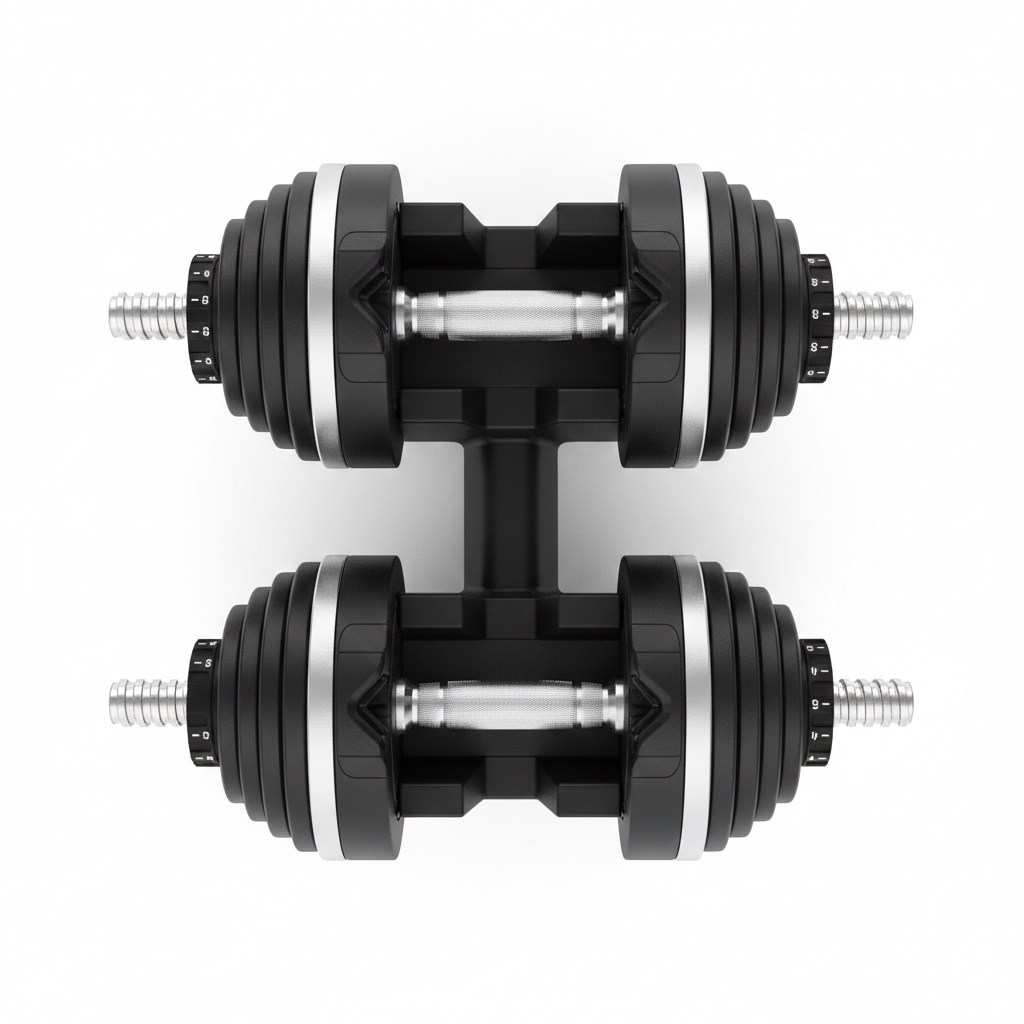
The NordicTrack Select-A-Weight Dumbbells replace 15+ pairs of fixed dumbbells and sit on a compact molded tray. One unit per hand, stores in the space of a shoebox pair. *(Price when reviewed: approximately $230 | Check Price on Amazon)*
No clanking plates, no scattered weights across your floor. Pick them up, train, put them back.
Alternative: PROIRON set if budget is tight, but they're standard plate-loading style so slightly bulkier. *(Price when reviewed: roughly $90 | Check Price on Amazon)*
Foldable Bench: Disappears When Done
The FLYBIRD Foldable Bench folds completely flat, about 6" thick when collapsed. *(Price when reviewed: around $103 | Check Price on Amazon)*
Slide it under your bed. Stand it behind a door. Store it in a closet. Training done, bench gone.
It's stable enough for dumbbells up to 66 lb per hand. Beyond that, you'd want the non-folding version anyway.
Doorway Pull-Up Bar: Zero Floor Space
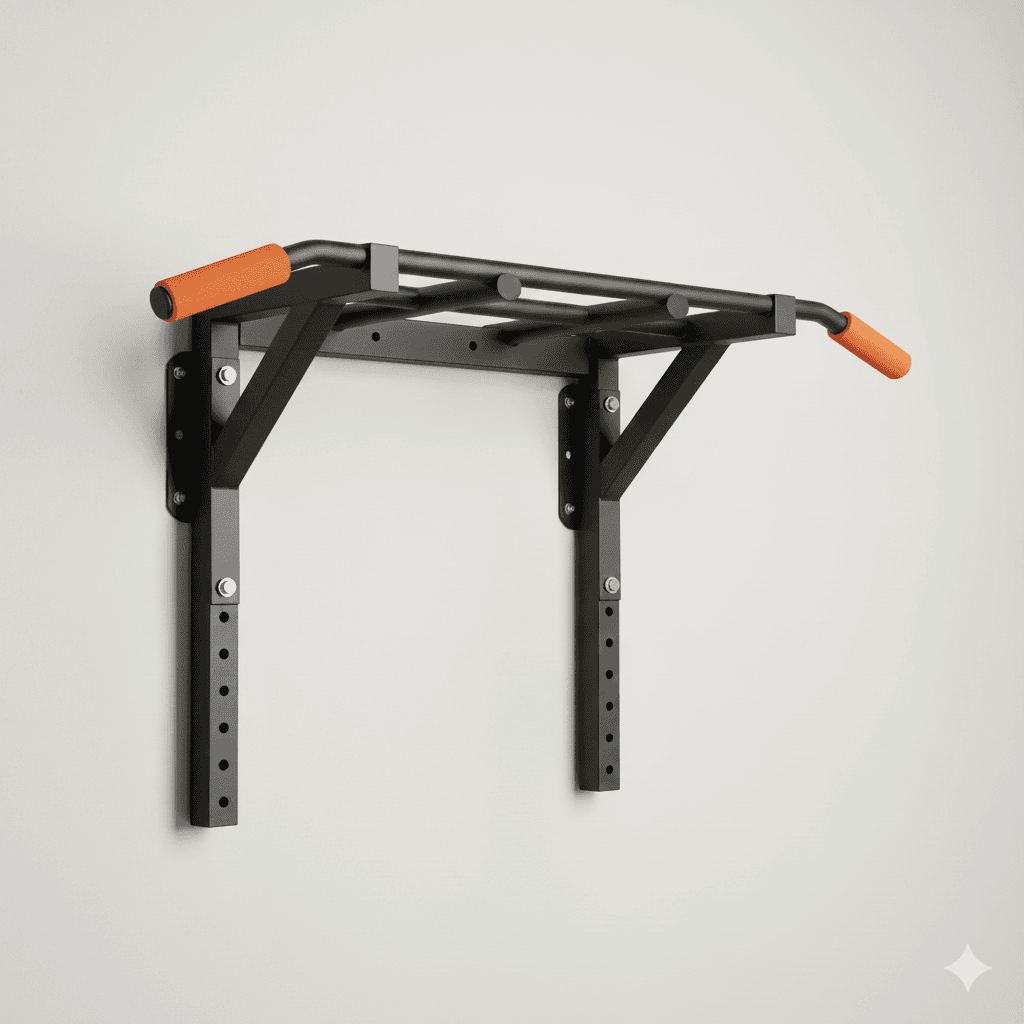
The AmazeFan Pull Up Bar mounts in most standard door frames without screws. *(Price when reviewed: approximately $60 | Check Price on Amazon)*
Pull-ups, chin-ups, hanging leg raises, dead hangs. Removes in 5 seconds when guests visit.
Check your door frame first: needs to be solid wood, not hollow. Most internal doors work fine.
Resistance Bands: Infinite Exercises, Zero Space
Gritin Resistance Bands fit in a drawer. *(Price when reviewed: roughly $12 | Check Price on Amazon)*
Anchor them in a closed door for lat pulldowns, rows, chest flies. Use them for assistance on pull-ups. Add resistance to squats and lunges.
Genuinely useful, not just beginner gear. We still use bands in my garage gym.
For garage-specific setup guidance, the garage gym setup guide US covers the full process.
Cardio for Small Spaces
**Best option: WENOKER Exercise Bike* (Price when reviewed: around $180 | Check Price on Amazon)*
4' x 2' footprint. Transport wheels to roll it against a wall. Quiet magnetic resistance won't disturb neighbors.
If you want rowing: The Merach Magnetic Rower folds vertically for storage (20" x 12" standing). But it needs 7'+ clear space while in use. *(Price when reviewed: approximately $290 | Check Price on Amazon)*
Under-desk treadmills (walking pads): Slide under furniture when done. Good for steps and light cardio, not intense workouts.
Apartment-Friendly: Noise Matters
Your downstairs neighbors will hear: - Jumping (burpees, box jumps, jump rope) - Dropping weights - Air rowers (fan noise) - Heavy footwork
Your neighbors won't hear: - Magnetic resistance equipment - Adjustable dumbbells (no plate clang) - Resistance bands - Controlled dumbbell movements on a thick mat
Essential for flats: A 0.6"+ exercise mat absorbs impact and protects floors from dumbbell drops. Budget $35-50 for something decent.
The Complete Small-Space Setup
Everything you need, everything stores away:
| Item | Storage |
|---|---|
| Adjustable dumbbells | Corner, on base |
| Foldable bench | Under bed |
| Pull-up bar | Remove after use |
| Resistance bands | Drawer |
| Exercise mat | Rolled, stands upright |
Total: roughly $448 for equipment covering every muscle group.
Add the MERACH bike for cardio and you're at around $621 for a genuinely complete home gym that stores in a bedroom corner.
Two square metres, a pair of adjustable dumbbells, and a foldable bench is enough to build a serious physique. Don't let the size of the space be the reason you don't start.
What to Avoid in a Small-Space Gym
Treadmills in apartments. Even on a thick mat, treadmill running transmits impact through the floor to rooms below. It's the single piece of equipment most likely to create neighbor complaints. If you live in an apartment and want cardio, the WENOKER exercise bike is the answer: magnetic resistance means near-silent operation even at full intensity.
Fixed dumbbell sets. A set of 10 pairs of fixed dumbbells takes up 6+ feet of floor space and costs $200-400. Adjustable dumbbells replace all of them in a 2 square foot footprint. For small spaces, there's no debate.
Equipment you need to disassemble every session. If setting up your gym takes more than 30 seconds, you'll skip it when motivation is low. The whole point of a home gym is removing friction. A pull-up bar that installs and stays in a doorframe beats a bar you disassemble each time. A bench that folds in two seconds beats one you have to move furniture to use.
Squat racks in under 200 sq ft. Even a folding wall-mounted squat rack (the most space-efficient option) needs 4x6 feet of clear space when deployed and requires ceiling height over 7.5 feet. For small spaces, dumbbells and bodyweight movements typically deliver better results per square foot.
Training Programmes for Small Spaces
The mistake most small-space gym owners make: buying equipment without a programme. Equipment sits unused because there's no plan for what to do with it.
With dumbbells only (5x5 full body, 3x per week):
Day A: Goblet squat 3x8, Dumbbell row 3x8 per side, Push-up 3x10, Romanian deadlift 3x8, Overhead press 3x8
Day B: Bulgarian split squat 3x8 per side, Incline press 3x8, Single-arm row 3x8, Lateral raise 3x12, Curl 3x10, Tricep extension 3x10
Alternate A/B, rest day between sessions. Progressive overload: when you can complete all sets with good form, increase weight by 5 lb next session.
With dumbbells, pull-up bar, and bands (more complete):
Add pull-ups or banded pull-ups, face pulls with bands, and band pull-aparts for shoulder health. These pulling movements are the biggest gap in a dumbbells-only programme.
With bike added (4-5x per week):
Three strength sessions plus two 30-minute bike sessions covers conditioning and strength development without requiring more space or equipment.
Resistance Bands: The Underrated Space-Zero Tool
Resistance bands deserve more attention than they typically get in home gym guides. Most people buy them as a cheap filler purchase and then discover they are genuinely useful training tools.
What they actually cover. Resistance bands anchor in a closed door and become a cable machine. Band pull-aparts and face pulls are the most effective shoulder prehabilitation work available for pressing athletes, and they require no space and no equipment beyond the bands themselves. Banded good mornings cover hip hinge training. Band pull-downs replicate lat pulldowns. Banded squats and lunges add resistance without adding weight. For a small-space gym, bands add approximately 20 more exercises to a dumbbell-based programme.
The limitation. Bands provide variable resistance: light at the bottom of the range, heavy at the top. This means they do not replicate the linear resistance of weights across the full movement range. They are excellent for assistance work, warm-ups, shoulder health, and adding variety. They are less effective for the primary progressive overload exercises like pressing and rows, where free weights or dumbbells are better.
Which set to buy. The Gritin set covers five resistance levels. The heavier bands (30-40 lb equivalent) handle most exercises. Buy one set, learn what you use, and replace worn bands individually as needed. Bands last 12-18 months of regular use before the latex starts to degrade.
Using bands for pull-up assistance. For anyone working toward their first pull-up, a looped resistance band over the pull-up bar acts as a counterweight. Stand in the loop, grab the bar, and pull. The band unloads 20-50 lb of bodyweight depending on thickness. This is the most effective way to build pull-up strength from zero. It requires nothing more than a doorframe bar and a resistance band.
The Complete Small-Space Equipment List
Here is every item in the recommended small-space setup, with what each one actually adds to your training options.
Adjustable dumbbells ($90-230): Covers every upper and lower body dumbbell exercise. Pressing, rowing, curling, lateral raises, Romanian deadlifts, goblet squats. This is the foundation of the entire setup.
Foldable bench ($80-103): Adds incline and flat pressing. Opens up incline press, incline rows, step-ups, and seated overhead press. Stores in 6 inches of space when flat.
Doorway pull-up bar ($25-60): Adds all pulling strength work: pull-ups, chin-ups, hanging leg raises, dead hangs. Zero floor space. Removes in seconds.
Resistance bands: Adds shoulder health work, banded assistance exercises, and cable-machine substitutes. Stores in a drawer.
Exercise mat ($25-35): Protects floors, adds cushioning for floor exercises. Required for apartment use.
Total cost: $230-460 depending on dumbbell choice. Total footprint during training: approximately 6 x 6 feet. Everything except the pull-up bar stores in a corner or closet when not in use. The entire setup fits in the space most people use for a single armchair. If you have room to sit, you have room to train. The constraint in small-space training is almost never actually space -- it is deciding to start and staying consistent once you do.
The Space Reality Check
Before buying anything, measure your actual available training area with tape. Mark it on the floor with painter's tape to see how it feels.
5x5 (25 sq ft): Enough for bodyweight and dumbbell training. Floor exercises, standing movements, seated exercises. Tight but functional.
6x7 (42 sq ft): Standard small bedroom corner. Fits dumbbells, bench, and a bike with a foot of clearance around each.
8x8 (64 sq ft): Comfortable for a complete setup. Room to move around all equipment.
10x10 (100 sq ft): Could fit light barbell training with safety considerations.
Most people find 6x7 to be the practical minimum for a setup they enjoy using. Below that, the tightness affects workout quality.
Frequently Asked Questions
What's the most versatile piece of equipment for a small home gym?
Adjustable dumbbells, without question. They replace 15+ pairs of fixed weights in roughly the footprint of a shoe rack. Every major upper body movement (press, row, curl, lateral raise, shoulder press), every lower body movement except barbell squats and deadlifts, and all the accessory work your programme needs. The NordicTrack Select-A-Weight at around $230 is the most space-efficient option: one compact tray replaces an entire dumbbell rack.
How do I do cardio in a small space?
Three options in order of space efficiency: (1) Jump rope -- zero equipment, zero storage space, legitimate HIIT cardio. Requires ceiling height of at least 9-10 feet. (2) Exercise bike -- 4x2 foot footprint, near-silent, rolls against a wall when done. (3) Resistance band circuits -- jump squats, burpees, mountain climbers, band pull-aparts. No equipment storage needed.
Can you get a good workout in a spare bedroom?
Yes, genuinely. A spare bedroom typically has 80-120 square feet of floor space when furniture is moved aside, which is more than enough for a complete dumbbell programme, pull-ups, and bike cardio. The main constraints are ceiling height for overhead exercises and floor protection for weights. A 20mm rubber mat on the training area handles both.
What's the best home gym setup for under $300?
Pull-up bar + doorframe pull-up bar installation + adjustable dumbbells PROIRON set + resistance bands + foldable exercise mat. Total: approximately $152. Add a foldable bench ($80-100) and you're at $230-250. This covers full-body strength training and costs under $300. The pull-up bar is the key addition most beginners skip -- it adds pulling movements that dumbbells alone don't cover effectively.
How loud is a small home gym to downstairs neighbors?
Depends entirely on the equipment. Magnetic resistance bikes and rowers: near-silent. Dumbbell training on a rubber mat: minimal noise. Jumping movements (burpees, box jumps): significant impact noise. Dropping weights: very loud and damaging. For apartment gyms, the rule is simple: magnetic resistance equipment only, no dropping weights, rubber mat on floor, no jumping above the first floor.
Noise Management in Apartments
Small-space home gyms are often in apartments, and noise complaints end training programmes fast.
Rubber flooring is the minimum. Even a thin 6mm rubber mat reduces impact noise transmission by 20-30%. For dumbbell work, a thicker 15mm mat prevents sound traveling to the unit below.
Equipment selection for quiet training: Adjustable dumbbells with rubber coating over bare metal plates. Resistance bands are silent. Magnetic exercise bikes over chain-drive. No jumping exercises if you have downstairs neighbours.
Time of day matters. Most apartment noise policies allow reasonable noise during 8am-10pm. Early morning lifting is possible with rubber flooring and controlled movements. Never drop weights in an apartment. Ever. Controlled lowering takes two extra seconds and prevents a knock on your door.
Maximising a 6x6 Foot Space
A 6 by 6 foot area is enough for a complete training setup.
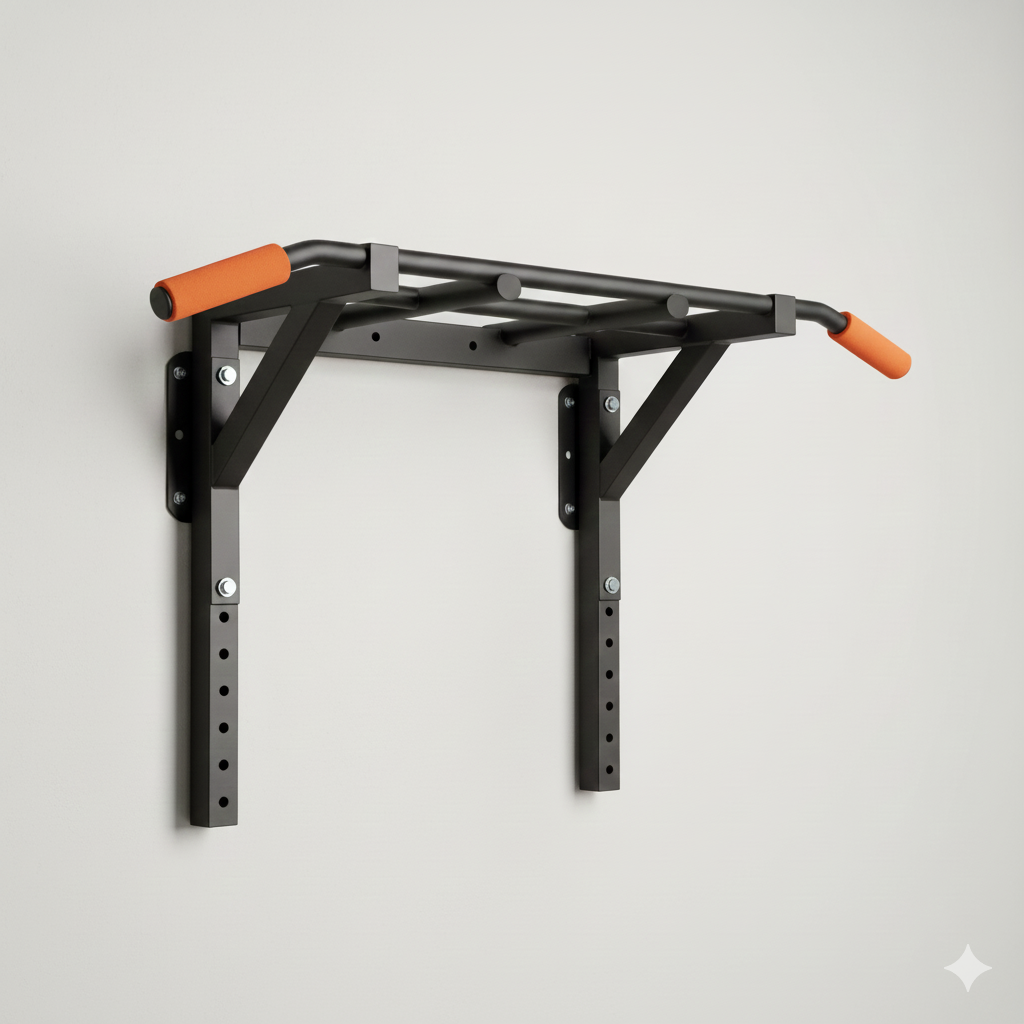
Wall-mounted pull-up bar (12 inches of wall space, zero floor space when not in use). Adjustable dumbbells in their cradle (20 by 12 inches). Folding bench (stores vertically against the wall in 12 by 24 inches). Resistance bands on a door hook. Yoga mat rolled in a corner.
For resistance band recommendations, see the best resistance bands US guide, the most space-efficient training tool available.
What to Avoid
The small-space version of common home gym mistakes. These are purchases that seem logical but fail in practice when space is limited.
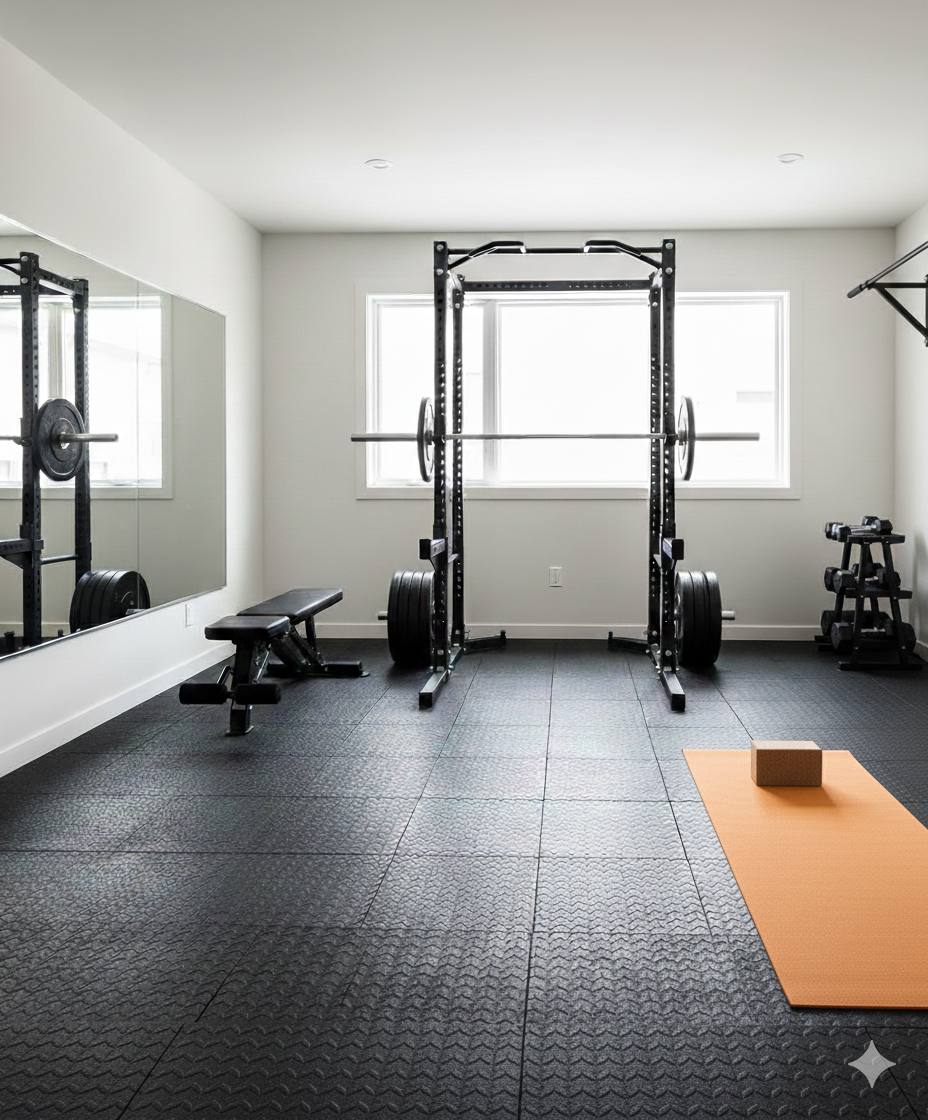
Full barbell sets. A standard 7-foot Olympic barbell requires 8+ feet of clearance to use safely. A squat rack adds another 4-5 square feet of floor space. For a 6x6 foot training area, barbell training is not viable. Adjustable dumbbells go to 55-90 lb per hand and cover the same compound movements in a fraction of the footprint. The power rack and barbell is a later-stage purchase for people who have established the training habit and the space.
Air resistance rowing machines. Air rowers like the Concept2, while excellent machines, use a fan flywheel that generates significant noise at moderate and high intensities. In an apartment, the noise is a real issue for neighbours. In a small room, the resonance amplifies. The magnetic rowers, like the Merax, are near-silent by comparison and just as effective for steady-state cardio.
Fixed-weight dumbbell sets. A set of fixed dumbbells from 5 lb to 50 lb in 5 lb increments takes up roughly 5 feet of floor space on a dedicated rack. It also costs $300-600 for a complete range. The NordicTrack Select-A-Weight stores on a single two-foot tray and does everything the fixed set does. In a small space, fixed weight sets are the most space-inefficient choice available.
Building Momentum: Month One in a Small Space
The challenge of small-space training is not the space. It is starting and continuing before the habit is established. Here is a realistic first month.
Sessions per week: Three. Monday, Wednesday, Friday or Tuesday, Thursday, Saturday. Rest days matter as much as training days for recovery and adaptation.
Session length: 25-35 minutes. Short sessions eliminate the barrier of needing a large block of time. The 6am session before work is viable at 25 minutes. At 60 minutes, it is not.
Month 1 programme with dumbbells and pull-up bar:
Session A: Push-up 3x8, Dumbbell row 3x10 per side, Goblet squat 3x10, Overhead press 3x8, Curl 3x10 Session B: Pull-up or band-assisted pull-up 3x max reps, Romanian deadlift 3x10, Lateral raise 3x12, Tricep extension 3x10, Reverse lunge 3x8 per side
Rest 60 seconds between sets. Alternate sessions A and B, rest one day between.
The progression rule: When you complete all sets cleanly and the last rep is not difficult, increase weight by the smallest increment available next session. Applied consistently over 8-12 weeks, this produces visible strength gains on every major lift.
After month one: If you trained three times per week for four weeks, you have earned the right to upgrade. The first upgrade for a small-space gym is almost always an adjustable bench. It multiplies what the dumbbells can do.
When You Outgrow the Small Space
Most people do not outgrow a small home gym. The limiting factor in training results is consistency, not space. A committed athlete can build a strong physique for years with adjustable dumbbells and a bench in a spare room.
Signs you genuinely need more space: - You have reached the weight ceiling on your adjustable dumbbells and need heavier weights consistently - You want to add barbell training specifically (deadlifts, squats, bench press at high loads) - Your programme requires equipment like a cable machine that cannot be substituted
If none of these apply, the small space is not the problem. It is not the solution either, but it is enough.
For people who do eventually outgrow the small setup: the adjustable dumbbells and bench move with you. They remain the foundation of the larger setup. Nothing from the small gym becomes redundant.
The Actual Advantage of Small-Space Training
Training in a small, focused space has one advantage that large home gyms and commercial gyms don't: you can't get distracted.
No wandering between machines. No settling into a chair while checking your phone. No 15-minute conversations between sets. The equipment is right there, the session starts, the session ends.
For the full US equipment buying guide, the best home gym equipment US guide covers every category.
People who train consistently in small spaces often train more efficiently than people with comprehensive setups. The constraints force simplicity. Simplicity forces focus. Focus produces results.
Two square metres and a pair of adjustable dumbbells. The small space isn't a limitation. It's a feature.
As an Amazon Associate, we earn from qualifying purchases.
Products Mentioned in This Guide
Frequently Asked Questions
Related Guides
Find Your Perfect Equipment
Expert guides for racks, barbells, plates, benches, and more. Build your home gym the right way.
Browse All Guides