Home Gym for Small Spaces: UK Apartment Guide

Thirty years of training at home. Built multiple home gyms from bare garages to proper setups. I know what equipment lasts, what breaks, and what becomes an expensive clothes rack.
Just so you know, some links on this page are affiliate links. If you buy something via them, we get a small kickback. You don't pay more, but it helps toward the next bit of kit.
Looking for more equipment recommendations?
Browse All GuidesI trained in a 1.5m x 2m corner of my bedroom for two years before getting garage space. It worked better than I expected.
The trick isn't finding more room. It's choosing equipment that folds, stores, and doesn't require a dedicated gym space.
Quick Picks for Small Spaces
| Category | Pick | Stored Size |
|---|---|---|
| Dumbbells | MuscleSquad Adjustable | 42cm x 20cm base |
| Bench | Mirafit Foldable | Folds flat, slides under bed |
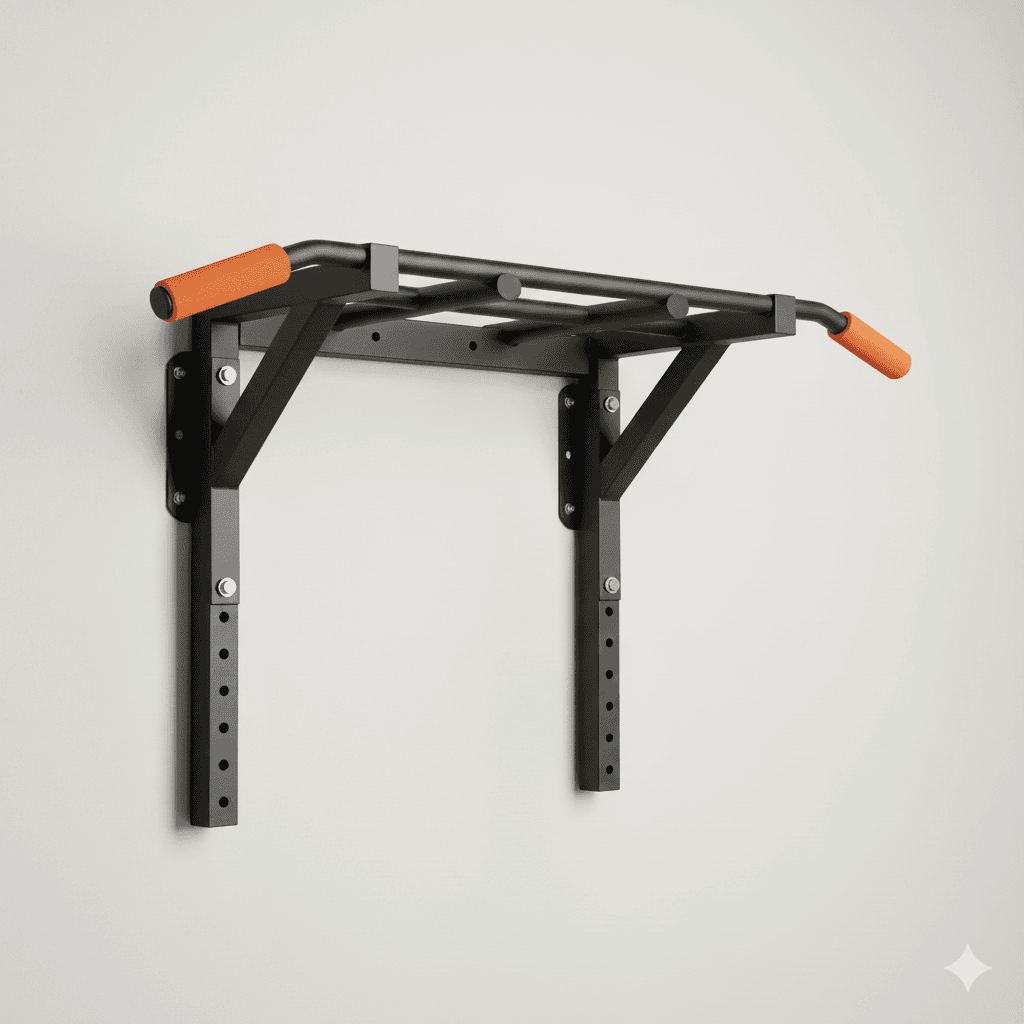
| Pull-ups | HAKENO Door Bar | Removes in seconds |
| Bands | Gritin Set | Fits in a drawer |
| Cardio | JLL IC200 PRO | 1.2m x 0.5m footprint |
Total for complete setup: roughly £500
How Much Space Do You Actually Need?
| Workout Type | Minimum Space | Notes |
|---|---|---|
| Dumbbells only | 1.5m x 1.5m | Standing and floor exercises |
| Dumbbells + bench | 2m x 2m | Add room to lie down |
| Plus cardio bike | 2m x 2.5m | Bike fits against wall |
| Plus rowing machine | 2m x 3m | Rower extends when in use |
Context: 2m x 2m is smaller than a single bed plus bedside tables. Most bedrooms have this space available.
The Space-Saving Equipment Stack
Adjustable Dumbbells: The Foundation
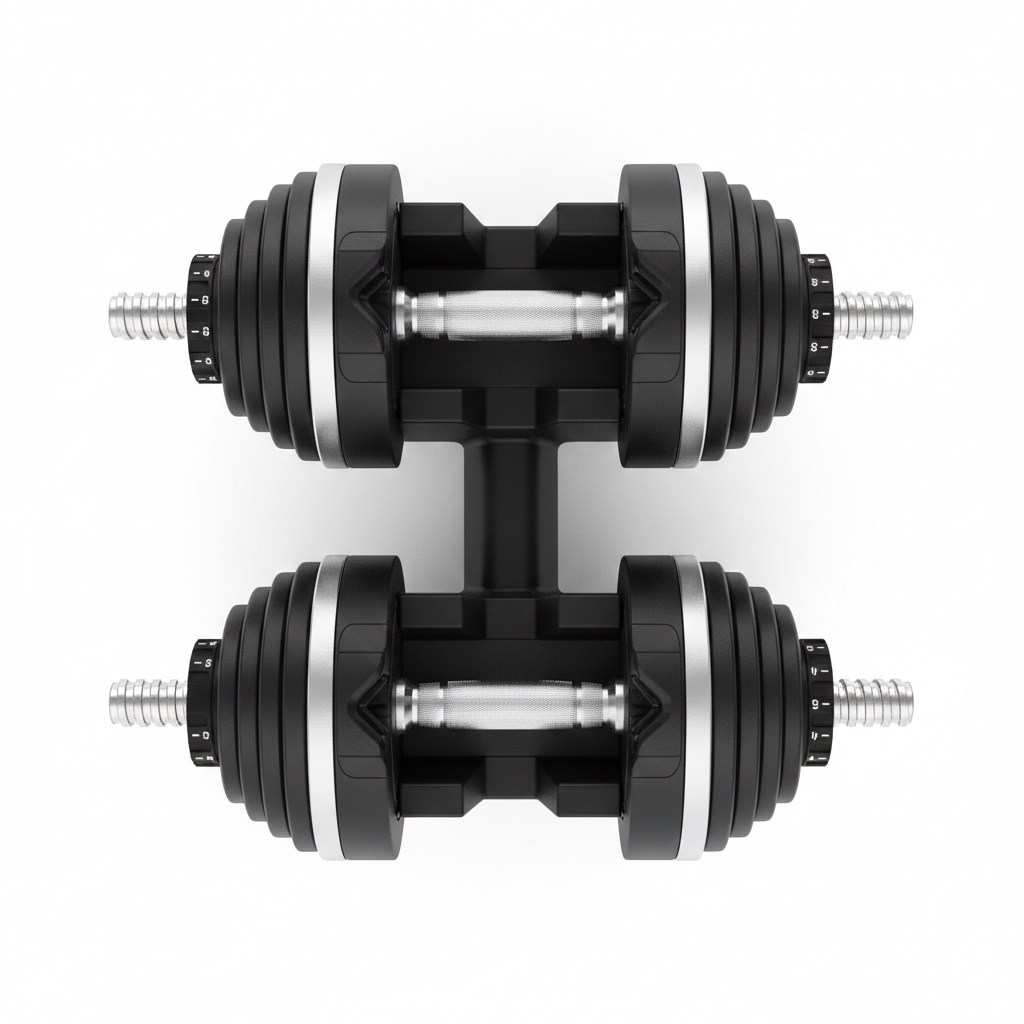
The MuscleSquad Adjustable Dumbbells replace 15+ pairs of fixed dumbbells. They sit on a base that measures 42cm x 20cm. Smaller than a shoe rack. *(Price when reviewed: around £200 | Check Price on Amazon)*
No clanking plates, no scattered weights across your floor. Pick them up, train, put them back.
Alternative: PROIRON set if budget is tight, but they're standard plate-loading style so slightly bulkier. *(Price when reviewed: approximately £80 | Check Price on Amazon)*
Foldable Bench: Disappears When Done
The Mirafit Foldable Bench folds completely flat, about 15cm thick when collapsed. *(Price when reviewed: roughly £90 | Check Price on Amazon)*
Slide it under your bed. Stand it behind a door. Store it in a wardrobe. Training done, bench gone.
It's stable enough for dumbbells up to 30kg per hand. Beyond that, you'd want the non-folding version anyway.
Doorway Pull-Up Bar: Zero Floor Space
The HAKENO Multi-Grip Pull Up Bar mounts in most UK door frames without screws. Check Price on Amazon
Pull-ups, chin-ups, hanging leg raises, dead hangs. Removes in 5 seconds when guests visit.
Check your door frame first: needs to be solid wood, not hollow. Most internal UK doors work fine.
Resistance Bands: Infinite Exercises, Zero Space
Gritin Resistance Bands fit in a drawer. *(Price when reviewed: approximately £10 | Check Price on Amazon)*
Anchor them in a closed door for lat pulldowns, rows, chest flies. Use them for assistance on pull-ups. Add resistance to squats and lunges.
Genuinely useful, not just beginner gear. We still use bands in my garage gym.
Cardio for Small Spaces
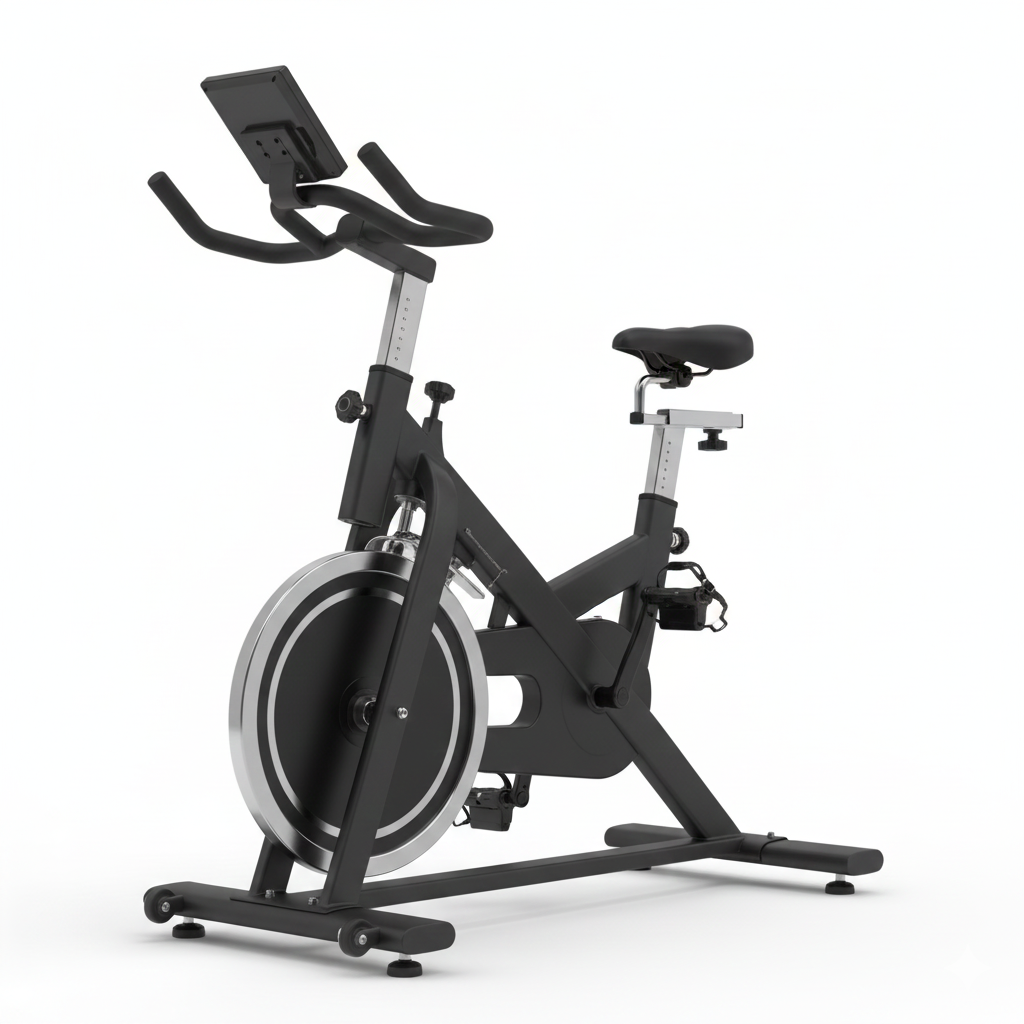
**Best option: JLL IC200 PRO bike* (Price when reviewed: roughly £150 | Check Price on Amazon)*
1.2m x 0.5m footprint. Transport wheels to roll it against a wall. Quiet magnetic resistance won't disturb neighbours.
If you want rowing: The Dripex Magnetic Rower folds vertically for storage (0.5m x 0.3m standing). But it needs 2m+ clear space while in use. *(Price when reviewed: around £250 | Check Price on Amazon)*
Under-desk treadmills (walking pads): Slide under furniture when done. Good for steps and light cardio, not intense workouts.
Flat-Friendly: Noise Matters
Your downstairs neighbours will hear: - Jumping (burpees, box jumps, jump rope) - Dropping weights - Air rowers (fan noise) - Heavy footwork
Your neighbours won't hear: - Magnetic resistance equipment - Adjustable dumbbells (no plate clang) - Resistance bands - Controlled dumbbell movements on a thick mat
Essential for flats: A 15mm+ exercise mat absorbs impact and protects floors from dumbbell drops. Budget £30-50 for something decent.
The Complete Small-Space Setup
Everything you need, everything stores away:
| Item | Storage |
|---|---|
| Adjustable dumbbells | Corner, on base |
| Foldable bench | Under bed |
| Pull-up bar | Remove after use |
| Resistance bands | Drawer |
| Exercise mat | Rolled, stands upright |
Total: approximately £390 for equipment covering every muscle group.
Add the JLL bike for cardio and you're at roughly £540 for a complete home gym that stores in a bedroom corner.
What to Avoid in Small Spaces
Some equipment sounds clever in a small space but doesn't work in practice.
Multi-gyms/cable machines: Need at least 2.5m ceiling clearance for lat pulldown. The frame footprint is 1.5m x 1m minimum. Skip entirely for small spaces - dumbbells cover the same muscle groups better.
Barbell setups: A standard 7ft Olympic bar needs at least 2.5m width to load. Power racks need 1.5m x 1.5m footprint plus working space each side. Only works in a spare room with 3m+ clearance, not a flat.
Treadmills: 2m x 0.8m footprint, don't fold flat, generate impact noise that transmits through floors. The worst choice for flat training. Bikes do cardio better in small spaces.
Air resistance rowers: Loud. The fan noise on a Concept2 is significant, not suitable for early mornings in a flat or terraced house. Magnetic rowers only if you're in a flat.
Small Space Workout Plan
Here's exactly what you can train with the equipment stack above in a 2m x 2m area:
Strength days (3x weekly, 40 minutes): - Dumbbell bench press (foldable bench, flat and incline) - Bent-over rows - Shoulder press - Bicep curls and tricep extensions - Lunges and goblet squats - Romanian deadlifts
Cardio days (2-3x weekly, 20-30 minutes): - Bike intervals (10 second sprint / 50 second steady) - Steady-state 30-minute sessions - Pull-up bar supersets between sets
Full-body option: Resistance band circuit. Anchor in door frame for rows, lat pulldown variations, chest press, and rotation exercises. Works every muscle group, zero floor space, complete silence.
Equipment That Earns Its Space
In a small gym, every piece of equipment needs to justify its footprint through versatility. Here's how to evaluate whether something deserves the space.
Adjustable dumbbells: Replace 15+ pairs of fixed weights. Floor space: 42cm x 20cm base. Exercises covered: 40+. Verdict: essential, the single highest-value item per square centimetre.
Foldable bench: Unlocks every pressing angle and supported row variation. Storage: 15cm thick when folded. Exercises it adds: 15-20 that can't be done standing. Verdict: essential for serious training.
Pull-up bar: Uses zero floor space (doorway-mounted). Adds the entire pulling movement category. Verdict: essential, and it doubles as a band anchor point.
Resistance bands: Store in a drawer. Add variable resistance to every dumbbell exercise and enable cable-style movements with a door anchor. Verdict: essential, effectively zero footprint.
Spin bike: 1.2m x 0.5m permanent footprint (doesn't fold meaningfully). Adds dedicated cardio. Verdict: only if cardio is a genuine priority. A skipping rope delivers similar cardiovascular benefit in zero footprint, though bikes are quieter for flat living.
Kettlebell: Sits on a shelf or in a corner. Adds ballistic conditioning that dumbbells can't replicate. Verdict: strong addition once you have the basics, but not before dumbbells and a bench.
Ab wheel: The size of a large rolling pin. Stores anywhere. One of the most effective core exercises available. Verdict: buy one for 8-12 pounds and wonder why you didn't sooner.
The test for any new purchase: does it add exercises I can't do with what I already own, and does it store in under 30 seconds? If yes to both, it earns the space. If no to either, leave it in the shop.
Noise: The Building Management Reality
Many leases restrict "gym equipment" without being specific. In practice:
- Magnetic bikes and rowers: always acceptable - Adjustable dumbbells on a thick mat: no issue - Fixed dumbbells clashing: problematic - Any kind of jump training: avoid
If your building has timber floors (most Victorian conversions), a 15mm rubber mat under your workout area makes a noticeable difference to transmitted impact.
Frequently Asked Questions
Can I build muscle with just dumbbells and a foldable bench? Yes. Every major muscle group has at least 3-4 effective dumbbell exercises. Chest, back, shoulders, arms, legs - all covered. You won't lift maximal weight, but you'll build muscle and strength effectively.
Is a doorway pull-up bar safe? For most UK door frames (solid wood construction), yes - up to the stated weight limit. Don't use in hollow-core doors or frames that feel unstable. Check that your frame passes through the casing at the top, not just into plasterwork.
How long before I need more space? If you're training seriously, you'll likely outgrow a 2m x 2m setup after 12-18 months. You hit the limits of what you can do without a rack or cable system. But that's 18 months of genuine progress first.
What mat thickness do I actually need? 15mm minimum for a flat. 20mm if you drop weights. Anything thinner transmits too much impact and doesn't protect your floor adequately from dumbbells.
Two square metres, a pair of adjustable dumbbells, and a foldable bench is enough to build a serious physique. Don't let the size of the space be the reason you don't start.
Getting More From the Space You Have
Small space training is partly a mindset shift. Rather than working around constraints, you start designing workouts that are more efficient than most commercial gym sessions.
Supersets become the default. No machine or cable station to queue for means you can flow directly from one exercise to the next. Pair push and pull movements: dumbbell press into rows, shoulder press into band pull-aparts, curls into tricep extensions. You get more work done in 30 minutes than most gym-goers accomplish in an hour.
Density training fits small spaces perfectly. Set a timer for 20 minutes and cycle through 4-5 exercises with minimal rest. You don't need open floor space or elaborate equipment - you need a dumbbell, a pull-up bar, and something to lie on.
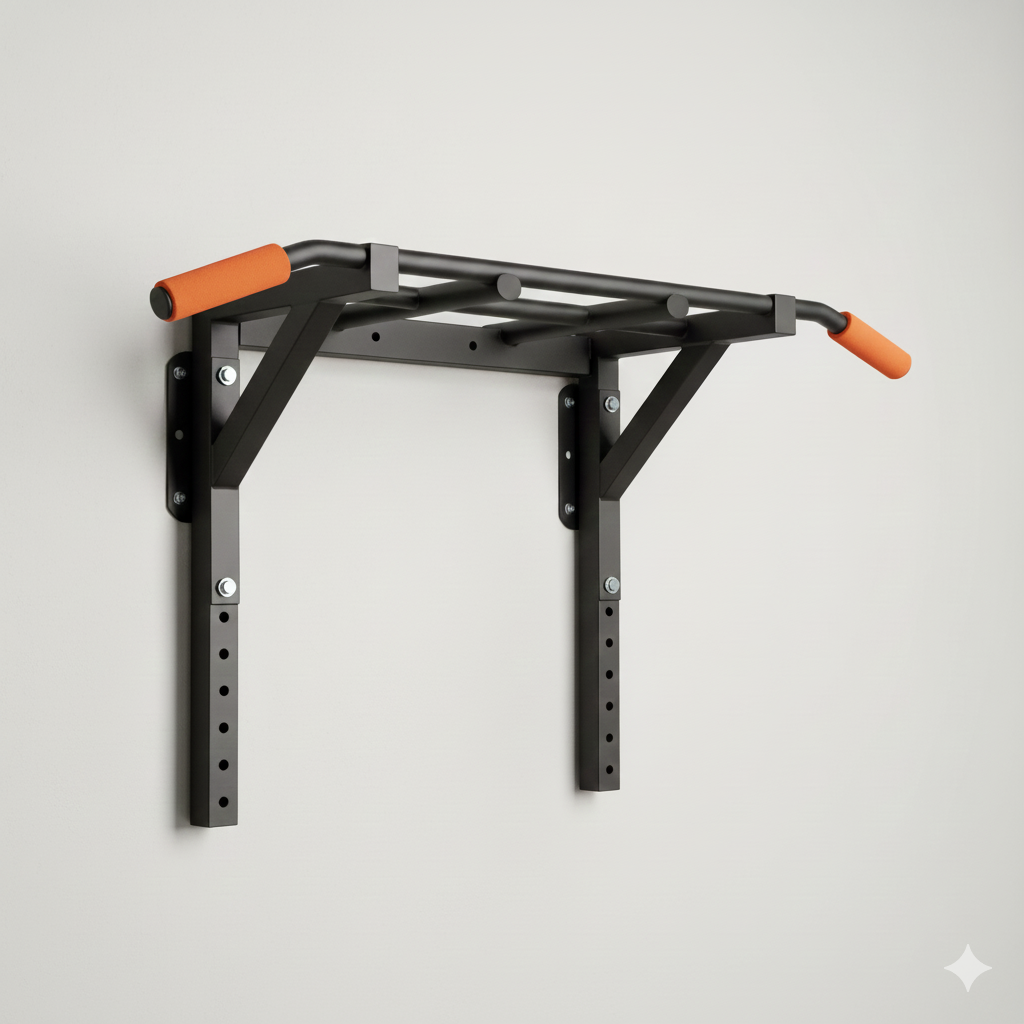
Vertical thinking. Wall-mounted pull-up bars use dead ceiling space. Resistance bands anchor in door frames. Rings (gymnastic-style) hang from ceiling hooks and fold away in seconds. A 2m x 2m space can support more training variety than you'd expect when you think vertically.
Structured programmes beat random training. With limited equipment, following a clear programme matters more than in a fully equipped gym. A 3-day dumbbell programme (push/pull/legs or upper/lower split) uses everything you have efficiently without you having to plan each session from scratch. Our home gym workout plan covers structured approaches for dumbbell-only training.
The constraint of a small space often produces better training habits than unlimited gym access. When you can't wander between machines, you train with more intention. Most people who move from a commercial gym to a small home gym find they train harder and more consistently, not despite the constraints, but because of them. The kit you need fits in a corner. The time you save not commuting goes back into your session. Two square metres and a pair of dumbbells is genuinely enough to start and sustain a training habit for years.
Budget Tiers for Small Spaces
Not every small-space gym needs to cost 500 pounds. Here's what each level gets you:
Under 100 pounds: Resistance bands (10 pounds), yoga mat (15 pounds), doorway pull-up bar (30 pounds), ab wheel (12 pounds). This covers bodyweight training with added resistance, pulling movements, and core work. Effective for general fitness and toning. Stores in a single drawer plus a door frame.
100-250 pounds: Add a pair of adjustable dumbbells (80-200 pounds depending on type). This is where real strength training starts. Every upper body exercise becomes available. Combined with bands and a pull-up bar, you have a legitimate training toolkit.
250-400 pounds: Add a foldable bench (90 pounds). This unlocks bench press, incline work, supported rows, and seated exercises. The bench transforms the dumbbell from a standing-only tool into a full gym. For most people, this tier is the sweet spot between cost, space, and training capability.
400-600 pounds: Add a spin bike or magnetic rower (150-250 pounds). Dedicated cardio that stays quiet for flat living. This is the "complete small-space gym" tier. Beyond this, you're into rack-and-barbell territory that most small spaces can't support.
Making Noise Manageable
Noise is the number one reason small-space home gyms fail in shared buildings. It's also the most solvable problem.
The physics of gym noise: Impact noise (dropping weights, jumping) travels through floors and walls as vibration. Airborne noise (fan resistance, music) travels through air gaps. Impact noise is harder to control and more disruptive to neighbours.
What actually works: - 15mm+ rubber mat under your entire training area (not just under the bench). This reduces impact transmission by 60-70% compared to bare floor. - Controlled lowering on every rep. Never drop dumbbells. The habit of setting weights down quietly is worth developing early. - Magnetic resistance equipment exclusively. No fan rowers, no air bikes, no treadmills with impact belts. - Training shoes with flat, cushioned soles rather than barefoot on hard floors. - A schedule. Train between 8am and 9pm, and the occasional noise is within what most building management considers reasonable use.
What doesn't work: Foam puzzle mats (too thin, compress under load), carpet (unstable base, doesn't absorb impact), rugs (slip hazard). Spend the money on proper rubber. It's a one-time cost that saves the relationship with your neighbours.
Storage Solutions That Actually Work
The difference between a functional small-space gym and a cluttered room is storage discipline. Every piece of equipment needs a home it returns to after every session.
Behind-the-door storage. The space behind a bedroom or spare room door fits a foldable bench (leaned flat), a yoga mat (hung on a hook), and resistance bands (small hook or drawer). This is dead space in most rooms that costs nothing to use.
Under-bed storage. A foldable bench slides under most UK double beds with 15-20cm clearance. Exercise mats roll and fit alongside. This keeps the training area completely clear between sessions.
Wall-mounted options. A single shelf at 1.5m height holds a pair of adjustable dumbbells, a kettlebell, and a foam roller. Wall-mounted pull-up bars stay permanently installed. Gymnastic rings hang from a ceiling hook and coil against the wall. Total wall space used: about 60cm.
The "gym in a box" approach. Everything except the pull-up bar fits inside a 60cm x 40cm storage box: bands, handles, ab wheel, skipping rope, wrist wraps, chalk. Slide the box under a desk or into a wardrobe. Setup time: 30 seconds. Teardown: the same.
The goal is zero visible gym equipment when you're not training. If the room looks like a bedroom (or office, or living room) when visitors arrive, you've solved the storage problem.
Renter-Friendly Setup
If you rent, permanent modifications are off the table. Everything needs to be removable.
Pull-up bars: Pressure-mounted doorway bars (no screws) work in most UK door frames. Remove before inspections. Leave no marks.
Flooring: Interlocking foam tiles protect floors without adhesive. Lift and stack when you move out. They also reduce noise to downstairs neighbours better than a single exercise mat.
Wall protection: If using bands anchored in a door, add a small towel between the band and the door edge to prevent scuff marks on the paintwork.
Deposit protection: Photograph the room before setting up and after taking down. Document that no damage occurred. A rubber mat under the dumbbell base prevents floor dents that could cost you a deposit deduction.
Mistakes Small-Space Gym Builders Make
Buying equipment you need to move every session. A treadmill that folds, then unfolds, then gets pushed back -- sounds like a good idea and becomes a deterrent within weeks. The friction of setup kills the habit. Choose equipment that stays ready to use. A barbell in a corner, kettlebells on a shelf, a pull-up bar in a doorframe -- these create zero setup cost.
Misjudging clearance requirements. The machine dimensions are not the space dimensions. You need clearance around equipment for safe movement. A 150cm jump rope requires 60cm of ceiling clearance above your head plus the rope length. A bench needs a metre in front and behind it for loading and unloading. Measure the actual workout space, not just the footprint of the equipment.
Scaling to the dream gym rather than the starting habit. Two weeks into training is too early to buy a half rack. Start with kettlebells or adjustable dumbbells and a mat. Add equipment when you've proved the habit. Premature scaling wastes money and creates clutter that makes the space feel chaotic rather than purposeful.
Progressive Overload in a Small Space
The concern with small-space gyms is running out of progression. Here's when it actually happens and what to do about it.
Dumbbells: Adjustable dumbbells typically max out at 25-32kg per hand. For most people, this is 18-24 months of progression on upper body exercises. When you hit the ceiling on bench press, shift to slower tempos (3-second lowering phase), pauses at the bottom, and single-arm variations. These extend the useful range of the weight by months.
Bands: Add bands over dumbbells for variable resistance. A medium band draped over your back during dumbbell press adds 5-10kg at the top of the movement where you're strongest. This technique is used in competitive powerlifting and works just as well in a bedroom.
Bodyweight: Pull-ups, dips (between chairs), push-ups, single-leg squats. These movements progress through difficulty variations rather than weight. A strict single-leg squat is harder than most people's barbell squat.
When you genuinely need more: If you've been training consistently for 18+ months, can goblet squat 32kg for 15 reps, and want to add barbell training, you've outgrown the small space. That's a success, not a failure. Move to a garage, spare room, or keep the small-space setup for upper body while adding a barbell elsewhere.
Making It Work Long-Term
The constraint of a small space often produces better training habits than unlimited gym access. When you can't wander between machines, you train with more intention. Most people who move from a commercial gym to a small home gym find they train harder and more consistently, not despite the constraints, but because of them.
The real test is month six, when the novelty has worn off and the habit has to carry itself. The setups that survive are the ones where equipment stays accessible, storage is effortless, and the transition from "not training" to "training" takes less than a minute. A pair of dumbbells on a base in the corner, a bench leaned against the wall, a pull-up bar in the doorframe. Walk in, pick up, start.
Two square metres and a pair of adjustable dumbbells. That's genuinely all you need to build a training habit that lasts years. Everything after that is refinement, not requirement. The space doesn't need to be perfect. It needs to be available.
As an Amazon Associate, we earn from qualifying purchases.
Products Mentioned in This Guide
Frequently Asked Questions
Related Guides
Find Your Perfect Equipment
Expert guides for racks, barbells, plates, benches, and more. Build your home gym the right way.
Browse All Guides