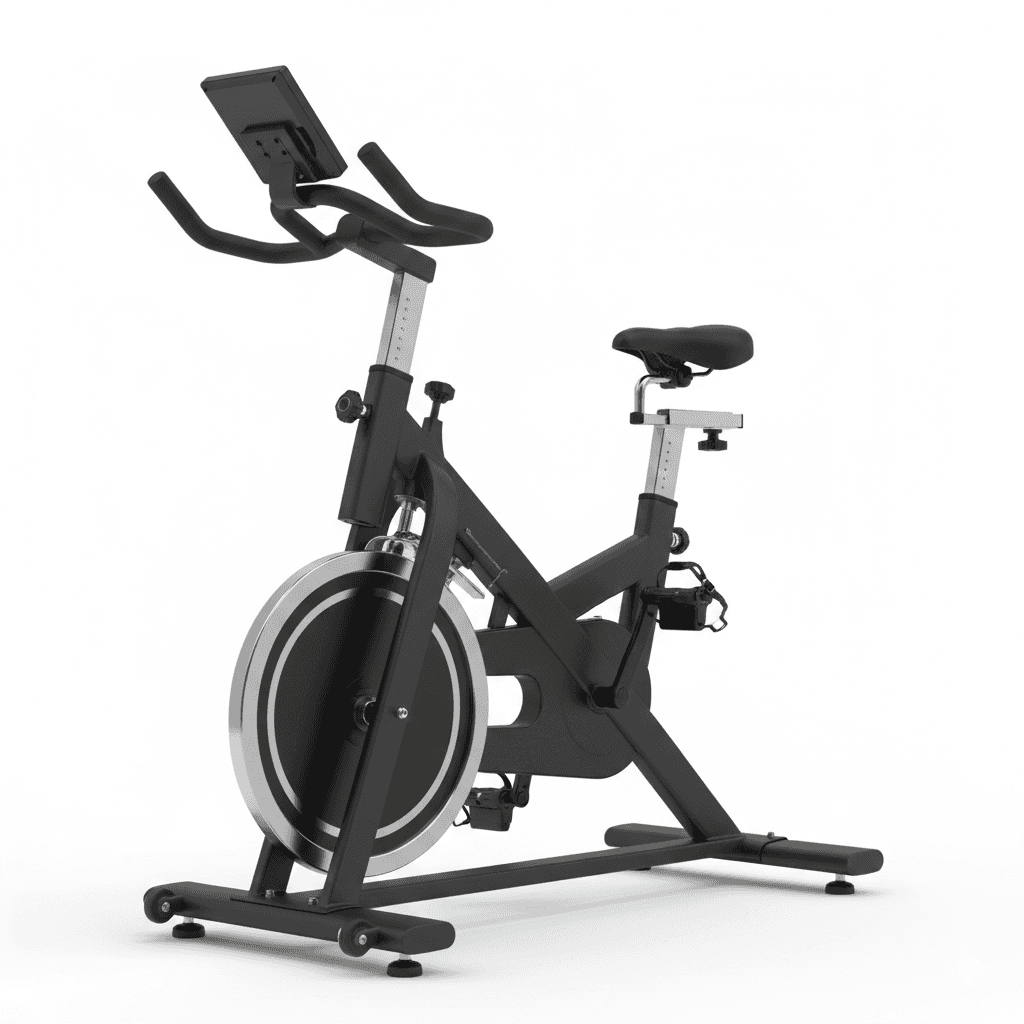
Best Exercise Bikes 2026

Thirty years of training at home. Built multiple home gyms from bare garages to proper setups. I know what equipment lasts, what breaks, and what becomes an expensive clothes rack.
Just so you know, some links on this page are affiliate links. If you buy something via them, we get a small kickback. You don't pay more, but it helps toward the next bit of kit.
Looking for more equipment recommendations?
Browse All GuidesA good exercise bike is the cardio machine you'll actually use. Silent enough for 6am, compact enough for a bedroom corner, and effective for everything from steady recovery rides to intervals that make your legs burn. The wrong one, and there are plenty - wobbles under load, squeaks on every stroke, and ends up as an expensive clothes rack.
Quick Picks
| Model | Flywheel | Best For | |
|---|---|---|---|
| WENOKER Exercise Bike | 22 lb | Budget buyers | Check Price on Amazon |
| MERACH Exercise Bike | 40 lb | Most people | Check Price on Amazon |
| Concept2 BikeErg | Air | Premium training |
Prices shown are approximate at time of review. Click "Check Price on Amazon" for current pricing.
What to Look For
Resistance type determines feel and noise level. Magnetic resistance is virtually silent, important in flats. Friction resistance is louder but often cheaper. Flywheel weight affects smoothness: heavier is better.
Adjustability matters more than you'd think. A bike that doesn't fit properly leads to knee pain and abandoned workouts.
Best Budget: WENOKER Exercise Bike
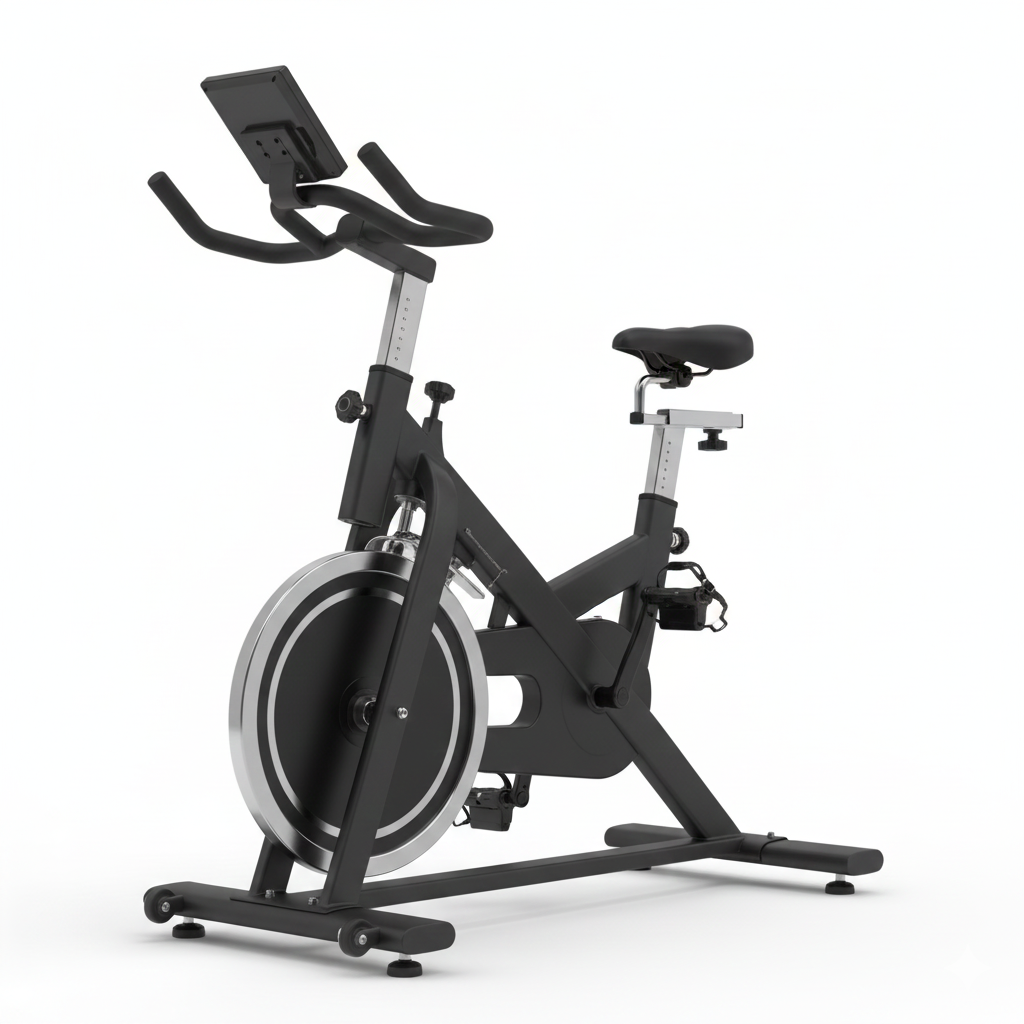
The WENOKER Magnetic Exercise Bike delivers serious value. 35 lb flywheel delivers smooth resistance, and the build quality embarrasses bikes twice the price. *(Price when reviewed: roughly $180 | Check Price on Amazon)*
LCD shows speed, distance, calories, and time. Heart rate sensors in the handles. Adjustable resistance dial lets you simulate hills.
It's not a Peloton, but it delivers 90% of the value at 10% of the price.
Best Mid-Range: MERACH Exercise Bike
The MERACH Stationary Exercise Bike steps up with a 40 lb flywheel for near-silent operation. Tablet holder lets you follow YouTube workouts or streaming classes. *(Price when reviewed: around $290 | Check Price on Amazon)*
Build quality is a clear step up from budget options. The magnetic resistance is smooth and consistent across all levels.
Best Premium: Concept2 BikeErg
At premium price points, consider the Concept2 for gym-quality performance. Multiple resistance levels, Bluetooth connectivity for apps, and a build that'll handle daily abuse for years.
Premium bikes work with Zwift, Peloton Digital, and other training apps. All the smart features without the subscription lock-in.
For Small Spaces
Look for foldable options if space is tight. Most exercise bikes need about 4' x 2' floor space. Check measurements before buying. Some "compact" bikes are larger than they claim.
The MERACH Exercise Bike has transport wheels for easy moving between rooms.
Spin Bike vs Exercise Bike
Spin bikes like the MERACH Exercise Bike position you leaning forward like a road bike. They're better for intense workouts and standing climbs.
Upright exercise bikes have you sitting more upright. They're easier on the back but less effective for serious fitness.
For home gym use, spin-style bikes offer better workouts and more versatility. If you'll use it regularly and have $290 to spend, the MERACH is the clear choice - the flywheel difference over budget bikes is immediately noticeable and makes it something you'll actually want to ride. Skip anything under $100. Those bikes are fitness equipment in the same way a plastic guitar is a musical instrument.
What the Specs Actually Tell You
Before buying an exercise bike, understand the two numbers that matter most.
Flywheel Weight
The flywheel is the heavy wheel that creates resistance. Heavier flywheels provide smoother, more consistent pedalling -- the momentum carries through the dead spot at the top and bottom of each pedal rotation.
Under 25 lb: Noticeable lurch at low cadence. Feels cheap. Fine for walking-pace pedalling. 30-40 lb: The range where exercise bikes start feeling like actual bikes. The sweet spot for home use. 40+ lb: Competition-level smoothness. Worth it if you do high-cadence interval training.
The WENOKER at approximately $180 has a 35 lb flywheel. The MERACH at roughly $290 has a 40 lb flywheel. That 5 lb difference is noticeable at higher intensities -- it's part of why the MERACH is the pick for most people.
Resistance Type
Magnetic resistance: A magnet adjusts proximity to the flywheel to increase or decrease resistance. No friction contact means near-silent operation. The mechanism doesn't wear out. Almost all modern exercise bikes use magnetic resistance. This is what you want.
Friction resistance: A physical brake pad contacts the flywheel. Creates more noise, wears out over time, and gives less consistent resistance across the range. Found on very cheap bikes and some spin bikes. Avoid it.
The Full Breakdown: WENOKER Exercise Bike
The WENOKER Magnetic Exercise Bike at around $180 covers the basics without compromise.
What works well: - 35 lb flywheel is smooth at moderate cadences - Magnetic resistance with 35 adjustable levels - LCD console shows speed, distance, time, calories - Handlebar pulse sensors for rough heart rate monitoring - Fully adjustable seat height, handlebar height, and fore/aft seat position - 330 lb weight capacity - Transport wheels for moving between rooms
What to know: - The console is basic. No Bluetooth, no app connectivity, no automatic workout tracking. - Seat height adjusts on a standard post, so it fits most people. Handlebar height adjusts independently. - Assembly takes 45-60 minutes from box. All tools included.
Good choice if you want low-maintenance cardio without spending more than necessary. The 330 lb capacity is one of the higher limits in this price range.
The Full Breakdown: MERACH Exercise Bike
The MERACH Stationary Exercise Bike at around $290 is the step-up most people should consider if they'll use the bike consistently.
What works well: - 40 lb flywheel is noticeably smoother than budget options - Whisper-quiet magnetic resistance - Tablet holder for following YouTube workouts or streaming - Dual-sided SPD/toe cage pedals -- compatible with cycling shoes or regular sneakers - Multiple resistance levels with Bluetooth app connectivity - Heart rate straps included with some models
What to know: - The MERACH app tracks workouts and syncs with Apple Health and other platforms. - Some buyers find the console display dimmer than expected. Phone screen on the tablet holder is more practical anyway. - Seat is comfortable for 30-45 minute sessions. Longer sessions may benefit from a padded seat cover.
The dual-sided pedals are the practical standout feature -- if you ever decide to use cycling shoes, you can without buying new pedals.
Spin Bikes vs Upright Exercise Bikes
These are distinct products, though they're often sold under the same category.
Upright exercise bikes: Sit upright, handlebars in front. Comfortable for extended low-intensity sessions. Better for people who want casual cardio. Limited range of body positions.
Spin bikes (indoor cycling bikes): Forward-leaning position similar to a road or track bike. More aggressive, more positions available (standing, sprinting, climbing). Better for high-intensity interval training. What you'll find in spinning classes.
The WENOKER and MERACH above are both spin-style bikes -- forward lean, clip or cage pedals, heavy flywheel. They're more versatile for training than upright bikes and are what most serious home gym buyers prefer.
Upright bikes make sense for rehabilitation, older users who want comfort over intensity, or anyone who wants steady-state cardio while watching TV without leaning forward.
Common Mistakes When Buying an Exercise Bike
Buying a Peloton-style bike for the classes without testing if you'll use them. The monthly subscription cost ($44/month) adds $528/year on top of the machine cost. If you already know you respond well to instructor-led classes, it's worth it. If you're hoping the classes will motivate you to train, test with a month's app-only subscription ($13/month without the bike) before committing.
Choosing an upright bike when a spin bike would get used more. Spin bikes are more engaging for most fitness-focused users. The ability to stand on the pedals and do sprint intervals changes the quality of workout significantly.
Ignoring assembly difficulty. Most exercise bikes arrive 60-70% assembled. Budget 45-90 minutes and check that the package includes all hardware. Reviews that mention missing bolts are a red flag.
Buying solely on price under $150. Below $150, flywheel weights typically drop to 20 lb or less and magnetic resistance is replaced with friction. The workout feels noticeably worse and the mechanism wears out faster. The WENOKER is close to the minimum for a decent workout.
Frequently Asked Questions
How much room does an exercise bike need?
Most spin-style exercise bikes need approximately 4 feet by 2 feet of floor space -- roughly the footprint of a large suitcase. Add 12-18 inches around the bike for comfortable mounting and dismounting. A 5x6 foot area is sufficient for the bike plus movement space. Transport wheels on most models let you roll it against a wall when not in use.
Are exercise bikes good for weight loss?
Yes. A 45-minute moderate-intensity cycling session burns approximately 350-450 calories depending on weight and effort level. Consistent cycling combined with appropriate nutrition produces real fat loss. The practical advantage over treadmills for weight loss purposes: significantly lower injury risk, which means more consistent training over weeks and months without setbacks.
How do you know if you're working hard enough?
The conversation test is the simplest metric: you should be able to speak in sentences but not paragraphs. That's moderate intensity -- the zone where aerobic fitness improves fastest. For interval training, alternate between all-out effort (60-90 seconds) and easy recovery (60-90 seconds). Aim for RPM above 80 during hard intervals.
Do exercise bikes build leg muscle?
They build muscular endurance in the quads, hamstrings, and calves -- the ability to sustain effort for long periods. They don't build maximum strength or size the way squats and leg press do. For larger legs, you need progressive resistance training (adding weight over time). For leaner, more defined legs with improved endurance, cycling is effective.
Can you use an exercise bike if you have knee problems?
Generally yes -- cycling is lower impact than running and typically recommended for knee rehabilitation. The key is proper seat height: your knee should have a slight bend (10-15 degrees) at the bottom of the pedal stroke, not fully extended. If the seat is too low, it puts strain on the front of the knee. If it's too high, it strains the back. Get the fit right first. Check with a physio if you're recovering from a specific injury.
Resistance Types and What They Mean for Your Training
The resistance mechanism determines how the bike feels and how long it lasts.
Magnetic resistance uses magnets near the flywheel. No physical contact means no wear, no noise, and no maintenance. The feel is smooth and consistent. Every premium bike in this guide uses magnetic resistance. This is the standard for home use.
Friction resistance uses a felt pad pressing against the flywheel. Turning the resistance knob increases pressure. This creates audible contact noise and the pad wears over time. Replacement pads cost around $8-15 and last 12-18 months of regular use. The advantage: friction resistance feels more natural and responsive than cheap magnetic systems at low price points.
Direct contact resistance found on the cheapest bikes uses a brake pad against the wheel. Avoid these. They wear fast, create inconsistent resistance, and screech at high intensity.
Noise Levels for Apartments and Shared Walls
This matters enormously in American apartments and condos.
Belt-drive bikes (Schwinn IC4, Bowflex VeloCore) are the quietest. At moderate intensity, the loudest sound is your breathing. These bikes work at 5am in an apartment bedroom without complaints from neighbours below or beside you.
Chain-drive bikes produce a low mechanical hum. Not loud, but audible in a quiet room. They need occasional chain lubrication every 3-6 months.
Flywheel weight affects smoothness but not noise. Heavier flywheels (35lb+) produce smoother pedal strokes. Lighter flywheels (15-25lb) feel choppy at low cadence. For comfortable riding, 30lb minimum is the sweet spot.
Heart Rate Training Zones
Heart rate training transforms random cycling into structured fitness.
Zone 2 (60-70% max HR): Aerobic base. Most time here. The foundation of cardiovascular health. Conversational pace. Zone 4 (80-90%): Threshold. Hard but sustainable for 20-30 minutes. Race-pace effort. Zone 5 (90-100%): Maximum. 30-60 seconds only. Used in HIIT intervals.
Pedal Types and Upgrades
Most bikes ship with flat pedals and toe cages. These work with any shoes. Clipless pedals transform the experience.
SPD pedals are the common standard. Many bikes accept SPD replacements (around $20-30 for pedals, $40-60 for entry-level cycling shoes). The locked connection means you pull up and push down, increasing output by 10-15%.
Saddle Comfort: The Habit Killer
Saddle discomfort ends more exercise bike routines than anything else. Most people blame the bike when the issue is setup.
Saddle height: With one pedal at the lowest point, your knee should have a 25-35 degree bend. Too low causes knee pain. Too high causes hip rocking and soreness.
Saddle swap: Stock saddles on bikes under $400 are narrow and hard. A wider, padded replacement (around $20-30) transforms the experience. Gel covers are a cheaper option but shift during intense riding.
Padded shorts make more difference than saddle upgrades for sessions over 30 minutes. A basic pair costs $15-25 and eliminates pressure points.
Peloton Alternatives
Training Programmes That Work on Any Bike
Steady state (Zone 2) is the foundation. Ride at a pace where you can talk but would rather not. 30-45 minutes, three times per week, produces measurable fitness improvement in four weeks. This is where most health benefits come from.
Interval training produces faster results but is harder to sustain. 30 seconds maximum effort, 90 seconds easy, repeated 8 times. Total: 16 minutes plus warmup. Two sessions per week alongside steady state is the sweet spot.
What to Avoid
Bikes with resistance mechanisms that do not work smoothly at higher settings. This is the failure mode of budget exercise bikes. The resistance feels appropriate at levels 4-6 but becomes jumpy or inconsistent above level 8, where the magnetic braking system has poor calibration. For most people who train consistently, the lower resistance range is not challenging enough after the first two months. Buy a bike where user reviews specifically mention resistance quality at higher settings, not just "works great" in general.
Bikes with small, heavy flywheels. Flywheel mass determines how smooth the pedalling motion feels. Budget bikes use 8-12 lb flywheels that create a choppy, stop-start feel at lower cadences. The MERACH uses an 18 lb flywheel. The WENOKER uses a 15 lb flywheel. Both provide a smoother pedal stroke than entry-level options with 8-10 lb flywheels. Smooth pedalling reduces knee strain and makes sustained cardio sessions significantly more tolerable.
Peloton Bike at full retail price without understanding the subscription. The Peloton Bike is well-built hardware. But the software and coaching features that justify the price require a $44/month subscription. Without the subscription, it is a stationary bike with a screen that shows basic metrics. If the Peloton classes are what you want and you will use them consistently, the total cost of ownership is reasonable. If you want a solid stationary bike for independent training, the MERACH gives better value for the actual cycling experience.
Bikes without adjustable seat height and reach. Poor bike fit causes knee pain and discomfort that stops sessions early. The seat height should place a slight bend in the knee at the bottom of the pedal stroke. The handlebar reach should allow a comfortable slight forward lean without straining the lower back. Most quality exercise bikes include both adjustments. Check that any bike you are considering has both before purchasing, and adjust them properly before your first session.
FAQ
How long should I cycle per session? For cardiovascular fitness, 20-30 minutes at moderate resistance is a solid session. For weight loss, 30-45 minutes at a conversational pace burns meaningful calories without requiring high intensity. High-intensity interval training on a bike works well in shorter sessions: 20 minutes of hard intervals produces significant cardiovascular and metabolic adaptation. If you are new to the bike, start with 15-20 minute sessions and build from there. Consistency over weeks matters more than session length on any given day.
What resistance level should I use? A resistance where pedalling at 80-90 RPM requires effort but is sustainable for the session. If you can easily hold a full conversation without any breathing change, the resistance is too low. If you can only manage 2-3 words between breaths, it is too high for steady-state work. On a 32-level bike, most people settle into the 8-14 range for general training. Adjust upward as your fitness improves over weeks.
Is an exercise bike good for weight loss? Yes, when combined with consistent use. The calorie burn per session varies by intensity and bodyweight, but 30 minutes of moderate cycling burns 200-300 calories for most people. The more important factor is sustainability. An exercise bike in the home that gets used four times per week delivers far better results than the most sophisticated gym program you only make it to twice. The bike wins through accumulated consistent sessions, not through any single high-intensity effort.
Should I buy a spin bike or an upright exercise bike? Spin bikes use a heavier flywheel and a design closer to a road bike, with a stiffer feel and more resistance range for high-intensity work. Upright exercise bikes are more comfortable for longer sessions and typically include console features like heart rate monitors and preset programs. For high-intensity intervals and cycling-specific training, the spin bike is better. For general cardio and longer steady-state sessions, the upright is more comfortable. The MERACH and WENOKER are both upright designs suited to general cardio use.
The Bottom Line
An exercise bike is one of the most reliable home cardio purchases available. The combination of low injury risk, compact footprint, near-silent operation, and consistent calorie burn makes it the cardio equipment most people actually stick with.
The WENOKER handles everything from recovery rides to moderate intervals at a price that's easy to justify. The MERACH is where most people who train consistently should land -- the build quality and flywheel improvement are worth the extra $110 over the long run.
Buy either one, set it up in a corner, and actually use it three times a week. The consistency is what matters. Everything else is detail.
What You'll Need With It
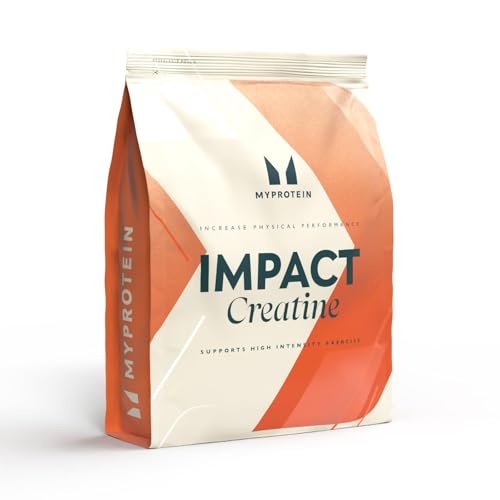
Pure creatine monohydrate powder - the most researched and effective supplement for strength and muscle gains. 5g per serving, unflavoured. Mixes easily with water or protein shake.
As an Amazon Associate, we earn from qualifying purchases.
Products Mentioned in This Guide
Frequently Asked Questions
Related Guides
Find Your Perfect Equipment
Expert guides for racks, barbells, plates, benches, and more. Build your home gym the right way.
Browse All Guides