Home Gym on a Budget: Complete UK Guide

Thirty years of training at home. Built multiple home gyms from bare garages to proper setups. I know what equipment lasts, what breaks, and what becomes an expensive clothes rack.
Just so you know, some links on this page are affiliate links. If you buy something via them, we get a small kickback. You don't pay more, but it helps toward the next bit of kit.
Looking for more equipment recommendations?
Browse All GuidesA proper home gym for under £500 changes how you train forever. No waiting for equipment. No commute. No monthly fee draining your account. Just walk into the spare room and start lifting. The trick is buying in the right order so every pound works hard from day one, rather than ending up with a £300 coat rack in the corner.
Short on time? Grab a set of PROIRON 40kg adjustable dumbbells at around £65 and a pull-up bar. That covers 80% of what you need for under £200. Read on for the full buying order.
Budget Tiers at a Glance
| Budget | Equipment | What You Can Train |
|---|---|---|
| Under £200 | Dumbbells + bands + pull-up bar + mat | Full body, upper and lower |
| £300-400 | Above + adjustable bench | Full dumbbell gym, every angle |
| £500-600 | Above + selectorised dumbbells | Serious training for years |
| £800+ | Above + squat rack + barbell + plates | Complete strength gym |
Every tier builds on the last. You never throw away what you bought before, just add to it.
The Right Buying Order
Most people get this wrong and end up with expensive equipment gathering dust. The order matters because each piece only becomes useful once you have the one before it.
1. Resistance bands and exercise mat (around £20-30) - Start here. Bands cost almost nothing, take up zero space, and make every bodyweight exercise harder than you expect. Banded push-ups, banded squats, banded rows. A basic exercise mat protects your floor and your knees. This is your day-one kit.
Gritin Resistance Bands: Five resistance levels covering warm-up, mobility, and genuine training resistance. These last years with normal use. *(around £10 | Check Price on Amazon)*
2. Adjustable dumbbells (around £65-200) - The single highest-impact purchase you will make. A pair of adjustable dumbbells in a corner replaces an entire rack of fixed weights. Every upper body exercise. Most lower body exercises. If you only ever buy one piece of equipment, make it these.
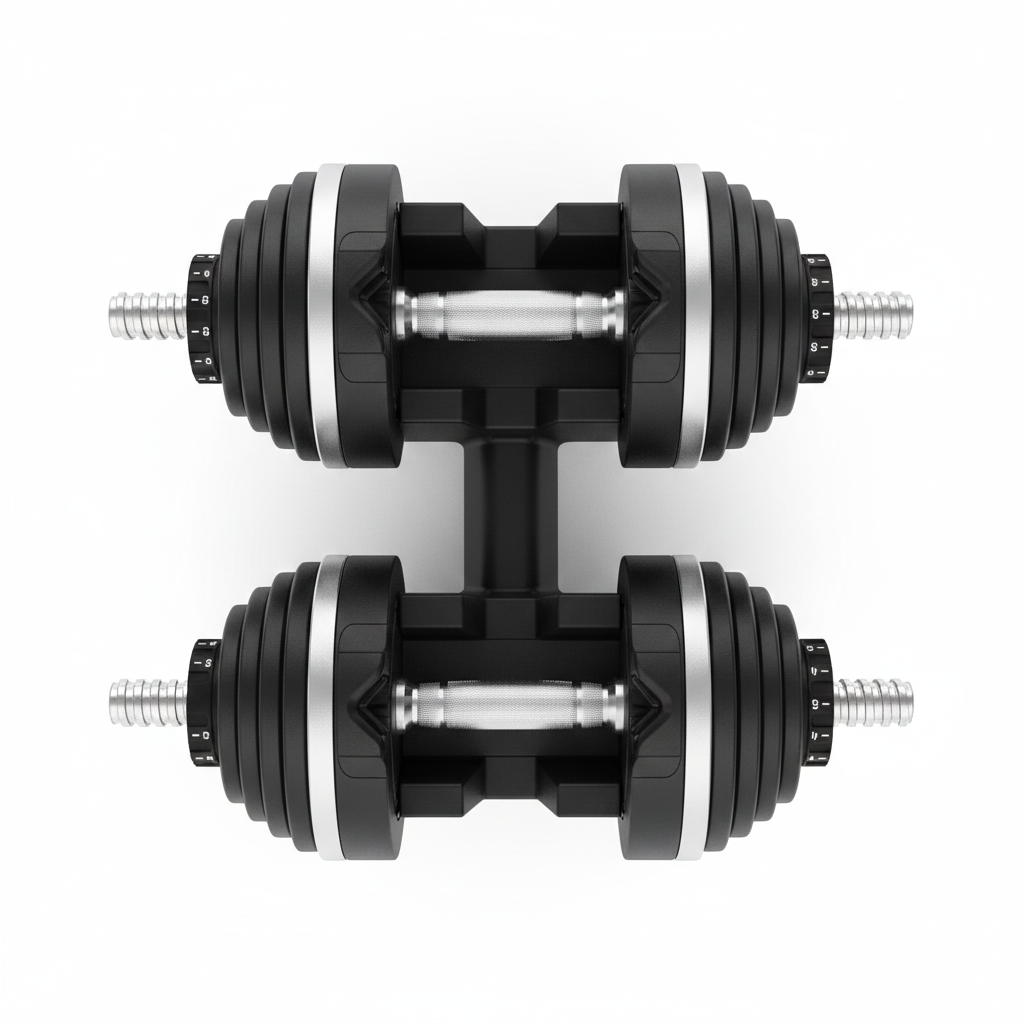
PROIRON Adjustable Dumbbells 40kg: Cast iron plates, simple spin-lock mechanism. Not the fastest to adjust between sets, but the reliability is bulletproof at this price. You will still be using these five years from now. *(around £65 | Check Price on Amazon)*
3. Pull-up bar (around £25-90) - Adds the pulling movements that dumbbells alone cannot replicate. Pull-ups, chin-ups, hanging leg raises. A doorframe bar works if you are renting. A wall-mounted bar is better if you can drill into brick or stud.
ONETWOFIT Wall Mounted Pull Up Bar: Wall-mounted, handles 200kg, covers pull-ups, chin-ups, and hanging core work. The multi-grip handles let you vary your grip width and angle. *(around £90 | Check Price on Amazon)*
4. Adjustable bench (around £100-170) - Unlocks the full dumbbell toolkit. Without a bench you cannot press properly, cannot do incline work, cannot do supported rows. Add this once you have confirmed training is a habit, not a New Year experiment.
Mirafit M150 Adjustable Bench: The bench most UK home gym owners settle on. 260kg capacity, 6 backrest angles, 28kg of solid construction that does not wobble under load. *(around £150 | Check Price on Amazon)*
5. Barbell setup (around £300-500) - Rack, bar, plates. Add this when you have genuinely exhausted what dumbbells can do, which for most people takes 12-24 months of consistent training. Not before.
The reason this order works: each piece builds on the last. Bands teach movement patterns. Dumbbells add load. A pull-up bar adds vertical pulling. A bench adds pressing angles and stability. The barbell adds the heavy compound movements that dumbbells physically cannot replicate above a certain weight. Skip a step and you either spend money on something you do not use or create gaps in your training.
Most people who regret their home gym bought out of order. The £800 multi-gym that becomes a clothes rail. The rowing machine purchased before a single dumbbell. The full Olympic plate set for someone who has not learned a goblet squat yet. Follow the sequence and every purchase earns its keep before the next one arrives.
Space Requirements
You need less room than you think. Here is what each tier actually requires:
Bands and mat only: 2m x 1.5m (3 sq m). A yoga mat's worth of floor space. Works in any room including a bedroom.
Dumbbells and bench: 2.5m x 2m (5 sq m). The bench needs about 1.5m length, plus room to stand either side of it. A single garage or box room handles this easily.
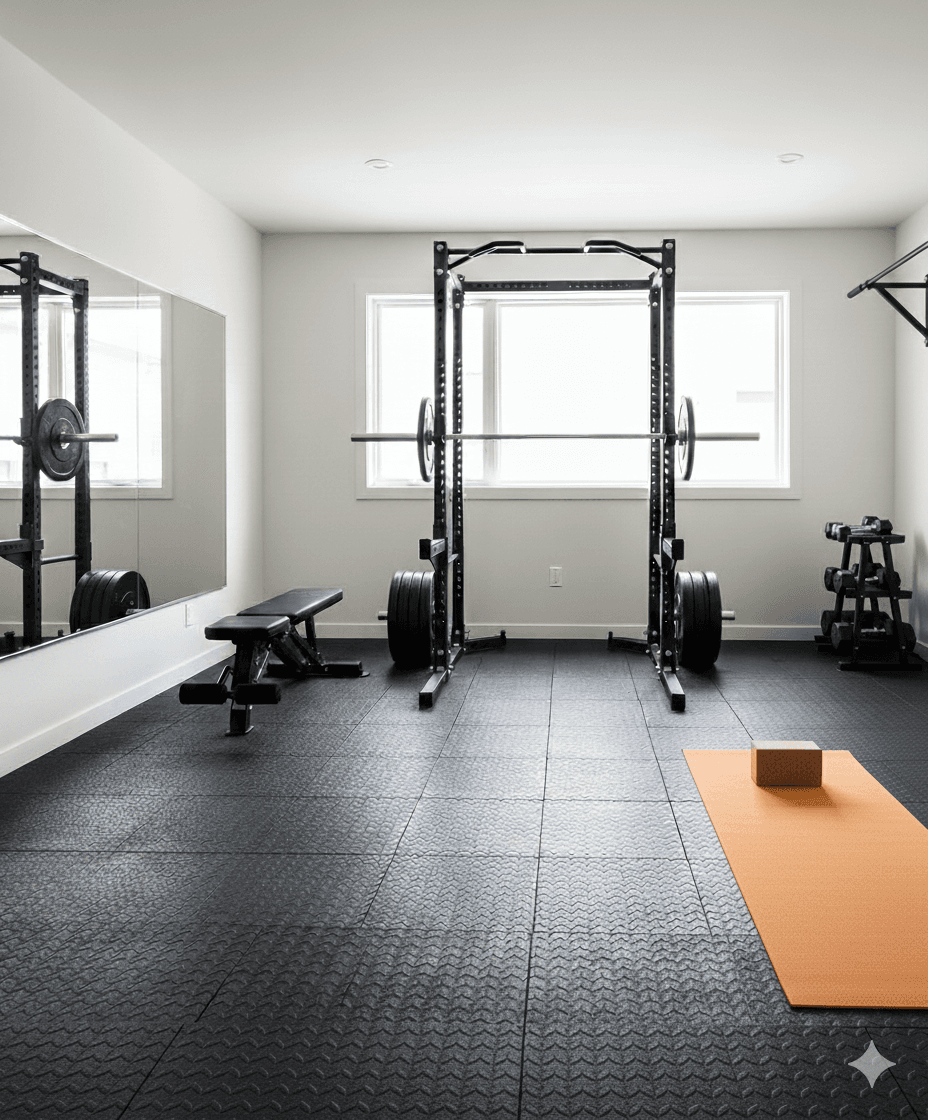
Full rack setup: 3m x 3m (9 sq m) minimum. The rack itself occupies about 1.2m x 1.2m, but you need clearance either side for loading plates and space in front for deadlifts. A single garage works. A double garage gives you room to grow.
Ceiling height matters for pull-ups. You need at least 2.2m from floor to the top of your pull-up bar, plus enough clearance above it that your head does not hit the ceiling. Standard UK room height is 2.4m, which is tight but workable for most people. If your ceiling is lower, a doorframe pull-up bar that mounts lower solves this.
Flooring. Rubber gym tiles (around £30-50 for enough to cover a lifting area) protect your floor from dropped dumbbells and give your feet grip during squats and deadlifts. In a garage, they also add a layer of insulation. Worth every penny, even on a tight budget.
The Under £200 Starter Setup
This gets you training properly from day one. Total investment: under £200.
Your kit list: PROIRON adjustable dumbbells (around £65), ONETWOFIT pull-up bar (around £90), Gritin resistance bands (around £10), exercise mat (around £15-20). All the products are linked in the buying order section above.
What this covers: push-ups, dumbbell press, dumbbell rows, curls, overhead press, lateral raises, goblet squats, lunges, Romanian deadlifts, split squats, pull-ups, chin-ups, hanging leg raises, banded exercises for every muscle group. That is a genuinely complete full-body programme.
What it does not cover: bench press and incline pressing (need a bench), heavy barbell compounds like squats and deadlifts (need a rack). Those come later when you need them, not before.
For most people, this setup handles 90% of what they would do in a commercial gym. The only movements you truly miss are the heavy barbell compounds, and most beginners should not be loading a barbell in their first six months anyway.
The £350 Foundation Setup
Add the bench and your training options nearly double.
Everything from the starter setup, plus the Mirafit M150 adjustable bench (around £150, linked above).
The bench transforms what dumbbells can do. You unlock flat bench press, incline press for upper chest development, supported single-arm rows, seated shoulder press, preacher curl position, and lying tricep extensions. Every pressing and rowing variation opens up once you have a stable, angled surface to work from.
Total: around £350. For most people, this is a complete home gym that genuinely replaces a membership. You can run a serious training programme on this for years without needing anything else.
The £550 Serious Setup
Upgrade the dumbbells to fast-adjust selectorised and training starts feeling like a luxury rather than a compromise.
Everything from the foundation setup, but swap the PROIRON spin-lock dumbbells for:
MuscleSquad Adjustable Dumbbells 32.5kg: UK brand, 3-second weight changes via a dial mechanism, goes to 27.5kg per hand. The weight change speed matters far more than you expect during supersets. With spin-locks, you spend 30 seconds fiddling between sets. With these, you twist and go. *(around £200 | Check Price on Amazon)*
Sell the PROIRON dumbbells on Facebook Marketplace for around £40-50, so the real upgrade cost is closer to £150.
Total: around £550. At this level, 27.5kg per hand is enough for most people for two to three years of progressive training. Fast weight changes mean supersets flow naturally and you spend your rest periods recovering, not adjusting kit.
The £800+ Complete Setup
Add the barbell and rack for the full strength training experience.
Everything from the serious setup, plus:
Mirafit M130 Squat Rack: Half rack with safety bars and dip bars included. 250kg rated capacity. The safety bars are non-negotiable if you are training alone, because they catch the bar if you fail a heavy squat or bench press. (around £150)
Strongway Olympic 50KG Set: 20kg Olympic bar plus 30kg of plates. Start here and add more plates as your strength increases. (around £200)
Total: around £900. This is a complete home gym that covers everything from absolute beginner to genuinely advanced lifter. Squats, bench press, deadlifts, overhead press, barbell rows, pull-ups, and every dumbbell variation. There is nothing in a commercial gym you cannot replicate with this setup, apart from cable machines and specialist equipment.
The Phased Buying Path
If the full budget is not available right now, build over months. This is actually the smarter approach because you buy based on proven need rather than guessing.
Month 1: Bands + mat (around £25). Start training immediately. Banded push-ups, banded squats, banded rows, core work on the mat. This is enough to build the habit.
Month 2: PROIRON adjustable dumbbells (around £65). Add real load to everything. Goblet squats, dumbbell rows, dumbbell press, overhead press. You now have a genuine training programme.
Month 3-4: Pull-up bar + bench (around £240 combined). Pull-ups add the vertical pulling your programme is missing. The bench unlocks every pressing angle. This is where most people realise they have built something that actually works.
Month 5-6: Upgrade to MuscleSquad selectorised dumbbells (around £200). Sell the PROIRON for around £40-50. The speed of weight changes transforms how your sessions feel.
Month 7+: Rack and barbell setup (around £350) when you are ready. Many people never reach this stage because the dumbbell and bench setup covers their needs completely. That is fine. Only add the barbell when you have a specific training reason, not because you feel you should.
The beauty of this path is that each month's purchase immediately improves your training. You never spend money on something that sits unused while you figure out the piece you actually needed first.
Training in a Flat or Upstairs Room
One of the most common worries about home gyms is noise. If you train in an upstairs flat or a bedroom above the living room, dropped weights and jumping are genuine concerns for neighbours and family.
Rubber floor tiles solve most of it. A set of interlocking rubber tiles (around £30-50 for a 2m x 2m area) absorbs impact noise from dumbbells being placed down. They do not make dropping a loaded barbell silent, but they handle normal dumbbell work well.
Control the weight down rather than dropping it. The eccentric (lowering) phase of every exercise is half the training benefit anyway. Lowering dumbbells to the floor in a controlled motion is quieter than dropping them and builds more muscle.
Avoid jumping exercises. Box jumps, burpees, and jump squats transmit through floors regardless of matting. Swap them for step-ups, kettlebell swings, and band-resisted squats which load the muscles without the impact.
Deadlifts on a ground floor or garage only. If you progress to barbell deadlifts, do these on a ground floor, in a garage, or on a solid concrete floor. The load and potential for an emergency set-down is too much for most suspended timber floors.
Structural limits. UK residential floors are designed to handle around 1.5 kN per square metre, which works out to roughly 150kg spread across a reasonable area. A person plus a 100kg loaded barbell in a squat is within limits if the load is distributed (rubber tiles help). Do not store all your plates in a single stack in one corner of an upstairs room, because the concentrated point load is the problem, not the total weight. If in doubt, train on the ground floor.
Garage Gym Considerations
A garage is the best space for a home gym in the UK, but garages come with their own challenges.
Condensation and rust. Unheated UK garages are damp from October to April. Morning condensation coats bare metal surfaces. The solution is a small desiccant dehumidifier (around £35-50) running continuously during the cold months. It uses around £5-8 of electricity per month and keeps humidity below the level where rust forms. Silicone spray on barbells and plates once a month adds extra protection.
Insulation. An uninsulated single-skin garage wall drops below 5 degrees C in winter. You can still train in the cold (your body warms up within a few minutes), but the bar feels brutal in your hands. Lifting gloves or a bar pad help for the first few sets. Proper insulation (foam boards on the walls, around £50-80 for a single garage) makes a meaningful difference if you plan to use the space year-round.
Lighting. Most garage strip lights cast shadows that make it hard to judge your form. An LED batten light (around £15-20, 4000K daylight) fitted above your lifting area fixes this. Good light makes a surprisingly large difference to how the space feels.
Power. You probably want at least one socket for a speaker, phone charger, or dehumidifier. Most UK garages have a socket already, but check it works before committing to the space.
Buying Second-Hand (The Smart Budget Move)
The used market for home gym equipment in the UK is genuinely excellent right now. The post-lockdown wave (2020-2021) means thousands of barely-used setups are being sold by people who bought during lockdown and stopped training.
What to buy used: Cast iron plates (they are literally chunks of metal that do not degrade), Olympic barbells (check for a bent shaft by rolling it on a flat surface), squat racks (steel does not wear out from normal use), kettlebells, benches from reputable brands (Mirafit, Bodymax, Bulldog Gear).
What to buy new: Adjustable dumbbells (the mechanisms wear, and you want a warranty), resistance bands (used bands can snap), anything with cables or pulleys (hard to verify cable condition), exercise mats (hygiene).
Where to look: Facebook Marketplace is the best source by far, followed by Gumtree. Search within 15-20 miles of your postcode. eBay collection-only listings are worth checking too, but the buyer protection for heavy equipment is weaker.
What to check in person: Spin the barbell on a flat surface (a bent bar wobbles visibly). Check plate hole diameter (50mm for Olympic, 25mm or 30mm for standard, do not mix them). Check bench padding for tears or compression. Check rack welds for cracks, particularly at stress points where the J-hooks sit. Operate the adjustment mechanism on any adjustable bench to check all positions lock firmly.
Typical savings: Expect 40-60% off retail for equipment in good condition. A Mirafit M150 bench goes for £70-90 used. Olympic plate sets at around £1 per kg used versus £2-3 per kg new. A complete rack plus barbell setup that would cost £400-500 new can be found for £200-250 used if you are patient and check listings regularly.
Timing matters. The best deals appear in February and March when New Year resolution buyers give up. January and September are the worst months to buy (new or used) because demand peaks. If you can wait for the right listing, the savings fund additional equipment.
Where to Save Money (and Where Not To)
Save on plates. Iron plates cost far less per kg used than new. Iron does not wear out.
Save on a kettlebell. One 16kg or 20kg kettlebell covers swings, goblet squats, Turkish get-ups, and carries. Far better value than a matched set to start.
Save on timing. March through May and October through November are the cheapest months for gym equipment. January and September prices spike 15-25% because of demand.
Do NOT save on dumbbells. The adjustment mechanism is where cheap dumbbells fail. Plates that wobble, spin-locks that jam, selectorised mechanisms that stick. The PROIRON is the quality floor. Below that, the mechanism fails within months and you replace them anyway.
Do NOT save on a bench. A bench that collapses during a 40kg dumbbell press is dangerous. Always check the rated weight capacity (it must exceed your bodyweight plus the weight you are pressing) and buy from a brand that publishes it. If the listing does not state a weight capacity, do not buy it.
Do NOT save on a multi-gym. The cable machines and weight stacks in budget multi-gyms (under £300) have low weight limits, cables that fray, and pulley systems that fail. A £200 multi-gym does less than £80 of dumbbells. Spend the money on free weights instead.
Do NOT save on a cheap treadmill. Budget treadmills under £400 have weak motors that burn out with regular use. If you want dedicated cardio equipment, buy a quality unit or use a rowing machine which is more durable at the same price point. Better still, run outside for free.
The Gym Membership Maths
Here is the real calculation most people do not do:
Average UK gym membership: around £48 per month. Travel costs: add £15-25 per week for petrol or public transport. Time cost: a gym visit involves changing, driving, parking, changing again, training, showering, driving home. A 45-minute session takes 90-120 minutes door to door. At three sessions per week, that is 150+ hours per year spent not training.
A £550 home gym pays back in under 12 months of membership savings alone. Every workout after that is effectively free.
Hidden gym costs you also stop paying: joining fees (typically £20-50), annual maintenance charges, parking fees, the overpriced protein shake you bought because you were there, and the £3 coffee on the drive home.
The time value alone is transformative. Three workouts per week, saving one hour per session on travel and changing, gives you back 156 hours per year. That is nearly four full working weeks of time. For a parent fitting training around children, or anyone with a commute-heavy job, that reclaimed time is worth more than the equipment cost.
What You Can Train at Each Budget Level
A common concern is that a budget home gym limits what you can achieve. The reality is that the gap between a £200 setup and a £2,000 commercial gym is far smaller than the fitness industry wants you to believe.
At under £200 (dumbbells + bands + pull-up bar + mat): - Full upper body: chest (dumbbell press, flyes), back (rows, pull-ups, pullovers), shoulders (press, lateral raise, rear delt fly), arms (curls, extensions) - Lower body: goblet squats, Romanian deadlifts, split squats, lunges, hip thrusts, step-ups - Core: planks, hollow body holds, hanging leg raises, dead bugs, banded rotations - Conditioning: dumbbell complexes, band circuits, EMOM workouts, Tabata intervals
This genuinely covers 90% of what most people do in a commercial gym. The only movements you truly miss are heavy barbell compounds, and for most beginners, dumbbells provide enough load for the first 12-18 months.
Adding a bench: - Every pressing variation with proper back support and angle selection - Incline press for upper chest development - Supported single-arm rows - Seated shoulder press with back support - Preacher curl position - Lying tricep extensions
At £800+ (add rack and barbell): - Barbell squat, deadlift, bench press, overhead press, barbell row - The fundamental compound lifts that drive the majority of strength and muscle development - Progressive overload in small 1.25kg increments across the full loading spectrum - Dips on the rack's included dip bars
At every budget level, consistency beats equipment. Three sessions per week with £200 of gear produces better results than one session per week with a £3,000 setup. The limiting factor for almost everyone is showing up regularly, not kit specification.
A Starter Programme That Uses Every Piece
Equipment without a plan is just metal in a corner. Here is a 3-day programme that uses everything in the £350 setup (dumbbells, bench, pull-up bar, bands).
Day 1 - Push (chest, shoulders, triceps): Dumbbell bench press 3x10, incline dumbbell press 3x10, dumbbell shoulder press 3x10, banded push-ups 2x15, tricep dumbbell extension 3x12.
Day 2 - Pull (back, biceps, core): Pull-ups 3x max reps (use a band looped over the bar for assistance if needed), dumbbell rows 3x10 each side, banded lat pulldowns (band over a door) 3x15, dumbbell bicep curls 3x12, hanging leg raises 3x10.
Day 3 - Legs and full body: Dumbbell goblet squats 3x12, Romanian deadlifts 3x10, walking lunges 3x10 each leg, dumbbell step-ups 3x8 each leg, banded hip thrusts 3x15.
Rest at least one day between sessions. Increase dumbbell weight by 2.5kg when you can complete all sets with good form. This programme runs for 12-16 weeks before you need to change anything. By then you will know exactly what equipment to add next, because you will have hit a specific limitation rather than guessing what might be useful.
Progression after 16 weeks: Add a fourth day for dedicated core and conditioning work. Increase to 4 sets on your main lifts. Start supersetting opposing muscle groups (press and row, squat and hip hinge) to increase training density. If you reach the top of your dumbbell range on key lifts, that is the signal to add the barbell setup rather than buying heavier fixed dumbbells.
What to Avoid
The budget multi-gym station. These cable and weight stack machines look impressive in photos and take up half a room. The cable weight limits are low (often 50-60kg), the cables fray after a few months of regular use, the pulleys stick, and the fixed movement paths do not match most people's biomechanics. A £200 multi-gym does less than £80 of adjustable dumbbells. They are the number one regret purchase in home gym communities.
The folding treadmill under £400. Weak motor, thin belt, noisy operation, and a warranty you will never successfully claim on. If you want dedicated cardio, budget properly for it or run outside. A skipping rope gives you more cardiovascular work per pound spent.
The "starter kit" bundle. Retailers sell these as convenient packages (bench plus dumbbells plus bar plus plates in one box). The equipment quality is uniformly poor. The bench wobbles, the dumbbells are low-weight plastic-coated concrete, the bar is undersized. Buy each piece separately from brands that specialise in that product.
Buying everything at once before building the habit. The biggest budget waste is buying £800 of equipment in January and discovering by March that you preferred running. Buy the £200 starter kit. Train for two months. Then decide what to add based on what you actually use, not what you imagine you will use.
Copying a commercial gym. You do not need a leg press, a cable crossover, a smith machine, or a lat pulldown at home. Free weights cover more movements in less space with better results for 95% of lifters. Do not try to replicate a gym floor in your garage.
Frequently Asked Questions
Is a home gym actually cheaper than a membership? At £350-550 for a complete dumbbell-and-bench setup versus £576 per year for a typical gym membership (before travel costs), the home gym pays for itself within 8-12 months. After that, your only ongoing cost is the occasional replacement band or additional plates.
Can I get a proper workout without a barbell? Yes. Dumbbells up to 27.5kg per hand (the MuscleSquad selectorised set) provide enough resistance for most people for two to three years of progressive training. Competitive powerlifters need a barbell. Everyone else can build impressive strength and physique with dumbbells and a bench.
What about cardio equipment? Most people do not need dedicated cardio equipment at home. Running, cycling, and walking outside are free. High-intensity dumbbell circuits and band work provide plenty of cardiovascular stimulus. Only buy a rower, bike, or treadmill if outdoor cardio is genuinely not an option for you, and if so, budget at least £400-500 for something that will last.
Will my floor handle the weight? Standard UK residential floors support around 150kg per square metre when distributed. A person plus a loaded barbell is within limits if you use rubber tiles to spread the load. Store plates across the floor, not stacked in one corner. For heavy deadlifts (150kg+), train on a ground floor or in a garage.
How do I stop equipment rusting in a garage? Run a desiccant dehumidifier (around £35-50) during the colder months, apply silicone spray to barbells and chrome surfaces monthly, and use rubber tiles under any bare metal that contacts the floor. This keeps garage gym equipment in good condition for years.
The right budget home gym is one you actually use. Start with the £200 basics, prove the habit, then build from there. Every piece earns its place before the next arrives. That approach costs less, wastes nothing, and builds a training setup that fits your life rather than the other way around. The best time to start was yesterday. The second best time is right now, and £20 worth of bands and a mat is all it takes to begin.
The Second-Hand Market
The UK second-hand fitness equipment market is one of the best in Europe. Post-lockdown oversupply means prices stay low, and the equipment itself is effectively indestructible.
Where to look: - Facebook Marketplace: largest selection, local pickup, negotiate freely - Gumtree: still active for larger items like racks and benches - eBay collection only: good for plates and bars (delivery costs kill the value otherwise) - Gym closures: commercial gyms liquidate equipment at 30-40% of retail
What to buy used (safe): - Cast iron plates (they're chunks of metal, they don't wear out) - Olympic barbells (check for bend by rolling on a flat surface) - Power racks and squat stands (steel frames don't degrade) - Benches (check padding condition and frame welds) - Kettlebells (cast iron, essentially eternal)
What to buy new (worth the premium): - Adjustable dumbbells (mechanisms wear, used ones often stick or skip weights) - Resistance bands (rubber degrades with age, snap risk increases) - Exercise mats (hygiene) - Anything with cables or pulleys (worn cables are a safety hazard)
Inspection checklist for used equipment: Check welds for cracks. Roll barbells on a flat floor to test for bends. Spin sleeves to check bearing smoothness. Test bench adjustment mechanisms through all positions. For racks, check that J-hooks and safety bars seat firmly without wobble. If the seller won't let you test it, walk away.
A patient buyer checking Facebook Marketplace twice a week can build a 1,500-pound gym for 500-700 pounds. The savings are real and the equipment is identical.
How Long Equipment Actually Lasts
Budget buyers worry about durability. Here's what actually happens with regular use:
| Equipment | Lifespan | Maintenance |
|---|---|---|
| Cast iron plates | Forever | Wipe occasionally |
| Olympic barbell | 10-20 years | Oil sleeves every 6 months |
| Power rack | 15-20 years | Check bolts annually |
| Adjustable bench | 8-12 years | Replace padding if it tears |
| Adjustable dumbbells | 5-10 years | Keep mechanism clean |
| Resistance bands | 1-2 years | Replace when cracks appear |
| Exercise mat | 3-5 years | Clean regularly |
| Kettlebells | Forever | Literally nothing |
The core equipment (plates, bar, rack) is a one-time purchase. The consumables (bands, mat) cost under 50 pounds per year to replace. Total annual running cost of a home gym after the initial build: effectively zero.
Frequently Asked Questions
How much does a decent home gym cost in the UK?
A genuinely functional home gym starts at 150-200 pounds: adjustable dumbbells (80 pounds), a pull-up bar (20 pounds), a yoga mat (15 pounds), and resistance bands (15 pounds). That covers strength training, pulling movements, core work, and flexibility. Adding a single kettlebell (30 pounds) and a foldable bench (80-100 pounds) brings the total to 330-350 pounds and opens up almost unlimited programming options.
Is a home gym cheaper than a gym membership long-term?
Usually yes. A budget gym membership costs 15-25 pounds per month in the UK, or 180-300 pounds per year. A 350-pound home gym setup breaks even in 14-24 months. After that, training is essentially free. The calculation improves further if you avoid the temptation to keep buying gym equipment, which is where most home gym budgets spiral.
What's the best value single piece of home gym equipment?
A single kettlebell in the 12-20kg range (depending on your starting strength) is the hardest single purchase to beat on versatility per pound. Swings, goblet squats, presses, rows, Turkish get-ups, and farmers carries cover full-body conditioning and strength from one cast iron object that costs 25-50 pounds and lasts a lifetime.
Can I build a complete home gym for under 500 pounds?
Yes. Priority order: adjustable dumbbells or kettlebell set (80-120 pounds), pull-up bar (20 pounds), resistance bands (15 pounds), foldable bench (80 pounds), yoga mat (15 pounds). That's 210-250 pounds. With the remaining budget: barbell and weight plates second-hand from Facebook Marketplace (100-150 pounds for a complete starter set), a squat stand if ceiling height allows (80-120 pounds). Total: 390-530 pounds for a genuinely complete home gym.
What if I outgrow my budget setup?
You will, eventually, and that's fine. Most people who start with a 200-pound dumbbell setup naturally progress to wanting a barbell and rack after 12-18 months. The good news: your original equipment doesn't become obsolete. The dumbbells, bands, and bench remain useful alongside the barbell. And the used equipment you bought can be resold at 70-80% of what you paid. A budget home gym is not a dead end. It's a starting point that retains its value.
Do I need a dedicated room for a home gym?
No. A corner of a bedroom, a section of garage, or even a cleared area of a living room works for a dumbbell-based setup. The equipment you need at the 200-350 pound level stores in a space smaller than a wardrobe. Dedicated rooms become useful when you add a rack and barbell, but that's months or years into training.
The Budget Home Gym Philosophy
The goal isn't to replicate a commercial gym. It's to remove the barriers to training consistently. A home setup wins not by having better equipment than a gym, but by being available at 6am without a commute, at 10pm when you couldn't get there earlier, or on a Tuesday when motivation is low but the bar is two metres away. A good playlist helps too, see best workout playlists on Amazon Music for the audio setup that works with a home gym.
The best budget home gym is the one you actually use. Not the most comprehensive. Not the best equipped. The one you built with what you could afford, that sits ready in the corner, that requires no excuses and no commute.
Start with 150 pounds. Prove the habit. Build from there. The equipment will always be available. The only thing you can't buy later is the training you didn't do today.
The first session where you roll out of bed, walk three metres, and start lifting without thinking about parking or locker keys is the moment it clicks. That convenience compounds. You train more often because the friction is gone. You train more consistently because the excuses evaporate. And every session you complete in your own space reinforces the habit that makes the next one easier.
As an Amazon Associate, we earn from qualifying purchases.
Products Mentioned in This Guide
Frequently Asked Questions
Related Guides
Find Your Perfect Equipment
Expert guides for racks, barbells, plates, benches, and more. Build your home gym the right way.
Browse All Guides