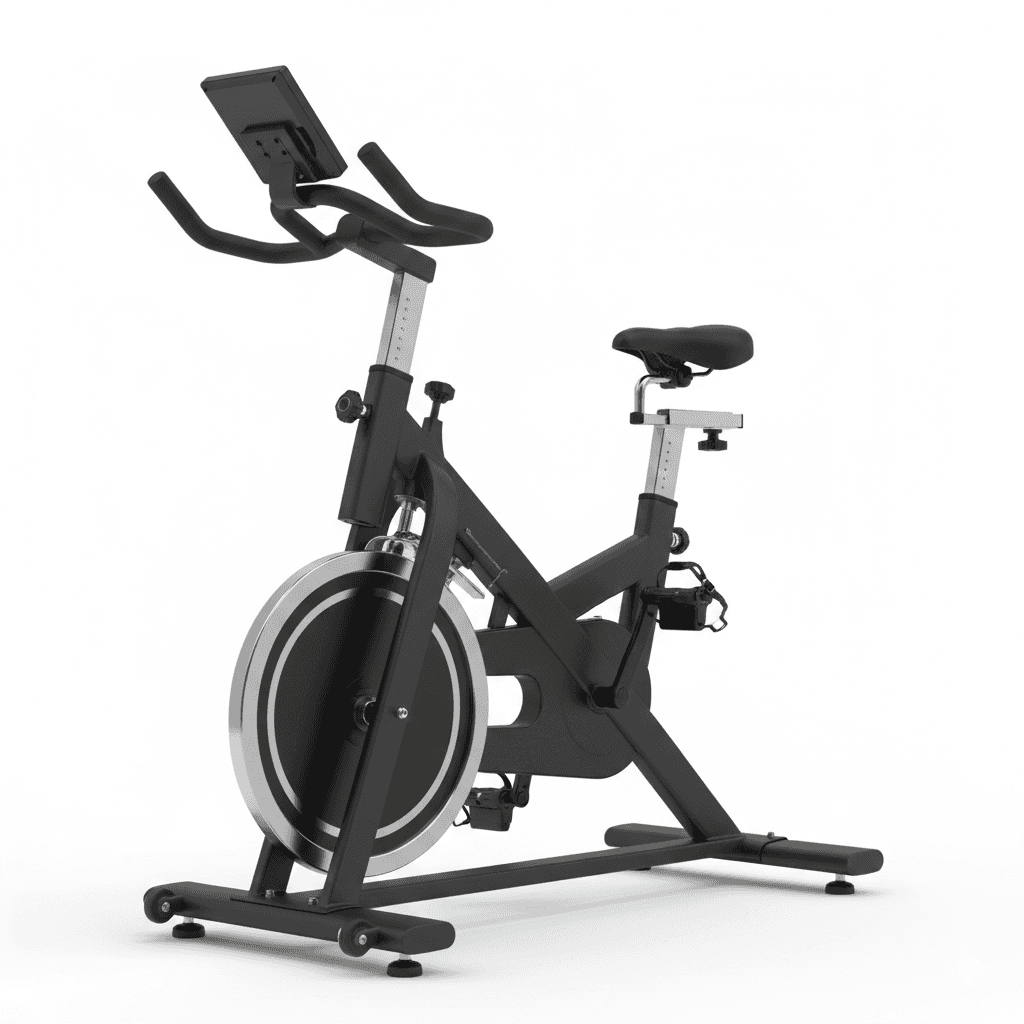
Best Exercise Bikes UK 2026

Thirty years of training at home. Built multiple home gyms from bare garages to proper setups. I know what equipment lasts, what breaks, and what becomes an expensive clothes rack.
Just so you know, some links on this page are affiliate links. If you buy something via them, we get a small kickback. You don't pay more, but it helps toward the next bit of kit.
Looking for more equipment recommendations?
Browse All GuidesA good exercise bike is the cardio machine you'll actually use. Silent enough for 6am, compact enough for a bedroom corner, and effective for everything from steady recovery rides to the intervals that make your legs burn. The wrong one, and there are plenty - wobbles under load, squeaks on every stroke, and ends up as an expensive clothes rack.
Here's what actually matters and which bikes are worth buying.
Quick Picks
| Model | Flywheel | Best For | |
|---|---|---|---|
| JLL IC200 PRO | 10kg | Budget buyers, casual riding | Check Price on Amazon |
| JLL IC300 PRO | 18kg | Most home gym users | Check Price on Amazon |
| Concept2 BikeErg | Air | Serious training, HIIT, CrossFit |
Prices shown are approximate at time of review. Click "Check Price on Amazon" for current pricing.
The Spec That Actually Matters: Flywheel Weight
Most buyers obsess over the display or app connectivity. The thing that actually determines how a bike feels is the flywheel.
A heavier flywheel creates more momentum, which means smoother pedal strokes and more consistent resistance. Cheap bikes have 5-7kg flywheels. You feel every dead spot in the pedal stroke. Mid-range bikes hit 14-18kg. You don't notice the difference until you try one - then you can't go back.
Here's the rough guide:
| Flywheel Weight | Feel | Best For |
|---|---|---|
| Under 8kg | Noticeably jerky | Casual users, light sessions |
| 8-14kg | Smooth for steady cardio | Most home users |
| 14-20kg | Near-commercial feel | Regular training, HIIT |
| 20kg+ | Commercial quality | Serious athletes |
For home use, target 14kg minimum if you plan to train more than twice a week.
Resistance Types Explained
Magnetic resistance - The standard for modern exercise bikes. A magnetic brake applies resistance to the flywheel with no contact, which means near-silent operation and zero maintenance. Resistance is controlled by a dial or digital display in set levels. This is what both JLL bikes use and it's the right choice for most homes.
Friction resistance - A felt pad presses against the flywheel. Smoother, more infinite adjustment than magnetic. Louder and requires occasional pad replacement. Found on older spin bikes and some budget options. Fine for a garage; not ideal for a flat at 6am.
Air resistance - A fan flywheel creates resistance that scales with how hard you pedal. Used by Concept2. Feels most like real cycling. Also the loudest option - think hairdryer at moderate intensity. Best for HIIT where infinite resistance scaling matters.
Best Budget: JLL IC200 PRO
The JLL IC200 PRO is the default recommendation for anyone spending under £200. JLL are a UK-based brand with actual customer service, which matters when a part needs replacing. *(Price when reviewed: around £150 | Check Price on Amazon)*
The 10kg flywheel is on the lighter side, but the magnetic resistance keeps it quiet. Handlebars and seat both adjust vertically and horizontally - getting the fit right matters more than most people realise. A poorly fitted bike causes knee pain within weeks.
The LCD shows speed, distance, time, calories, and heart rate via pulse sensors in the handles. No Bluetooth or app connectivity, but for most people that's fine. YouTube workout videos don't need a connected bike.
Build quality is solid for the price. At 15kg it's light enough to move between rooms. Handles up to 120kg user weight.
What you sacrifice: the lighter flywheel means you'll notice the resistance isn't perfectly smooth at low cadences. Push hard and it evens out. At this price, it's genuinely hard to fault.
Best Mid-Range: JLL IC300 PRO
The JLL IC300 PRO is the bike we'd buy if I was setting up a home gym today. The 18kg flywheel is the difference between a budget machine and something that actually feels like training. *(Price when reviewed: approximately £250 | Check Price on Amazon)*
The heavier flywheel means near-silent operation and momentum that carries you through the stroke. You can stand up and sprint on this. That's not really possible on the IC200.
Adjustability is comprehensive - 4-way seat adjustment (up/down/forward/back), 2-way handlebar adjustment. SPD-compatible pedals let you clip in if you have cycling shoes. Built-in tablet holder for following workout videos.
Magnetic resistance across 20 levels gives you more gradation between easy and hard. The display tracks the usual metrics plus has a USB charging port. Transport wheels make moving it between rooms straightforward despite the 22kg weight.
For a little more than the IC200, the IC300 is worth it if you plan to use the bike seriously. The flywheel difference alone justifies it.
Best Premium: Concept2 BikeErg
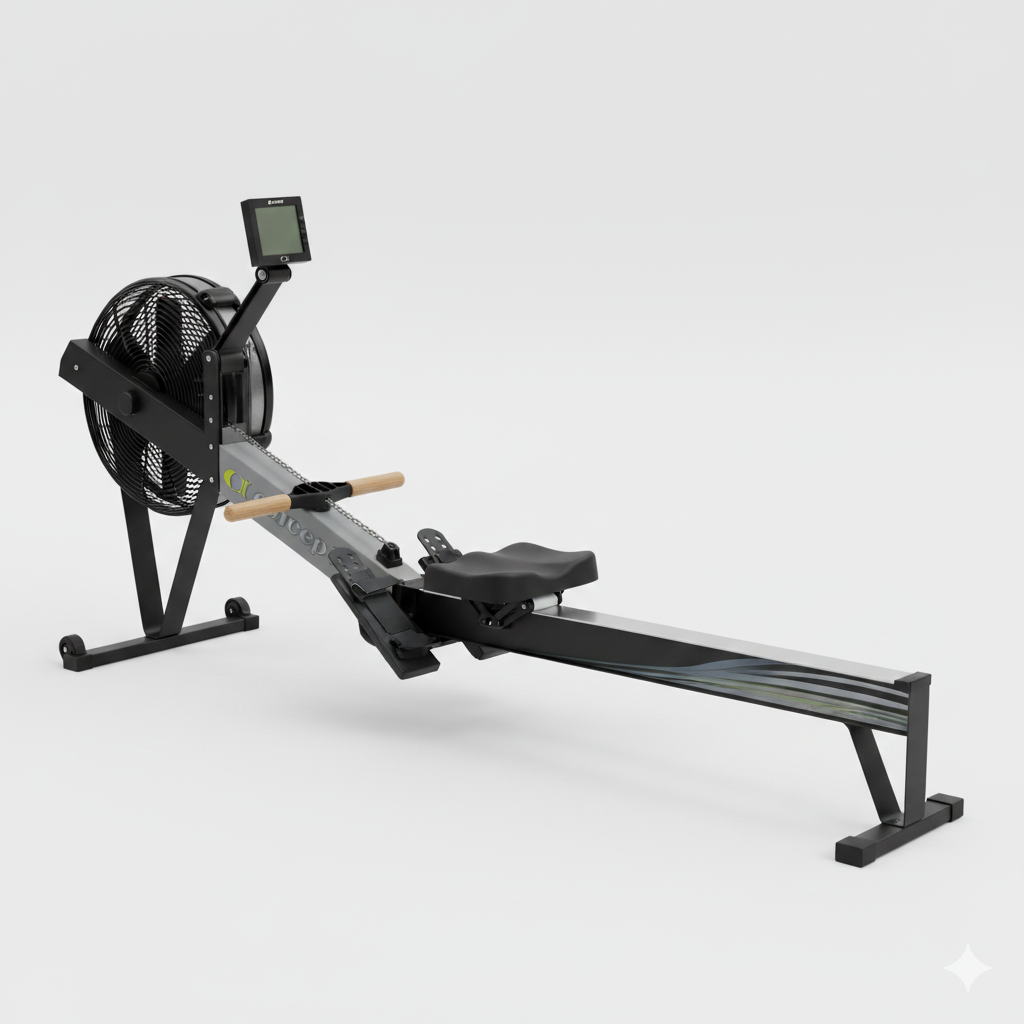
The Concept2 BikeErg sits at the opposite end of the price spectrum. The same company that makes the RowErg - the gold standard of rowing machines used by Olympic athletes and CrossFit boxes worldwide - applied the same philosophy to cycling.
Air resistance means the flywheel scales infinitely with your effort. Push harder, resistance increases. Back off, it eases. This is fundamentally different from magnetic resistance and is why serious athletes prefer air.
The PM5 monitor (the same one on the RowErg) connects to Zwift, Peloton Digital, Concept2 ErgData, and most training apps. Performance data is accurate enough for scientific training programmes.
At £900+, it's a serious investment. But Concept2 kit lasts 15-20 years with basic maintenance. Parts are available directly. Resale value holds extraordinarily well - used BikeErgs sell for £600+ years later. If you're genuinely going to train hard 4-5 times per week, the maths works out.
Spin Bike vs Upright Exercise Bike
People use these terms interchangeably. They're different things.
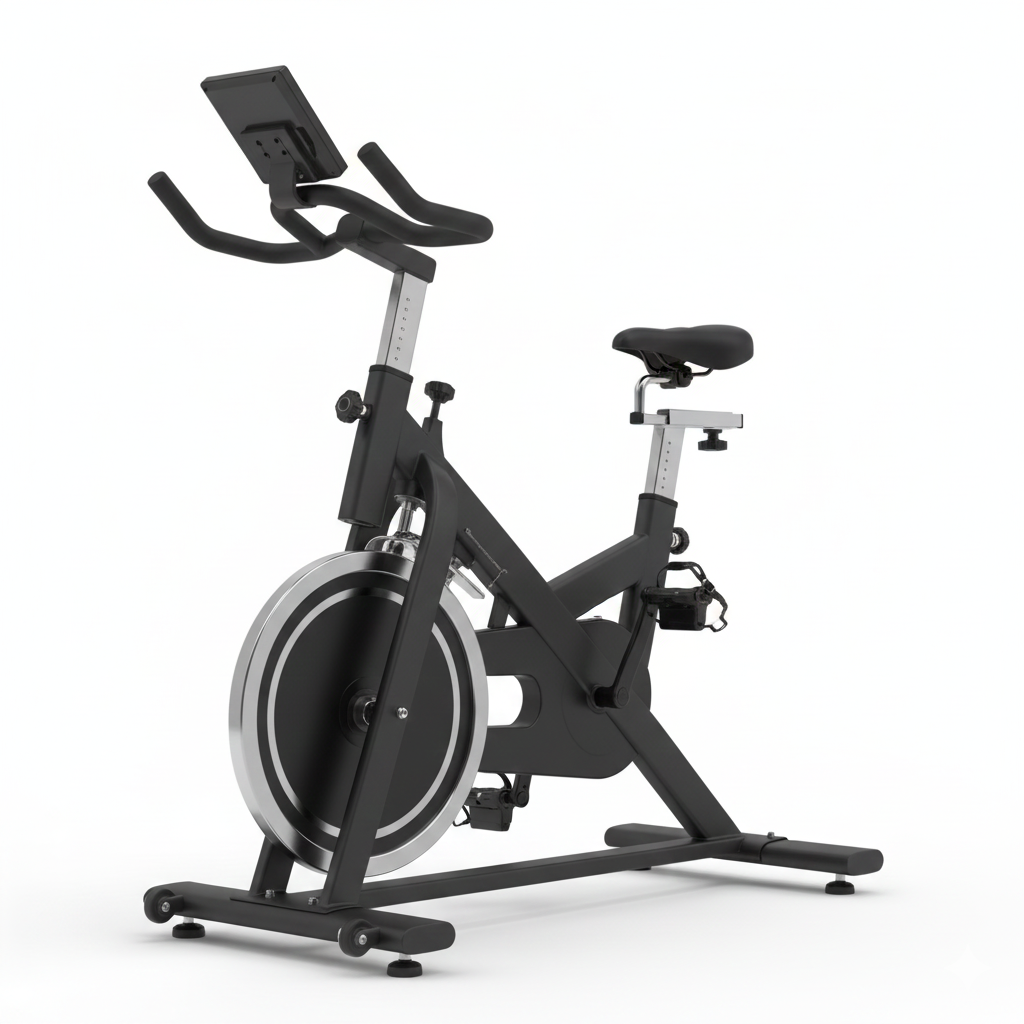
Spin bikes (JLL IC200, IC300, Concept2): Forward-leaning position like a road bike. Heavier flywheels. Designed for intensity - standing climbs, sprints, high cadence intervals. Better for serious fitness.
Upright exercise bikes: More upright position, like sitting on a chair. Lighter flywheels and stepped magnetic resistance. Better for comfortable, longer rides. Easier on the back.
Recumbent bikes: Seat with backrest, fully reclined. Lowest impact, easiest on back and joints. Almost no core engagement. Best for rehabilitation or elderly users.
For home gym use, spin-style is almost always the right choice. You get more effective workouts and more versatility. The only reason to consider upright or recumbent is a specific back or joint issue.
What to Check Before Buying
Adjustability range: Check the seat height range against your height. Most bikes publish a compatible height range (usually 155-195cm). Test this before assuming it fits.
Weight capacity: Check your weight against the rated maximum. Most budget bikes handle 100-120kg. The IC300 handles 130kg. Exceeding the limit is a safety issue, not just a warranty issue.
Noise level: Magnetic resistance is near-silent. Friction resistance (felt pad) creates a grinding sound under load. Check reviews specifically for noise - many bike listings don't specify resistance type clearly.
Pedal type: Standard flat pedals come on most bikes. SPD-compatible pedals (dual-sided) are worth having if you own cycling shoes. Clip-in shoes significantly improve power transfer and prevent foot slippage during hard efforts.
Service availability: UK-based brands like JLL have spare parts and customer service accessible. Budget imports from unknown brands may have no support when something fails.
Full Comparison
| Feature | JLL IC200 | JLL IC300 | Concept2 BikeErg |
|---|---|---|---|
| Price | roughly £150 | roughly £250 | roughly £900+ |
| Flywheel | 10kg | 18kg | Air |
| Resistance | Magnetic (8 levels) | Magnetic (20 levels) | Air (infinite) |
| Max user weight | 120kg | 130kg | 136kg |
| Adjustability | 2-way seat | 4-way seat | Full |
| App connectivity | None | Basic | Bluetooth, PM5 |
| Noise level | Very quiet | Very quiet | Moderate |
| Weight | 15kg | 22kg | 22kg |
| Transport wheels | Yes | Yes | Yes |
Workout Structures That Work
Steady-state cardio: 30-45 minutes at a conversational pace (you can speak but not sing). Burns fat, builds aerobic base, easy to sustain. Good for recovery days.
HIIT (20-30 minutes): Alternate 40 seconds hard with 20 seconds easy. 8-10 rounds. Burns more calories than steady-state in less time, raises metabolism for hours. Requires a flywheel heavy enough to handle sprints - the IC300 or above.
The 45/15 protocol: 45 seconds moderate effort, 15 seconds maximum sprint. Repeat 10-12 times. This is what most YouTube spin classes are based on. Effective, brutal, done in 20 minutes.
Hill climbs: Increase resistance every 2 minutes for 20 minutes, then decrease back down. Targets different muscle fibres than flat riding and builds leg strength alongside cardio.
If you're not sure where to start, follow a YouTube spin class. There are thousands of free options from 10 minutes to an hour. Set the bike up properly first - it makes a significant difference.
Space and Storage
Exercise bikes are compact. Most sit around 1.0-1.2m long and 0.5m wide. That's smaller than most people expect.
| Model | In Use | Weight |
|---|---|---|
| JLL IC200 | 100 x 48cm | 15kg |
| JLL IC300 | 110 x 53cm | 22kg |
| Concept2 BikeErg | 122 x 55cm | 22kg |
Neither JLL bike folds, but both have transport wheels for moving between rooms. If you need something that truly stores away, look at folding exercise bikes - they sacrifice flywheel weight and stability but take up very little floor space.
Is an Exercise Bike Right for You?
Exercise bikes excel at: sustainable cardio, HIIT, joint-friendly training, early morning workouts without waking the house.
Exercise bikes aren't great at: full-body training, functional fitness, calorie burn comparable to running. For full-body cardio that's still quiet, a rowing machine works 86% of muscle groups vs a bike's roughly 44%.
For a full comparison, see our rowing machine vs exercise bike guide. If you're building a complete home gym on any budget, our home gym on a budget guide shows how a bike fits into a wider setup.
My honest recommendation: If you'll use it regularly and have £250 to spend, the JLL IC300 is the clear choice. The flywheel difference over the IC200 is immediately noticeable and makes the bike something you'll actually want to ride. The IC200 is fine if budget is genuinely the constraint - it'll get the job done. Skip anything under £100. Those bikes are fitness equipment in the same way a plastic guitar is a musical instrument.
What to Avoid
Smart bikes with ongoing subscriptions as the main selling point. The Peloton model works brilliantly for people who use the classes consistently. It fails for people who prefer their own music or programming. Before committing to any subscription-tied bike, be honest about whether you'd pay 39-49 pounds per month for interactive classes long-term. If not, the IC4 or similar give you the hardware without the dependency.
For the Peloton Bike vs Bike Plus decision specifically, the comparison guide covers whether the upgrade is worth it.
Cheap magnetic bikes under 100 pounds. The resistance mechanism in budget bikes often fails within 6-12 months. The frames flex under higher-intensity use. The flywheel weight is too low for smooth pedalling at higher speeds. The JLL JF100 at around 180 pounds is a genuine step up in durability from the sub-100-pound category.
Bikes with plastic pedal cages instead of replaceable pedals. If you use cycling shoes (or might in future), check whether the pedals are standard-thread replaceable. Most quality bikes allow pedal swaps; some budget models use proprietary systems.
Frequently Asked Questions
Is an exercise bike worth buying for home use?
For people who want low-impact cardio they'll actually do consistently, yes. Exercise bikes are quieter than treadmills, kinder on joints than running, and more forgiving for people returning from injury. The key question is whether you'll sustain the habit. Bikes that get used 4-5 times a week are excellent value; bikes that become drying racks are expensive mistakes.
How do I choose between an upright and recumbent exercise bike?
Upright bikes are more compact and closer to road cycling position -- good for fitness training and replicating outdoor cycling. Recumbent bikes have a reclined seat with back support -- better for people with lower back issues, hip problems, or limited mobility. For general cardio fitness, upright is the standard choice. For rehabilitation or comfort with existing joint issues, recumbent is worth considering.
Can an exercise bike help with weight loss?
Yes, with appropriate expectations. A 45-minute moderate intensity session burns roughly 300-400 calories depending on body weight and effort level. Combined with a calorie-controlled diet, consistent cycling produces meaningful weight loss. The advantage over treadmills is lower injury risk, which means more consistent training over weeks and months.
What resistance level should I train at?
Start at a level where you can maintain conversation but feel the effort -- roughly a 6 out of 10. This is zone 2 training, which builds aerobic base efficiently. Once comfortable, add interval sessions: 30 seconds hard, 90 seconds easy, repeated 8-10 times. Two zone 2 sessions and one interval session per week is a solid starting protocol for most people.
Heart Rate Training Zones
Heart rate training transforms random cycling into structured fitness development.
Zone 1 (50-60% max HR): Active recovery. Easy pedalling, conversational pace. Useful between hard sessions. Zone 2 (60-70%): Aerobic base building. The foundation of cardiovascular fitness. Most training time should be here. Zone 3 (70-80%): Tempo. Comfortably hard. Improves lactate threshold. Zone 4 (80-90%): Threshold. Hard but sustainable for 20-30 minutes. Race pace for time trials. Zone 5 (90-100%): Maximum effort. Sustainable for 30-60 seconds only. Used in short intervals.
Pedal Types and Shoe Compatibility
Most exercise bikes come with flat pedals and toe cages. These work with any trainers. However, clipless pedals (which confusingly clip your cycling shoes to the pedal) transform the riding experience.
Saddle Comfort and Adjustment
Saddle discomfort kills more exercise bike habits than anything else. Most people blame the bike when the actual issue is saddle height or saddle type.
Saddle height: Stand next to the bike. The saddle should be at hip bone height. When seated with one pedal at the lowest point, your knee should have a slight bend (25-35 degrees). Too low causes knee pain. Too high causes hip rocking and saddle soreness.
Saddle choice: Stock saddles on bikes under £400 are usually narrow and hard. Replacing with a wider, padded saddle (around £20-30) transforms the riding experience. Gel saddle covers are a cheaper interim option (around £10) but tend to shift during intense riding.
Training Programmes That Work on Any Bike
The best exercise bike is the one you actually use three times a week. Equipment quality matters, but programme quality determines results.
Steady state (Zone 2) training is the foundation. Ride at a pace where you can hold a conversation but would rather not. Heart rate roughly 60-70% of maximum. Duration: 30-45 minutes. This builds aerobic base, burns fat efficiently, and is sustainable long-term. Three sessions of steady state per week produces measurable fitness improvement in four weeks.
Interval training produces faster results but is harder to sustain. The simplest effective protocol: 30 seconds maximum effort, 90 seconds easy pedalling, repeated 8 times. Total time: 16 minutes plus warm-up and cool-down. Two interval sessions per week alongside one or two steady state sessions is the sweet spot for most home trainers.
Tabata protocol (20 seconds all-out, 10 seconds rest, 8 rounds) is the most time-efficient workout that exists. Four minutes of actual work. It is also genuinely unpleasant. Most people who try Tabata on an exercise bike do it once, feel ill, and never do it again. If you have the mental fortitude, once per week is sufficient and effective.
Resistance Types Explained
The resistance mechanism determines how the bike feels to ride and how long it lasts.
Magnetic resistance uses magnets positioned near the flywheel. Moving the magnets closer increases resistance. There is no physical contact, so there is no wear, no noise, and no maintenance. The feel is smooth and consistent. Every premium bike in this guide uses magnetic resistance.
Friction resistance uses a felt or leather pad pressing against the flywheel. Turning the resistance knob increases pressure. This creates contact noise (a gentle whoosh at low resistance, a louder hiss at high resistance) and the pad wears over time (replacement pads cost around £8-15, needed every 12-18 months of regular use). The advantage: friction resistance can feel more natural and responsive than cheap magnetic systems.
Direct contact resistance (found on the cheapest bikes) uses a brake pad directly against the wheel. Avoid these entirely. They wear quickly, create inconsistent resistance, and screech at high intensity.
Noise Levels for Flat and House Training
This matters enormously in the UK where terraced houses and flats mean neighbours on all sides.
Belt-drive bikes (JLL IC300 PRO, Schwinn IC8) are the quietest. The belt connecting pedals to flywheel produces almost no noise. At moderate intensity, the loudest sound is your breathing. These bikes can be used at 6am in an upstairs bedroom without disturbing anyone below.
Chain-drive bikes produce a low mechanical hum similar to a bicycle chain. Not loud, but audible in a quiet room. They require occasional chain lubrication (every 3-6 months).
The Honest Summary
An exercise bike is one of the most reliable home cardio purchases you can make. No impact on joints, usable year-round regardless of weather, quiet enough for early mornings and late evenings, and durable enough to last a decade with basic maintenance.
The IC200 at around 280 pounds does the job. The IC4 at around 450 pounds does it better -- the build quality, adjustment range, and cycling-shoe compatibility justify the premium if cardio is a consistent part of your training. Either bike will outlast the motivation of someone who buys a subscription machine for the studio feel and stops using it six months later.
As an Amazon Associate, we earn from qualifying purchases.
Products Mentioned in This Guide
Frequently Asked Questions
Related Guides
Find Your Perfect Equipment
Expert guides for racks, barbells, plates, benches, and more. Build your home gym the right way.
Browse All Guides