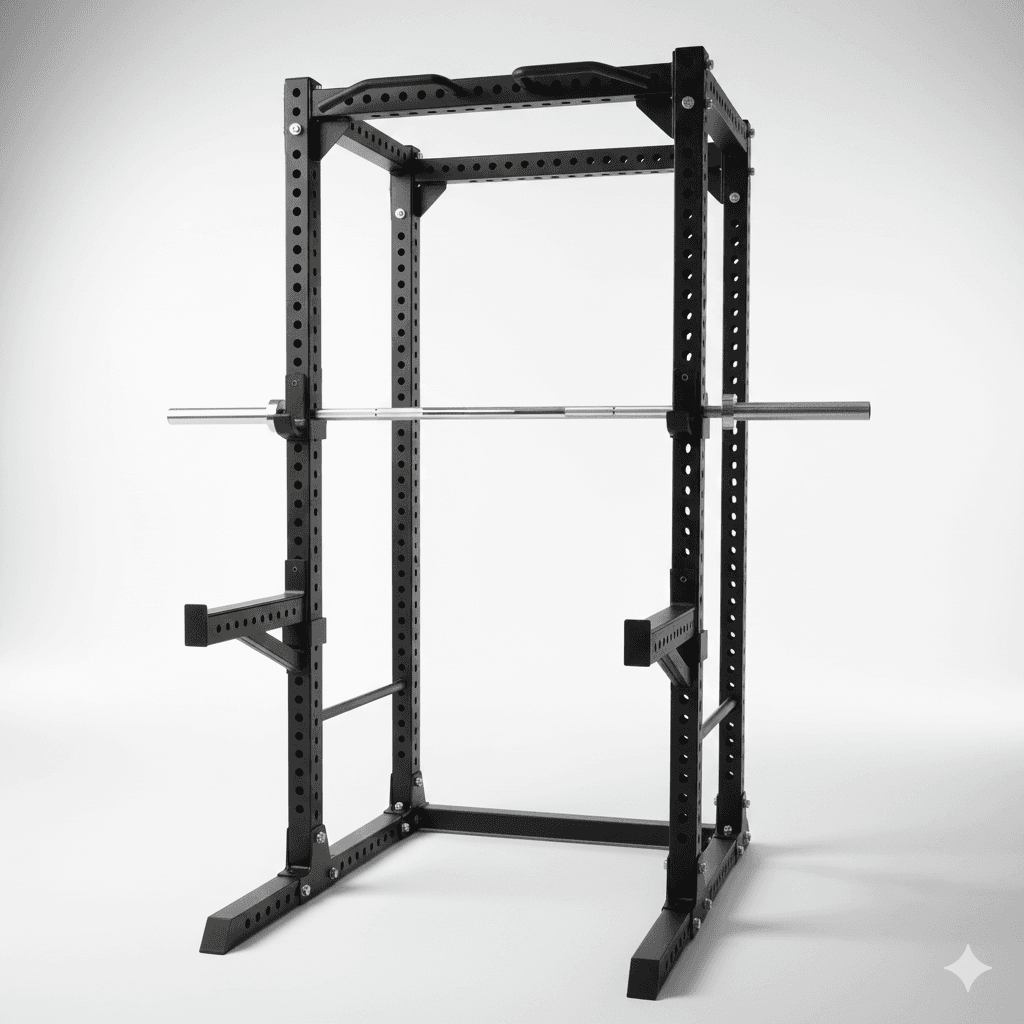
Best Power Racks 2026

Thirty years of training at home. Built multiple home gyms from bare garages to proper setups. I know what equipment lasts, what breaks, and what becomes an expensive clothes rack.
Just so you know, some links on this page are affiliate links. If you buy something via them, we get a small kickback. You don't pay more, but it helps toward the next bit of kit.
Looking for more equipment recommendations?
Browse All GuidesA power rack makes training to failure safe for solo lifters. Without one, you leave reps in the tank on squats and bench press because failing alone means the bar comes down on you. With a rack and properly set safety bars, you push to actual failure, and that's where the strength gains actually happen.
For serious barbell training at home, a rack is the safety system that makes heavy solo work viable. Here's what to buy at each price point and how to set it up correctly.
Quick Picks
| Model | Capacity | Type | Best For | |
|---|---|---|---|---|
| ULTRA FUEGO Power Cage | 550 lb | 2-post squat stand | Entry-level | Check Price on Amazon |
| CAP FM-8000F Power Rack | 500 lb | 4-post full cage | Best value | Check Price on Amazon |
| REP PR-1100 Power Rack | 1,000 lb | 4-post full cage | Best overall | Check Price on Amazon |
Prices shown are approximate at time of review. Click "Check Price on Amazon" for current pricing.
Do You Actually Need One?
Yes, if: - You squat or bench press with a barbell alone - You want to train to failure without a spotter - You plan to progress to serious weights - Safety is a priority (it should be)
No, if: - You train exclusively with dumbbells or kettlebells - You always have a reliable spotter present - Your space genuinely won't accommodate one
The honest assessment: solo barbell squats and bench press without a rack and safety bars means leaving multiple reps in the tank on every heavy set, or accepting real injury risk. The cost of a rack is modest against that calculation.
Space Requirements (Measure Before Ordering)
| Setup | Floor Space | Ceiling Height | Notes |
|---|---|---|---|
| Squat stands (no safeties) | 3' x 4' | 7'6" | Risky for solo training |
| 2-post with spotter arms | 4' x 5' | 7'6" | Compact, moderate safety |
| 4-post full cage | 6' x 8' | 8'6"+ | Best safety, most accessories |
| Full cage + bench inside | 8' x 10' | 8'6"+ | Complete barbell setup |
The trap: racks look compact online. They're not. A full cage needs working clearance on all sides for plate loading - add 24" on each side and you need a realistic 8' x 10' of floor space.
Ceiling height specifically matters for pull-ups and overhead pressing inside the rack. Standard residential garages are 8'0" - the REP PR-1100 at 84" leaves 12" of clearance, tight but workable for most lifters.
Best Entry-Level: ULTRA FUEGO Power Cage (around $180)
The ULTRA FUEGO Power Cage is the lowest-cost entry into barbell training with a safety system. *(Price when reviewed: approximately $180 | Check Price on Amazon)*
At this price point you're getting a 2-post squat stand rather than a full 4-post cage. The difference matters: instead of full-width safety bars running between two posts, you get spotter arms extending from the uprights. They catch a failed rep if the bar lands on them precisely - less forgiving than full-width bars, but functional.
What you get: - 550 lb rated capacity - 13 height adjustment levels - Adjustable width for different shoulder-width setups - Dip bars included - Spotter arms for failed lifts
The honest tradeoffs: - 2-post design is less stable than a 4-post full cage - Spotter arms require precise bar landing - less secure than full-width bars - 550 lb ceiling limits powerlifters, not casual home gym lifters - Basic j-hooks (rubber-lined upgrade available for roughly $20)
The right choice if budget is genuinely the hard constraint and you're not yet lifting weights that require full cage security.
Best Value: CAP FM-8000F Power Rack (around $300)
The CAP FM-8000F steps up to a proper 4-post cage: four uprights forming a complete enclosure with full-width safety bars. *(Price when reviewed: approximately $300 | Check Price on Amazon)*
The full cage means your safety bars span the complete width between uprights. A failed squat or bench press drops the bar onto the safety rails, fully contained within the cage - no risk of rolling off spotter arms to the side.
What you get: - Full 4-post cage with full-width safety bars - Pull-up bar integrated into the top - J-hooks included - 500 lb rated capacity
The honest tradeoffs: - 14-gauge steel is lighter than the REP's construction - noticeable under load - 500 lb capacity ceiling - Fewer j-hook position options than the REP
For beginners through intermediate lifters not pushing past 300 lb on squats, this covers everything at a fair price.
Best Overall: REP PR-1100 Power Rack (roughly $380)
The REP PR-1100 is the best power rack for most home gym users: 1,000 lb rated, 11-gauge steel, and the accessories that matter included at base price. *(Price when reviewed: around $380 | Check Price on Amazon)*
REP Fitness builds commercial gym equipment. The PR-1100 is their home gym entry, and the build quality shows: the steel gauge, weld quality, and j-hook precision are noticeably different from budget alternatives.
The 1" hole spacing is the detail most people underestimate. Budget racks use 2" spacing - your j-hooks and safety bars jump in 2" increments. The REP's 1" spacing gives fine control over exact bar height for squats and bench press. Getting this right is the difference between setup that feels natural and setup that always feels slightly off.
What makes it worth the money: - 1,000 lb capacity: unlimited ceiling for any home gym load - 11-gauge steel: no flex in the uprights under heavy loading - 1" hole spacing: precise j-hook and safety bar positioning - Included: pull-up bar, j-cups, full-length safety bars, dip attachment - 84" (7') height - fits standard 8' garage ceilings with 12" clearance - Compatible with REP's accessory ecosystem (lat pulldown, band pegs, more)
The honest tradeoffs: - $380 is real money, but this is the last rack most people buy - 84" needs at least 8'0" ceilings (not workable in 7'6" spaces) - Heavy assembly - plan 2-3 hours, ideally with a second person
For committed barbell training, the PR-1100 is where the money should go. Roughly $80 more than the CAP FM-8000F, it will outlast it by a decade.
Power Rack vs Half Rack vs Squat Stands: What Each Actually Means
The terminology is inconsistent everywhere. Here's what each type actually is:
Squat stands (2 independent posts) Two vertical posts, no connection between them, no safety bars. Smallest and cheapest. If you fail a squat, the bar goes wherever gravity takes it - on you. Only appropriate for experienced lifters with bumper plates who can safely dump the bar forward. Not for solo training.
2-post half rack / squat rack Two posts connected by a base, with spotter arms (not full-width bars). More stable than independent stands, has catch mechanism. The ULTRA FUEGO is this type. Spotter arms work if the bar lands on them precisely - less forgiving than a full cage.
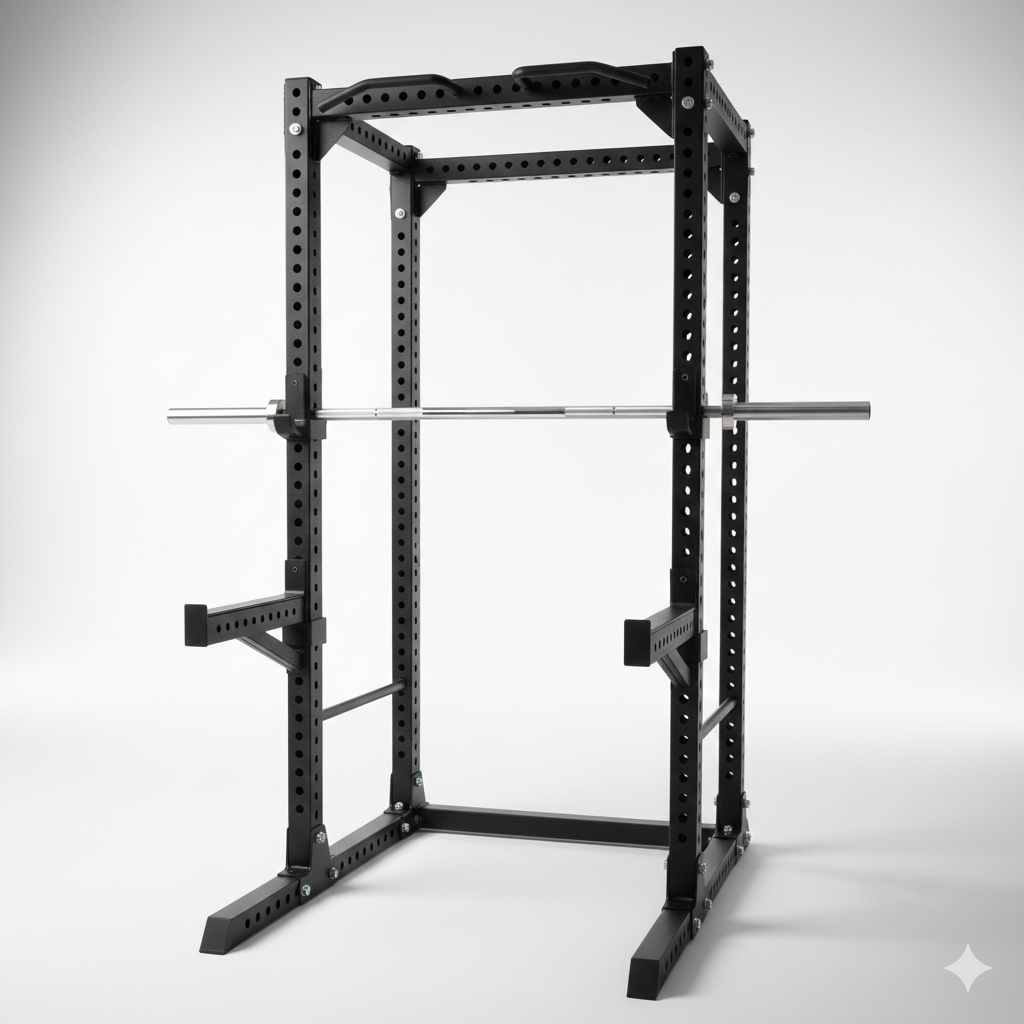
4-post full power rack / cage Four uprights forming an enclosed cage. Full-width safety bars run between the posts. Failed reps are fully contained. The safest option. CAP FM-8000F and REP PR-1100 are proper cages.
For solo training: full power rack is the correct choice. The full-width safety bar system is the difference between gear that catches failed sets reliably and gear that might.
Steel Gauge and Build Quality
Rack quality is measured in steel gauge - lower number means thicker, stronger steel.
| Steel Gauge | Thickness | Typical Use |
|---|---|---|
| 11-gauge | 0.120" | Commercial/premium home |
| 12-gauge | 0.105" | Good home gym |
| 14-gauge | 0.075" | Budget home gym |
| 16-gauge | 0.060" | Entry-level |
The REP PR-1100 uses 11-gauge. Budget racks at $150-200 typically use 14-gauge. Under a loaded barbell, you can feel the difference in upright flex. Premium racks have none. Budget racks have perceptible flex that erodes confidence under heavy loads.
Safety Systems: Bars vs Spotter Arms vs Straps
Safety bars (best): Fixed metal bars spanning the full cage width. Set 1-2" below the lowest point of the lift. Bar drops, lands on the rails, done. Most common, most reliable.
Spotter arms: Extend from uprights rather than spanning between posts. Less secure - bar can shift off them if it doesn't land precisely. Common in 2-post designs.
Safety straps: Nylon or steel straps at adjustable heights. Catch the bar without hard metal impact - preferred by some lifters for protecting barbell knurling. Usually an accessory, not stock.
Set your safeties before every session. The rule: safeties sit 1-2" below the lowest point of the bar during the lift. For squats: just below the bottom of your squat. For bench press: just above your chest.
Complete the Setup
A rack alone doesn't build anything. You need:
Olympic barbell and plates: The CAP Barbell Olympic Weight Set includes a 45 lb Olympic bar and plates to start. Add 25 lb and 45 lb plates as you progress - they hold resale value well. *(Price when reviewed: approximately $230 | Check Price on Amazon)*
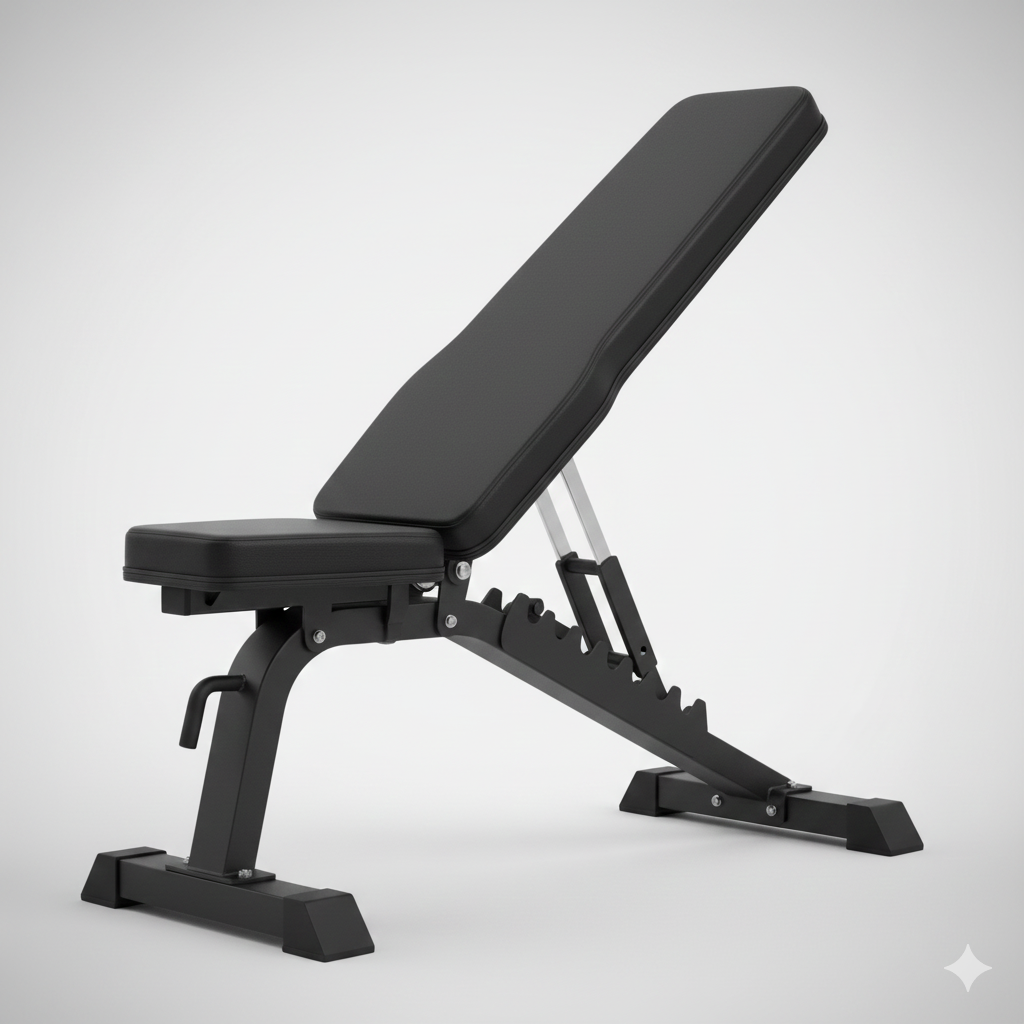
Adjustable bench: Slides inside the cage for bench press. The REP AB-3000 fits the PR-1100's interior width and handles the load comfortably.
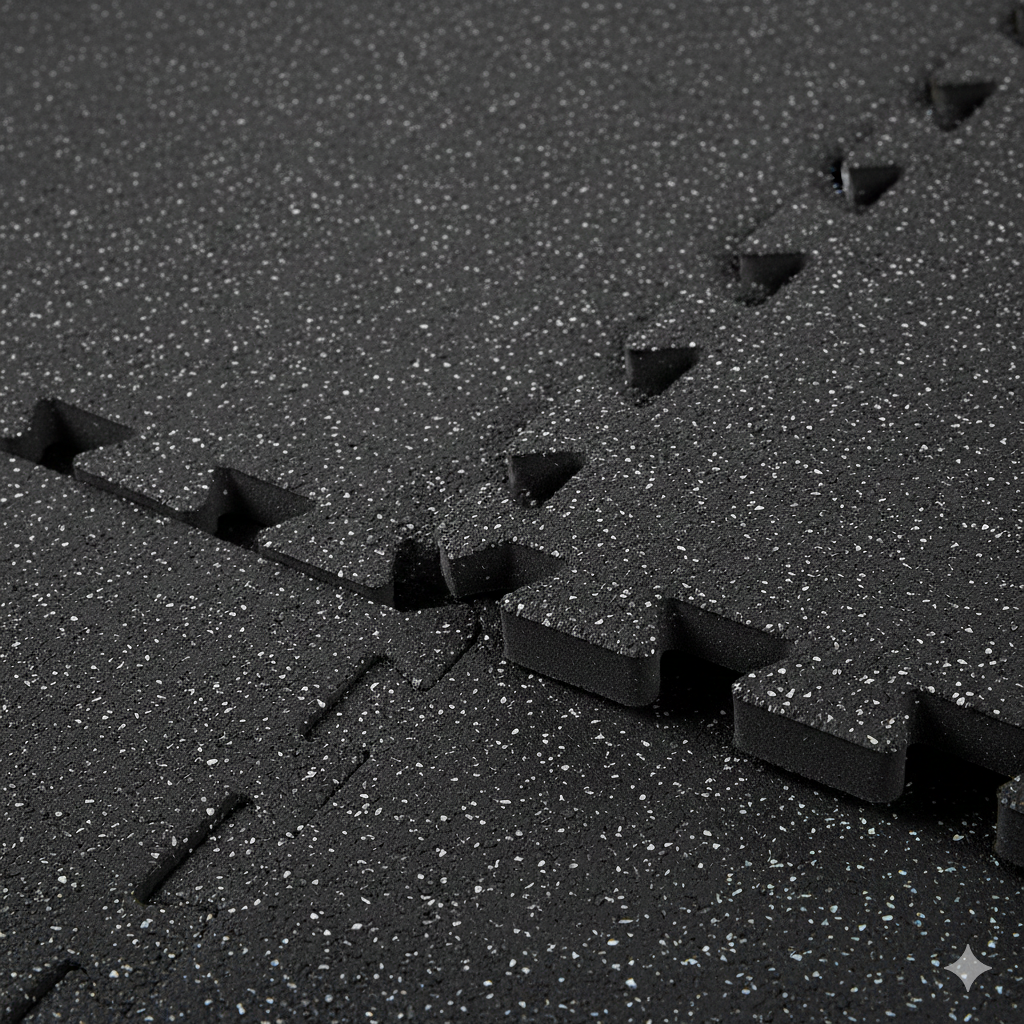
Rubber flooring: 3/4" rubber tiles minimum under the rack. Protects the floor from dropped plates, deadens impact, makes standing exercises safer.
Total for a complete barbell setup: roughly $610 (PR-1100 + Olympic weight set). That's less than 12 months of gym membership for equipment that lasts a decade.
Accessories Worth Getting
Rubber-lined j-hooks (around $20): Protect your barbell's knurling from bare metal. Budget rack j-hooks scratch bars over time - a small upgrade that matters if you care about your barbell.
Lat pulldown/low row attachment: The REP PR-1100 is compatible with an accessory lat pulldown system. Adds cable exercises without a separate machine.
Band pegs: Resistance bands attached to pegs add accommodating resistance - common in advanced strength programs (Westside method, etc.).
Anchoring Your Rack
Unanchored racks move. Under heavy barbell loading, even a rack on rubber tiles will shift slightly. Options:
Floor bolts (best): Lag bolts through the base plate into concrete (garage) or structural floor. Permanent, completely secure.
Weight plate storage: Loaded weight pegs on the rack add significant mass. Combined with rubber tiles, this handles most home gym loads without permanent modification.
Most home gym setups are fine with rubber tiles plus loaded weight pegs. Garage concrete floor? Bolt it.
Frequently Asked Questions
What's the minimum ceiling height for a power rack? The REP PR-1100 stands 84" (7'). Add 3-4" for pull-up bar clearance above a hanging lifter's head. Standard 8'0" garage ceiling is workable, tight for tall people doing pull-ups. 8'6"+ is comfortable. For 7'6" ceilings, look at the REP PR-1050 at 72" tall.
Can I bench press inside a power rack? Yes, and it's safer than a standalone bench. Set safety bars at chest height. A failed rep drops the bar onto the rails. The rack holds the bar at your starting height so you can get set and rack cleanly.
Do I need bumper plates with a power rack? No. Steel plates work for squats, bench, and overhead press. Bumper plates (rubber) are needed only for Olympic weightlifting where the bar is dropped from height. Standard steel plates are fine for powerlifting-style training.
Is used equipment worth buying? For Rogue and REP Fitness racks: yes, confidently. They last decades. Used is often 50-60% of new price. Check for rust (fixable) and that j-hooks and safety bars fit the hole spacing. For budget racks: inspect carefully.
The Garage Gym Environment
American garages are the default home gym location. Most offer 200-400 square feet and ceiling heights of 8-10 feet. The main challenges are temperature and moisture.
Summer heat in southern states reaches 100-120F in uninsulated garages. Metal bars become uncomfortable to grip. Solutions: train early morning or evening, install a portable fan, and keep a towel for bar wiping. Insulating the garage door ($100-150 DIY) reduces peak temperatures by 10-15 degrees.
Plate Organisation
Weight plates scattered on the floor are a tripping hazard and make changing weight between sets slow.
Storage horns on the rack uprights or base keep plates organised by size within arm's reach. The Rep PR-1100 and Titan T-2 include storage horns. Budget racks often do not, requiring a separate plate tree (around $30-50).
Safety: Training Alone at Home
Failing a heavy lift alone in a home gym without proper safety equipment is genuinely dangerous. A power rack exists to solve this problem.
Safety bars (spotter arms) are the critical feature. Set them 1-2 inches below the bottom of your range of motion for each exercise. If you fail a squat, sit into the bottom position and the bar rests on the safety bars. If you fail a bench press, lower the bar to the safety bars and roll out.
Test your safety bars. Before training heavy, deliberately fail a rep at moderate weight to confirm the safety bars catch correctly. Do this for every exercise you plan to train to failure.
J-hooks should have a protective lining (UHMW plastic or rubber) that prevents the barbell knurling from wearing grooves in the metal. Bare metal J-hooks score the bar and create sharp edges over time. Most racks over $300 include lined J-hooks.
Rack Accessories Worth the Money
Three accessories improve every rack on this list.
Dip attachment (around $30-50) bolts to the uprights and adds chest dips and tricep dips. Compound pressing movements from a different angle than bench press. Most people who add dips report noticeable development within two months.
Band pegs (around $15-25) anchor resistance bands for accommodating resistance training. The weight gets heavier as you stand up from a squat or push through a bench press. Powerlifters use this constantly. At home, it adds variety without buying more plates.
Landmine attachment (around $20-35) holds a barbell at an angle for landmine rows, presses, and rotational exercises. One attachment, twenty exercises.
Cable pulley systems (around $60-150) are the biggest upgrade. High and low pulleys for lat pulldowns, cable rows, tricep pushdowns, and face pulls. The Titan cable system fits most standard racks.
Floor Space and Ceiling Height
American garages and basements typically have 8-foot ceilings (96 inches). Most full-size racks are 82-84 inches tall with a pull-up bar adding 2-4 inches. This leaves minimal clearance in standard-height spaces. If your ceiling is under 90 inches, look for short racks specifically designed for low ceilings.
Floor space: a full power cage needs roughly 4 feet wide by 4 feet deep, plus 5 feet in front for bench press and 2 feet behind for plate loading. Total footprint: approximately 4 by 11 feet.
For the bench to pair with your rack, the best weight benches US guide covers the full range.
Bolting down is recommended for any rack used with heavy weight. On concrete garage floors, concrete wedge anchors (around $12 for a set of four) provide the strongest hold. On plywood platforms, 3/8-inch carriage bolts through the subfloor work. If bolting is not possible, filling the base with sandbags (60-80 pounds per side) gives reasonable stability.
Buying Used Racks in the US
The used gym equipment market in the US is enormous. Rogue and Rep Fitness racks hold value at 60-70% of new price. Titan and Fitness Reality racks sell for 40-60%.
Where to look: Facebook Marketplace is the primary source. OfferUp, Craigslist, and local garage gym buy/sell groups on Facebook cover most metro areas. The market peaks in January (New Year resolution sellers) and tapers by March.
What to check: Weld integrity at all joints. Straight uprights (sight down each one). Working hole spacing for J-hooks and safety bars. No missing hardware. Standard 2x2-inch or 3x3-inch hole spacing so aftermarket accessories fit.
What to Avoid
Squat stands without safeties for solo training. Squat stands and A-frame stands are fine with a spotter. Lifting solo without safety catches means either completing every rep or dumping the bar, which requires clear space and a willingness to abandon heavy sets. A power rack with proper safety bars removes that constraint entirely. If you train alone most of the time, the cage design is not a luxury. It is the point.
Racks with 1.5 x 1.5-inch steel uprights. Standard quality power racks use 2 x 2-inch or 3 x 3-inch steel tubing. Narrower uprights are cheaper to manufacture but have meaningfully less lateral rigidity under load. At 300+ lb on the bar, frame flex becomes a distraction. The REP PR-1100 uses 11-gauge 2x3 steel. The CAP FM-8000F uses 2x2. Both are adequate. Budget racks below $200 often do not specify upright dimensions clearly, which is a yellow flag worth investigating before purchase.
Combination racks with built-in lat pulldown systems. Budget lat pulldown attachments on combination racks rarely work well long-term. The cables are usually too short for full range of motion, the weight stacks are poorly calibrated, and the pulleys become noisy within a year of regular use. If you want cable work, a dedicated attachment for an established rack is the right approach. REP makes solid cable attachments for the PR-1100 that are far better than integrated budget combos. And if cables are the priority rather than a bonus, a standalone functional trainer does them better than any rack add-on. Do not pay a $150-300 premium for combo functionality that will frustrate you.
Fold-flat wall-mount racks as a primary lifting station. Wall-mount fold racks are a genuine space solution, but most carry weight limits of 300-400 lb including the user and bar, which is marginal for serious training. More importantly, they require solid stud-and-structural-beam mounting to be safe. Drywall anchors are not sufficient for a loaded barbell. For most home gyms, a free-standing rack is simpler, safer, and movable if your setup changes. If folding really is non-negotiable, a motor-driven all-in-one like the Speediance Gym Monster 2 is a different answer entirely, trading a barbell's ceiling for a setup that disappears against the wall. If you have the space but want everything in one steel frame, the Major Fitness Drone2 builds a Smith machine, a cage and a cable crossover into a single station instead of a bare rack.
The Verdict
A power rack changes how you train, not just the exercises available, but the intensity you bring to every set. When failure is safe, you actually train to failure. That's where strength develops.
The REP PR-1100 is the right answer for most committed home gym users: 1,000 lb capacity, 11-gauge steel, full safety system, expandable. Buy it once. The CAP FM-8000F covers beginner through intermediate on a modest budget. The ULTRA FUEGO is the entry point if budget is the hard constraint.
Get the rack. Set the safeties. Train to actual failure. That's the home gym that builds real strength.
As an Amazon Associate, we earn from qualifying purchases.
Products Mentioned in This Guide
Frequently Asked Questions
Related Guides
Find Your Perfect Equipment
Expert guides for racks, barbells, plates, benches, and more. Build your home gym the right way.
Browse All Guides