Best Power Racks UK 2026

Thirty years of training at home. Built multiple home gyms from bare garages to proper setups. I know what equipment lasts, what breaks, and what becomes an expensive clothes rack.
Just so you know, some links on this page are affiliate links. If you buy something via them, we get a small kickback. You don't pay more, but it helps toward the next bit of kit.
Looking for more equipment recommendations?
Browse All GuidesA power rack changed how I train. Before, we'd leave two reps in the tank on squats because I was scared of failing alone. Now I push to actual failure knowing the safety bars catch me.
If you're serious about barbell training at home, a rack isn't optional. It's essential safety equipment. Trying to squat or bench press heavy without one relies on either always having a spotter or never taking a set to failure - neither of which produces optimal results.
Quick Picks
| Category | Pick | Why | |
|---|---|---|---|
| Best Value | Mirafit M130 Squat Rack | 250kg capacity, dip bars, UK brand | Check Price on Amazon |
| Best Mid-Range | GORILLA SPORTS Rack | 300kg capacity, adjustable width | Check Price on Amazon |
Do You Actually Need One?
Yes, if: - You squat or bench press with a barbell - You train alone without a spotter - You want to train to failure safely - You plan to progress to weights that would be dangerous to dump
No, if: - You only use dumbbells or kettlebells - You have a training partner present every single session - Space is genuinely impossible (a rack needs 2m x 2m minimum)
Be honest. We know people who bought racks that became expensive clothes hangers because they never actually committed to barbell work. If you're at the dumbbell phase, stay there until you've exhausted that tool. Then buy the rack.
Space Requirements (Measure Before Ordering)
| Type | Floor Space Needed | Ceiling Height | Bar Loading Space |
|---|---|---|---|
| Full power rack (4-post) | 2m x 2m | 2.4m+ | 1m either side |
| Half rack / squat rack | 1.5m x 1m | 2.2m+ | 1m either side |
| Squat stands (2 posts) | 1m x 1m | 2.2m+ | 1m either side |
The ceiling height issue: racks look shorter in photos than in real life. Most UK garages are 2.4m. Pull-up work at the top of a full cage needs at least 2.5m. Measure yours before ordering anything. Standard UK house ceiling heights are 2.4m - a 2.1m half rack fits with 0.3m of clearance, which is adequate for most bar work but tight for overhead pressing inside the rack.
Bar loading space: A standard 7-foot Olympic bar extends 0.86m each side. You need room to slide plates on and off. Account for this in your floor space calculation. A garage with the rack centred leaves roughly 0.5-0.8m each side for loading in a 3m wide space - adequate but tight. If possible, position the rack with 1m clearance each side.
Access around the rack: You need to be able to walk around the rack to load from each side, set up for rows, and exit the rack quickly during a failed lift. A rack pushed against a wall on one side creates loading inconvenience and a safety risk if you need to bail and there's no room to step back.
Weight plate storage: Plan where plates live before ordering the rack. A loaded barbell and loose plates scattered across the floor is an injury risk and training inconvenience. Wall-mounted plate holders or a plate storage tree should be included in your space planning. Most racks have a base post for plate storage - use it. The weight on the base also improves stability. And when it comes to loading the bar itself, our plate loading calculator shows the exact plates per side for any target weight using the denominations you own.
The Mirafit M130: Best Value in the UK
The Mirafit M130 Squat and Dip Rack is the default recommendation in every UK home gym community. We understand why - it does everything a home gym needs without overcomplicating it. *(Price when reviewed: roughly £150 | Check Price on Amazon)*
250kg weight capacity handles 99% of home lifters. 13 height adjustment levels let you set the bar for every exercise from floor-level pulls to overhead pressing height. Adjustable width accommodates both standard and Olympic bars.
The dip bars are included - usually a £30-50 add-on on other racks. Safety spotter arms are included and adjustable. These are the point: when you fail a squat, the bar lands on the safeties rather than your back.
The honest limitations: this is a half rack, not a full 4-post cage. It's less stable than a full cage under very heavy loads. The standard J-hooks are bare metal - upgrade to rubber-lined ones for £15-20 if you're putting a knurled bar in them. At 250kg capacity it works for the vast majority of home lifters, but if you're genuinely hitting 200kg+ squats you'll want something heavier.
GORILLA SPORTS: Step Up in Capacity
The GORILLA SPORTS Squat Rack pushes capacity to 300kg with slightly heavier tube construction. *(Price when reviewed: around £150 | Check Price on Amazon)*
Same compact footprint, adjustable height and width, safety arms and dip bars included. The beefier construction adds a bit of stability compared to the M1 under maximum load.
Choose this over the M1 if you're already squatting 140kg+ or planning to. The extra 50kg capacity gives more headroom as you progress. Otherwise, the M1 is fine and saves you the research.
Power Rack vs Squat Rack vs Stands: The Real Difference
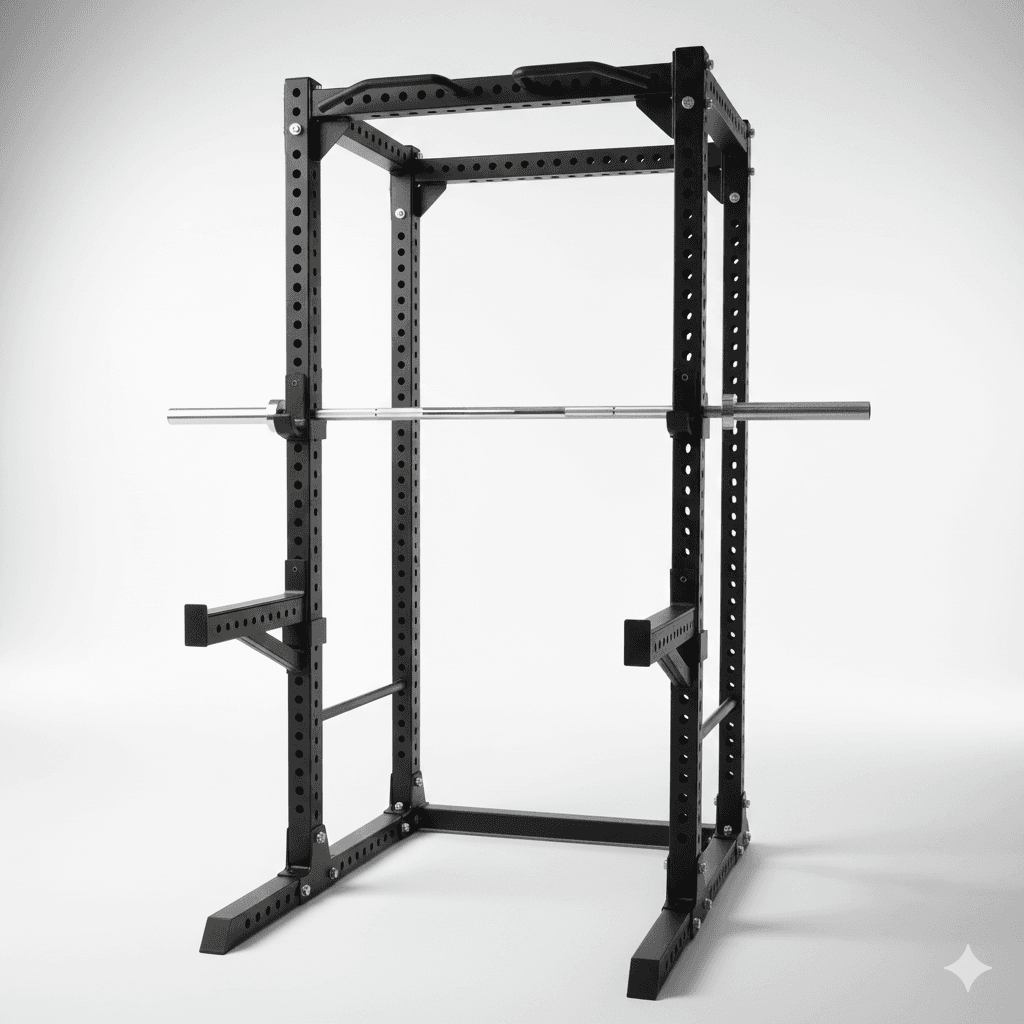
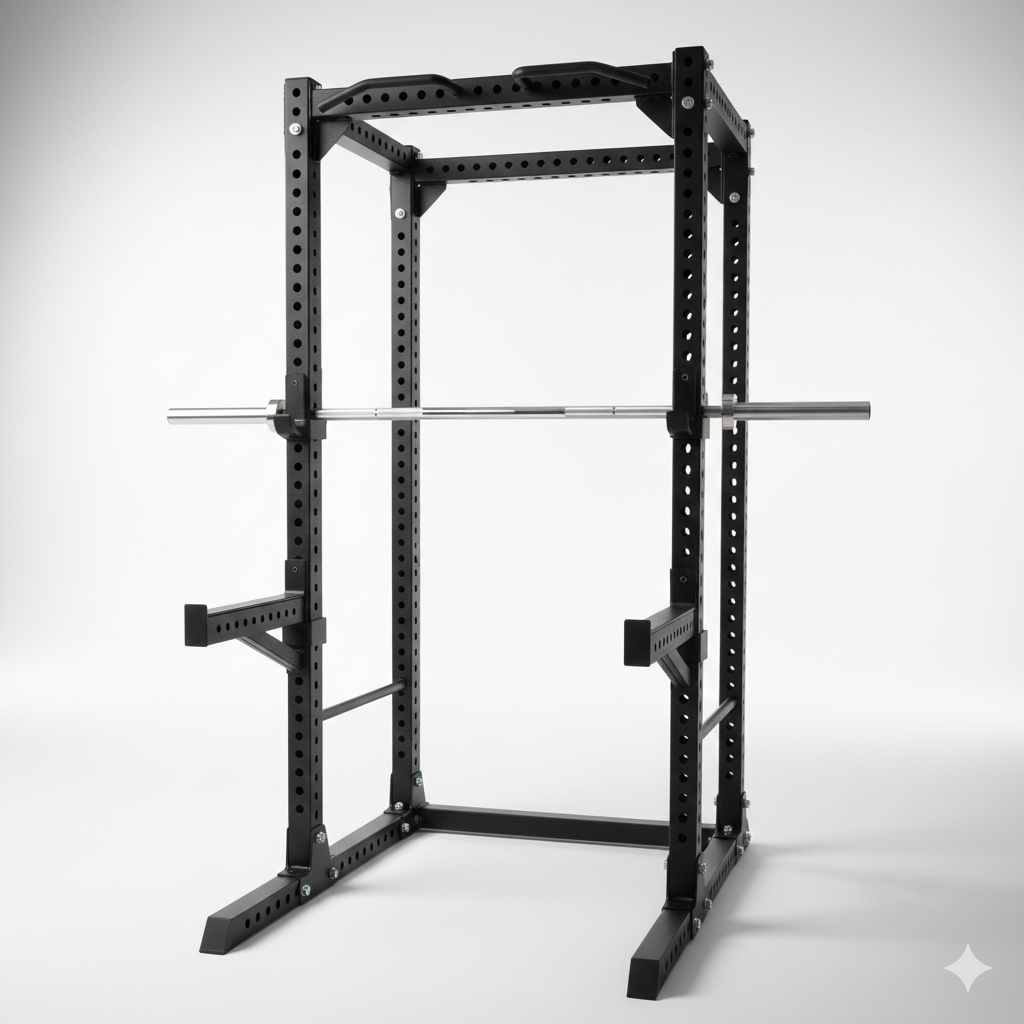
Full power rack (4-post cage): Completely enclosed cage with front and rear uprights connected at top. You walk in, set up, and train enclosed. Most attachments - lat pulldown, cable systems, landmine - are designed for full cage uprights. Most stable option. Largest footprint (typically 1.2m x 1.5m minimum). Most expensive.
Half rack / squat rack (2-post with frame): Two uprights connected by a rear base frame. Open front for easy access. Safety bars span between the two posts. This is what the M1 and GORILLA SPORTS are. Good balance of safety, space, and cost. Right choice for most home gyms.
Squat stands (2 independent posts): Two completely separate vertical posts with no connecting frame. Smallest and cheapest. The critical issue: no safety bars. If you fail a lift, there's nothing to catch the weight except you. Only appropriate for experienced lifters using bumper plates on rubber flooring, where dropping the bar is an acceptable outcome.
My take: unless space is a hard constraint, get at minimum a half rack with safety bars. The difference in cost between stands and a proper rack with safeties is £50-80. The difference in training safely alone is everything.
What to Look For in a Rack
Upright tube gauge: Measured in millimetres. 2x2" (51mm) uprights are standard for home gym racks. 3x3" (76mm) is commercial grade. At home gym loads, 2x2" is perfectly adequate.
Hole spacing: 5cm (Westside) spacing in the bench zone is the gold standard - gives precise bar height adjustment for competition-style positioning. 10cm spacing in the squat zone is fine. Most entry-level racks use 5cm throughout or 10cm throughout. Check if your target rack has close-spaced holes in the bench zone.
J-hook quality: The hooks that hold the barbell. Bare metal hooks damage bar knurling over time. Rubber-lined or UHMPE-lined hooks are worth having. They're available as upgrades for approximately £20 if your rack comes with bare metal.
Safety bar type: Strap safeties (bands of webbing between the posts) are more forgiving on the bar during a miss - the strap flexes instead of a hard catch. Pin safeties (solid metal arms) are the standard. Both work fine.
Weight capacity rating: The stated capacity is the maximum static load. Training loads are dynamic. A rack rated 250kg for a person slowly placing a loaded bar down behaves differently during a failed squat. Budget for margin.
Building the Complete Barbell Setup
A rack alone is useless. Here's the full setup:
Barbell and plates: The Strongway Olympic 50KG Set includes a 20kg Olympic bar plus 30kg of plates. Add plate pairs as you progress. *(Price when reviewed: roughly £200 | Check Price on Amazon)*
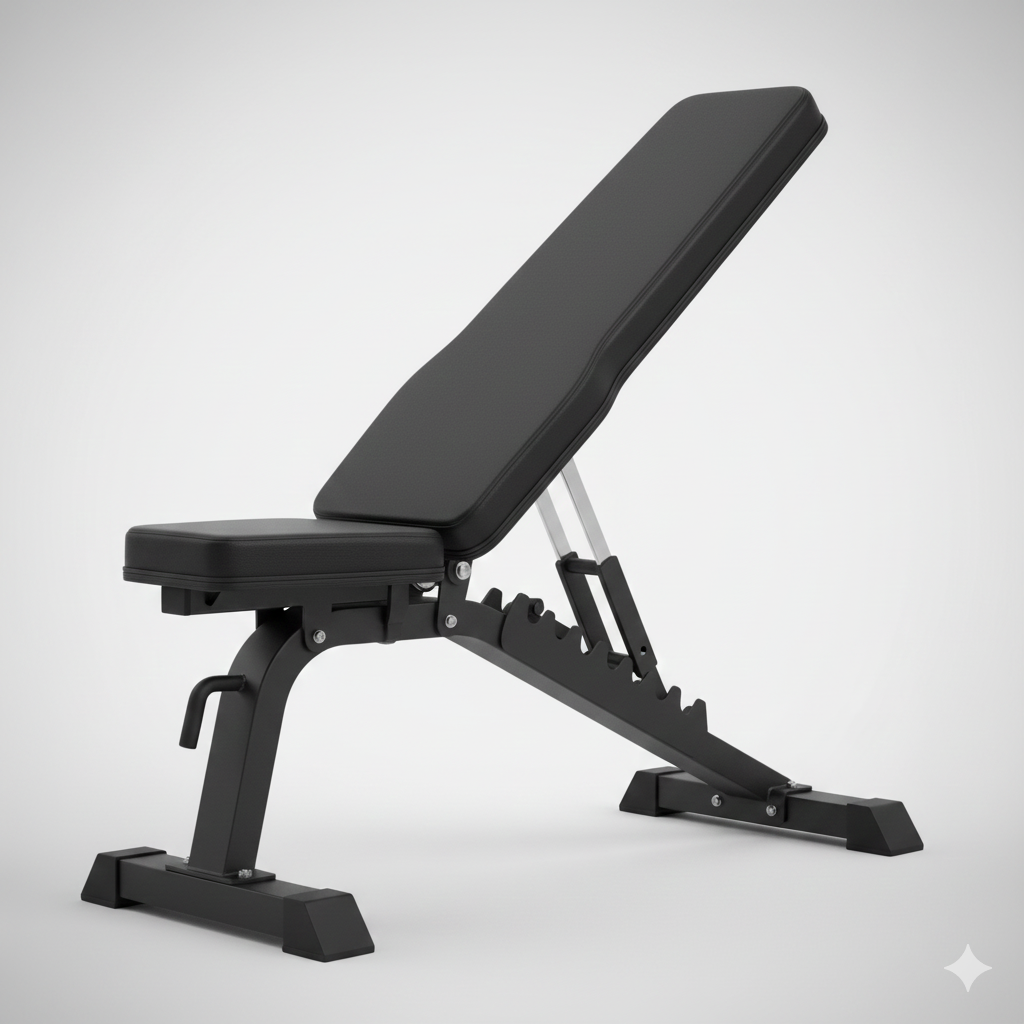
Bench: An adjustable bench slides inside the rack for bench press. The Mirafit M150 at 55cm wide fits inside most UK home gym racks. Check the internal width of your specific rack before buying.
Collars: Spring collars are fine for most training. Locking collars (OSO, Rogue HG) are worth the £20 for any set where plate wobble could be an issue.
Total for a complete barbell setup: Rack (around £150) + Barbell and plates set (approximately £200) + Bench (roughly £150) = around £500. That's less than a year of gym membership for kit that lasts a decade.
What You Can Train
With a rack, bar, plates, and bench, you have access to:
The big lifts: - Squat (back squat, front squat, safety bar squat) - Bench press (flat, incline, close grip) - Overhead press (standing or seated) - Deadlift (floor pull, no rack needed but the bar lives there)
Accessory work: - Pull-ups on the rack bar (if your rack has a pull-up attachment or top bar) - Dips on the dip attachment - Barbell rows - Good mornings - Romanian deadlifts - Barbell curls
This is essentially a complete strength training programme without any other equipment needed.
Anchoring Your Rack
Budget racks on smooth flooring can tip or walk during heavy pressing. Options:
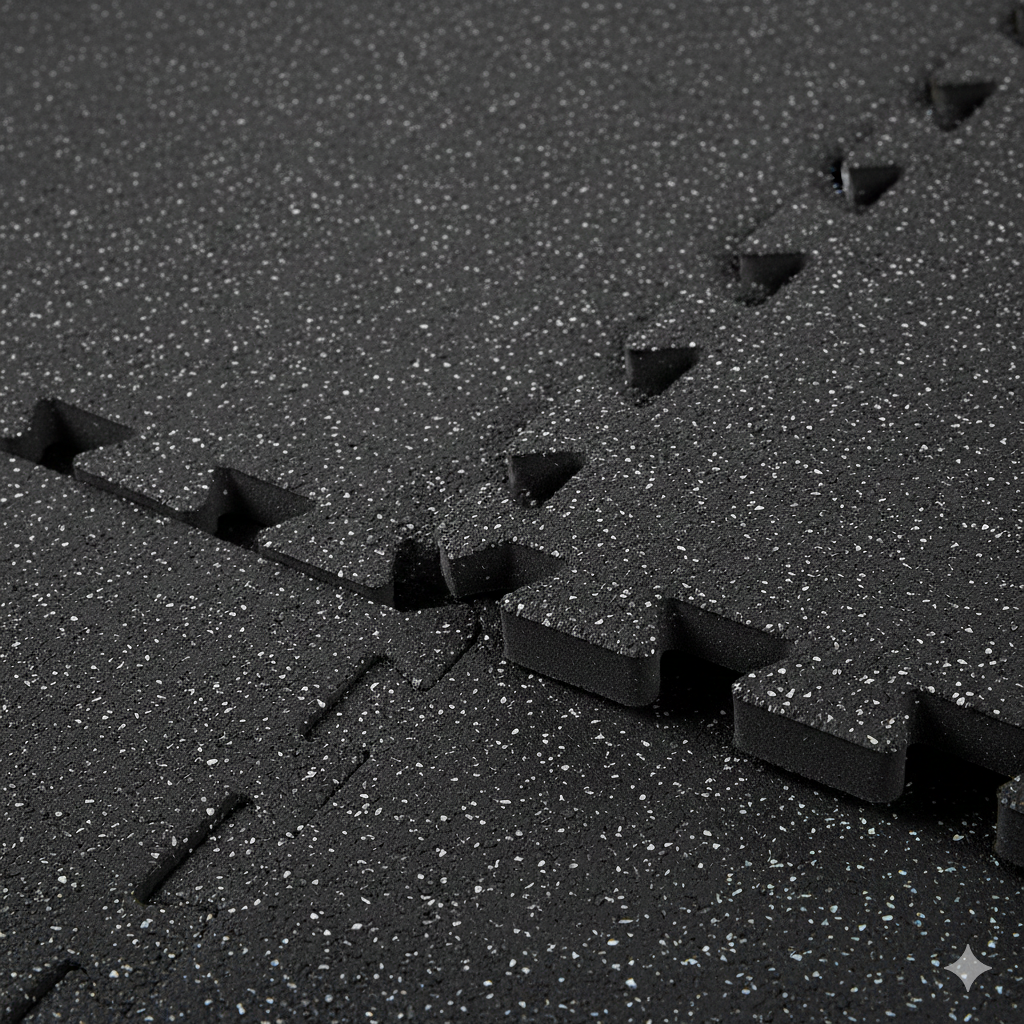
- Rubber gym tiles under the feet add friction and protect your floor. 20mm thick rubber tiles are the standard. - Weight the base: Most racks allow plates to be stored on the base posts. 20kg loaded on each base post adds stability. - Wall anchor: Some racks can be drilled to a wall stud. Significant stability improvement for very heavy loading.
For most home gym users, rubber tiles and base loading is sufficient. See our garage gym setup guide for full flooring options.
What to Avoid
Buying squat stands without safety bars. The whole point of rack training is training to failure safely without a spotter. Squat stands - two independent posts with no crossbar, safety arms, or cage - cannot catch a failed squat unless you have rubber flooring and are willing to dump the bar forwards. This is not beginner-appropriate and genuinely dangerous in a home setting with no spotter. If you're buying a rack to train alone, it must have safety bars. The M1 and GORILLA SPORTS both have them.
Buying a full commercial-grade cage for a home gym. The 3x3" uprights, 11-gauge steel, 600kg-rated cages that CrossFit gyms use are impressive. They're also 200-250kg assembled, need to be floor-bolted, and take up 1.5m x 2m of floor. They're genuinely excessive for home training loads and create installation challenges most domestic floors can't accommodate. A 2x2" half rack rated 250-300kg is the practical choice for the vast majority of home gym users.
Not measuring your garage door opening. Some full cages are taller than a standard UK garage door (2.0-2.1m). If you're buying a cage for a garage, measure the door opening height before ordering anything over 2.0m tall. Some flat-pack racks fit through when disassembled; check the assembled height and the door opening before clicking buy.
Cheap squat racks with welded J-hooks. The J-hooks are wear items. They should be replaceable. Fixed welded J-hooks that cannot be swapped mean when they wear down (knurled bars chew through the plastic inserts), you need to replace the whole rack. Adjustable, replaceable J-hooks are a non-negotiable feature.
Ignoring the barbell quality. A £150 rack paired with a £30 bar is a waste of money. Budget bars are typically not rated for Olympic lifts and have rough, uneven knurling that damages hands and tears calluses. A 20kg Olympic bar from a reputable source costs £100-200. The Strongway Olympic set is the entry-level benchmark - real Olympic spec at a reasonable price. *(approximately £200 | Check Price on Amazon)*
Forgetting the collar budget. Plates without collars can slide mid-set. During a squat, an uneven load shift is a serious injury risk. Budget £15-30 for a pair of good spring collars or £40-50 for locking collars. Don't treat this as optional.
Frequently Asked Questions
Do I need to bolt a home gym rack to the floor? For most home gym loads (under 150kg total on the bar), anchoring is optional if you have rubber flooring. The friction and base weight keep the rack stable. Above 150kg loaded, or on smooth concrete or laminate, bolting significantly improves safety. Pre-drilled holes for floor anchors are included on most half racks. Use M10 concrete anchors in a garage, M10 floor plate anchors on timber floors.
What barbell should I buy first? A standard 20kg Olympic barbell with a 28-29mm shaft diameter. This is compatible with all Olympic plates (50mm bore). Avoid 25mm bars (can't load Olympic plates) and avoid "fitness" bars with smaller plates - they won't work with standard iron plates. The Strongway and Body Power Olympic bars are reliable UK options. Don't buy a bar branded purely for bicep curls - you want a multipurpose bar that handles squats, bench, and deadlifts.
Is a power rack suitable for a wooden floor? Yes with protection. Use 20mm rubber gym tiles under the rack footprint (minimum) to distribute the load and prevent movement. A fully loaded rack (equipment + plates + person) can reach 300-400kg total. UK domestic timber floors are typically rated for 150-200kg per square metre - rubber flooring spreads the load across a larger area. Don't bolt into a timber first floor without confirming joist location and loading capacity.
Can I do pull-ups on a squat rack? Most half racks and full cages include a pull-up bar on the top crossbar. The M1 and GORILLA SPORTS both have this. Check your ceiling height first - you need enough clearance above the bar to hang fully. Standard racks are 2.1-2.3m tall; pull-up clearance requires 2.5m+ ceiling to hang comfortably.
Should I buy a rack or a Smith machine? A free barbell and rack. Smith machines restrict the bar to a fixed vertical path, which removes the stabiliser muscle activation that makes barbell training superior. You can't deadlift on a Smith machine. Smith machine-only training builds limited transferable strength. The free barbell in a rack is harder to learn but significantly more effective. The only use case for a Smith machine at home is if the trainee genuinely cannot learn free squat mechanics due to injury or mobility limitations.
Rack Accessories Worth Having
J-hooks and safety bars come standard with every rack on this list. Beyond those, three accessories earn their cost.
A dip attachment (around £30-50) bolts to the uprights and adds chest dips and tricep dips to your exercise list. These are compound movements that build pressing strength from a different angle than bench press. Most people who add dips report noticeable chest development within two months.
Band pegs (around £15-25) thread into the base of the rack and let you anchor resistance bands for accommodating resistance training. This means the weight gets heavier as you stand up from a squat or push through a bench press. Powerlifters use this technique constantly. For home trainers, it adds variety without buying more plates.
A landmine attachment (around £20-30) fits into one corner of the rack and holds a barbell at an angle. This opens up landmine rows, landmine presses, and rotational exercises that are genuinely difficult to replicate any other way. One attachment, twenty exercises.
Cable pulley systems (around £60-120) are the biggest upgrade. They bolt to the top of the rack and provide a high and low pulley for lat pulldowns, cable rows, tricep pushdowns, and face pulls. The Mirafit cable system fits the M1 and M2 racks and works well enough for home use, though it does not match the smoothness of a commercial cable stack.
Floor Space and Ceiling Height
UK ceiling heights average 2.4 metres. Most full-size racks need 2.1 metres of clearance including the pull-up bar, so standard ceilings work fine. Measure before buying. If your ceiling is 2.2 metres or below, look for short racks or half racks specifically designed for low ceilings. The Mirafit M130 squat stands are lower profile than full cages.
Floor space requirements depend on rack type. A full power cage needs roughly 1.4 metres wide by 1.2 metres deep, plus 1.5 metres in front for bench press and 0.5 metres behind for loading plates. Total footprint: approximately 1.4 by 3.2 metres. A squat stand needs less depth but has no safety bars for solo training.
Bolting down is recommended for full racks but not essential for squat stands. If you train with heavy weight (above 100kg on squats), a bolted rack feels noticeably more stable. On concrete garage floors, concrete anchors cost around £5 for a pack of four. On wooden floors, coach bolts through the subfloor work. Rental properties can use heavy sandbags on the base instead.
Plate Storage and Organisation
Racks with built-in plate storage horns keep your training area clear and your plates organised. The Mirafit M2 and M3 include storage horns. The M1 does not, so you will need a separate plate tree (around £30-50).
Weight organisation matters more than people expect. When plates are scattered on the floor, changing weight between sets takes longer, the floor gets scratched, and the training area feels chaotic. A tidy rack with plates sorted by size makes training more efficient and more enjoyable. Olympic plates fit on storage horns with a 50mm diameter. Standard plates need different diameter horns.
Barbell storage is another consideration. Most racks have no dedicated barbell holder, meaning the bar stays in the J-hooks between sessions. A wall-mounted barbell holder (around £15) keeps the bar horizontal and out of the way when the rack is used for bodyweight exercises or stretching.
Buying Second-Hand Racks
Power racks hold value well on the second-hand market. A Mirafit M2 typically sells for £180-220 used. Facebook Marketplace and Gumtree are the best sources in the UK. Check for the following before buying: weld integrity at all joints, straight uprights (sight down each one like checking a pool cue), working hole spacing for J-hooks and safety bars, and no missing hardware.
Collection is almost always required. Racks are heavy and awkward to ship. Budget £20-40 for a van hire if you do not own one. Disassembly at the seller's location takes 20-30 minutes with basic tools. Reassembly at home takes roughly the same.
Our Recommendation
The Mirafit M130 for almost everyone. It covers every exercise, handles realistic home gym loads, and is keenly priced. The UK brand and customer service matter - when something needs replacing, you can actually reach someone. *(roughly £150 | Check Price on Amazon)*
Go GORILLA SPORTS if you're already strong and want the extra capacity headroom. Go used Mirafit or similar on Facebook Marketplace if budget is tight - these racks last years without issues.
A rack with safety bars changes how you train. You stop leaving reps in the tank because you're worried about a failed set. That shift - from cautious to confident - is worth every penny of the £150.
For the full barbell and plates pairing, see our home gym equipment guide which covers all the components in one place. And if you're still weighing up whether to invest in a full strength setup versus staying with dumbbells, our dumbbell vs barbell comparison covers when each tool is the better choice for your training goals. The answer for most people is: use dumbbells first, add the rack when you've exhausted the range you can load with fixed dumbbells, typically around 30-40kg per hand for pressing movements.
For the barbell to pair with your rack, the best barbells UK guide covers the full range of options.
As an Amazon Associate, we earn from qualifying purchases.
Products Mentioned in This Guide
Frequently Asked Questions
Related Guides
Find Your Perfect Equipment
Expert guides for racks, barbells, plates, benches, and more. Build your home gym the right way.
Browse All Guides