Best Weight Benches 2026

Thirty years of training at home. Built multiple home gyms from bare garages to proper setups. I know what equipment lasts, what breaks, and what becomes an expensive clothes rack.
Just so you know, some links on this page are affiliate links. If you buy something via them, we get a small kickback. You don't pay more, but it helps toward the next bit of kit.
Looking for more equipment recommendations?
Browse All GuidesA weight bench unlocks half your training program. Chest presses, incline work, shoulder presses, seated rows, step-ups - every one of those becomes possible the moment you have a bench. Without one, you're stuck with floor-based work that cuts off the bottom range of motion on pressing exercises and limits what your training can cover.
This matters more than it sounds when you're choosing a bench. You're not buying furniture. You're buying access to a meaningfully wider exercise library and the ability to train through complete ranges that floor work physically can't reach.
Here's what's worth buying at each price point - plus the technical details that actually determine whether a bench holds up.
Quick Picks
| Category | Pick | Why | |
|---|---|---|---|
| Best Overall | REP AB-3000 Adjustable Bench | Commercial build, 1000 lb capacity, no pad gap | Check Price on Amazon |
| Space-Saving | Bowflex 5.1S Stowable Bench | Floor footprint drops 60% when stowed | Check Price on Amazon |
| Best Value | Merax Adjustable with Leg Developer | Adds leg curls and extensions at this price | Check Price on Amazon |
| Entry Level | Marcy SB-670 Standard Bench | Simple, stable, proven starting point | Check Price on Amazon |
Prices shown are approximate at time of review. Click "Check Price on Amazon" for current pricing.
Best Overall: REP AB-3000 Adjustable Bench (approximately $320)
The REP AB-3000 is the bench that serious home gym communities consistently recommend when people ask what they wish they'd bought first. *(Price when reviewed: roughly $320 | Check Price on Amazon)*
REP Fitness builds equipment to commercial specifications. The AB-3000 shows it: steel gauge, pad density, and weld quality are noticeably different from budget alternatives at the same price point.
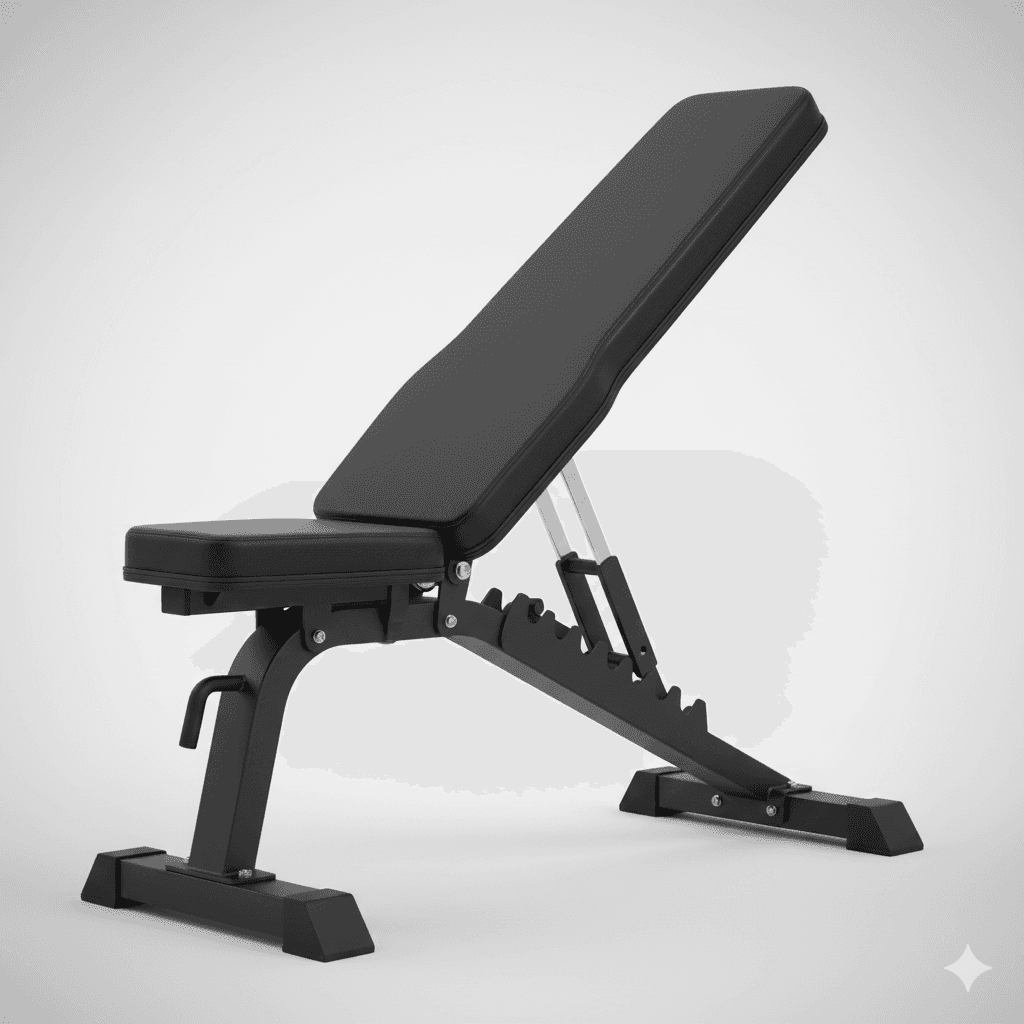
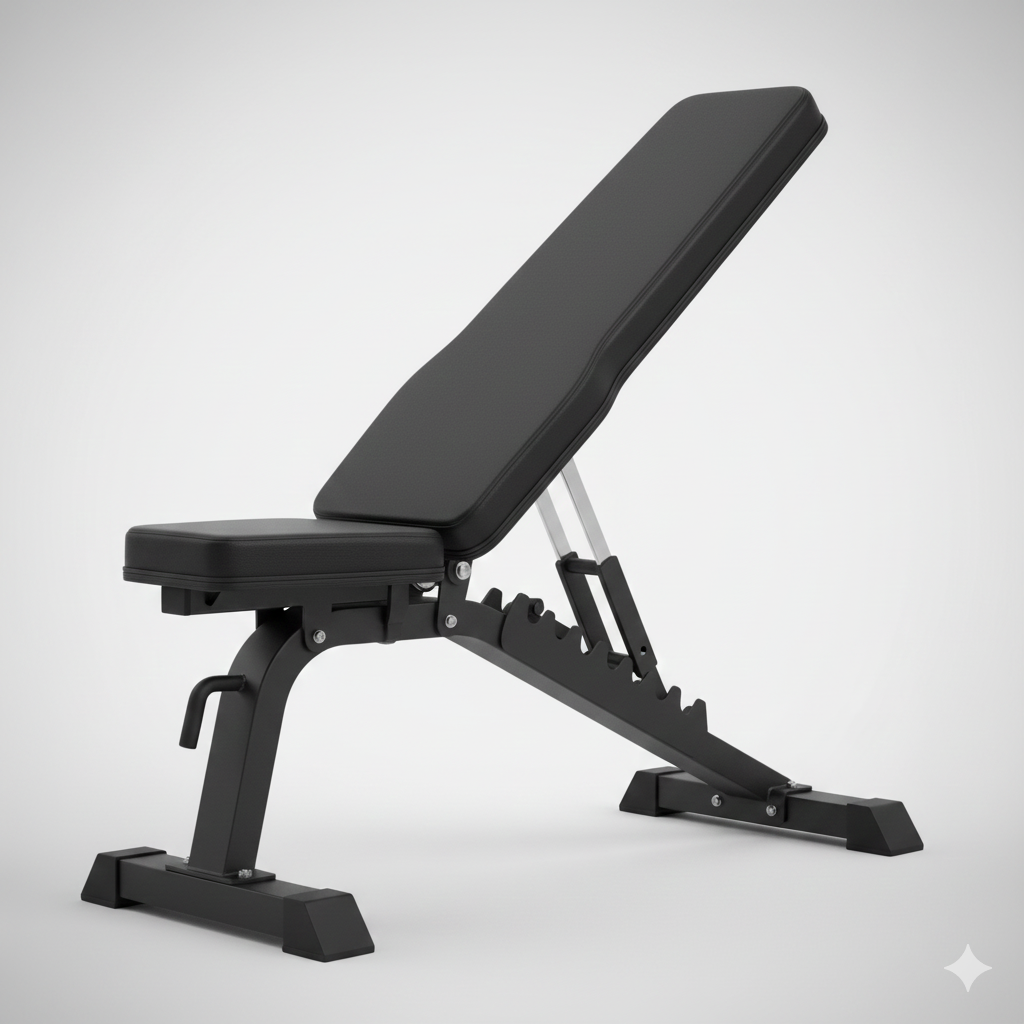
What makes it worth the money: - 1000 lb rated capacity handles anything in a home gym context - No gap between seat pad and backrest - critical for heavy pressing where lower back position matters - 7 backrest positions, 4 seat positions - every pressing angle including steep incline - Adjustment handles you can reach while seated, without dismounting between sets - 90 lb bench weight means no wobble during heavy dumbbell pressing - Pad firmness is correct: firm enough for stability, not hard enough to bruise
The honest tradeoffs: - 90 lb is genuinely heavy - moving it around solo takes real effort - Doesn't fold: needs dedicated floor space - The price point is real; this is not a cheap bench
One thing most people notice after buying cheaper benches first: the REP's pad gap (or lack of it) is a functional difference, not cosmetic. During heavy dumbbell pressing, a gap under your lower back forces bridging or grip adjustment. No gap means neutral spine throughout the set - better positioning, safer loading.
Space-Saving Pick: Bowflex 5.1S Stowable Bench (around $300)
The Bowflex 5.1S solves the storage problem that most adjustable benches create. *(Price when reviewed: approximately $300 | Check Price on Amazon)*
When not in use, it stands vertically - the floor footprint shrinks from 61" long to 24" long. Same 28" width, but the bench now fits against a narrow wall section or in a corner that a standard bench would block entirely. For apartments, shared spaces, or gyms that need to disappear after training - this is a genuine solution.
Six backrest positions: decline (−20°), flat (0°), low incline (30°), mid incline (45°), high incline (60°), and upright (90°). That covers the full pressing range from decline chest work through seated shoulder press.
What makes it worth the money: - Floor footprint drops by 60% when stowed - 61" to 24" length - Six positions cover the complete pressing range - 600 lb weight capacity - more than enough for any home gym context - 70 lb bench weight means genuine stability during heavy pressing - 15-year warranty - Bowflex stands behind this product
The honest tradeoffs: - 70 lb is heavy to move solo without using the transport wheels - Stowing mechanism adds mechanical complexity that a fixed bench doesn't have - Price is close to the REP AB-3000 for a different trade-off (storage vs rigidity)
The pick specifically for smaller spaces where the bench needs to disappear when training is done.
Best Value: Merax Adjustable Bench with Leg Developer (roughly $150)
The Merax with Leg Developer does something unusual for the money: it adds a leg developer attachment that most benches at twice the price don't include. *(Price when reviewed: around $150 | Check Price on Amazon)*
The leg developer covers leg curls and leg extensions - both quadriceps and hamstring isolation exercises that otherwise require separate cable or machine equipment. For a small home gym without a dedicated leg machine, this fills a real gap in what you can train.
What makes it worth the money: - Leg developer attachment covers isolation leg work at no extra cost - Six backrest adjustments including flat and decline - 550 lb weight capacity - reasonable for the price - Covers the full exercise range for a beginner to solid intermediate home gym
The honest tradeoffs: - Build quality reflects the price: steel gauge is lighter than premium options - Pad on the softer side - compresses noticeably under heavy pressing loads - Leg developer is functional but not as smooth as dedicated machine equivalents - Expect some assembly imprecision at this price point
The right bench if you want maximum exercise coverage per dollar, and you're not pushing weights that require commercial-grade construction.
Entry Level: Marcy SB-670 Adjustable Bench (approximately $130)
The Marcy SB-670 packs 8 positions into an entry-level price: upright, high incline, mid incline, low incline, flat, and decline. For dumbbell training on a strict budget, it covers the essential pressing angles. *(Price when reviewed: roughly $130 | Check Price on Amazon)*
The SB-670 has been around long enough that the real-world failure modes are documented. The adjustment mechanism and welds are the weak points - some users have reported structural failures during barbell bench pressing. For dumbbell work, it holds up fine. For barbell pressing with any meaningful weight, step up to the Merax or REP.
What makes it worth the money: - 8-position adjustability at entry-level pricing - Gets you training without a significant investment - Folds for storage - useful if you have very limited floor space - Low enough price that upgrading later doesn't sting
The honest tradeoffs: - Build quality reflects the price, not rated for heavy barbell work - Structural failure reports under barbell pressing loads: dumbbell-only for this bench - Pad is serviceable but on the soft side - Most people who stick with training upgrade within 6-12 months
Buy the Marcy for dumbbell-only training on a strict budget. Use the Merax or REP for any barbell work.
Flat vs Adjustable: The Real Answer
The debate comes up in every home gym forum: is a flat bench better because it's simpler and more stable, or does adjustable versatility make it the obvious choice?
For most home gym setups: adjustable is correct.
A flat bench does flat work only. A quality adjustable bench does flat work just as well - the flat position is exactly that, flat - plus every incline angle and seated work. The extra weight and mechanical complexity of an adjustable bench adds minimal instability for properly loaded pressing.
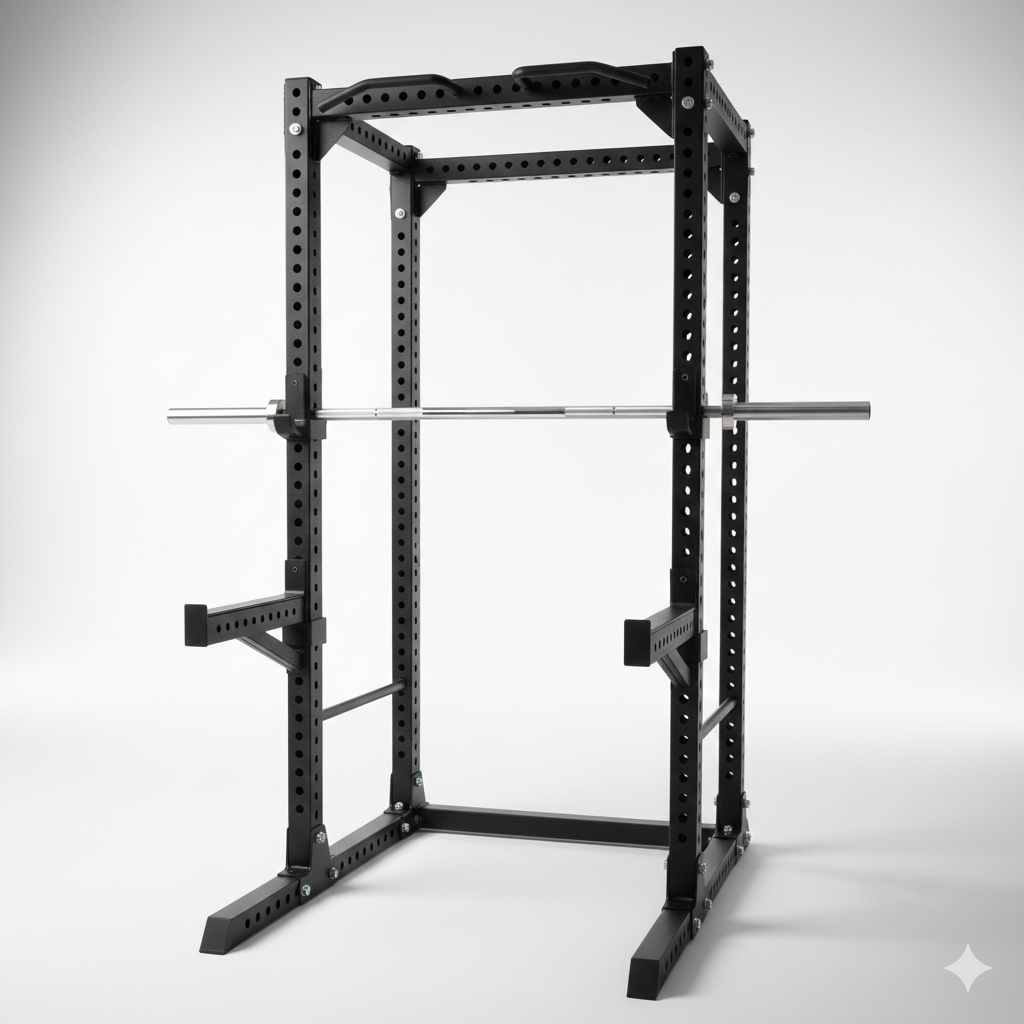
The exception: if you have a power rack with adjustable J-hooks and safety bars, a flat bench is genuinely fine. The rack handles your angles on barbell work. The bench is just a pad. For pure barbell training in a rack-equipped home gym, a flat bench costs less and does everything you need.
Without a rack: adjustable is the better answer, not because flat is wrong, but because the range of exercises one piece of equipment covers is meaningfully wider.
Weight Capacity Myths: What the Rating Actually Means
Every bench lists a weight capacity. Most people assume that rating includes their bodyweight plus the dumbbells. Some assume it's just the dumbbells. Neither is precisely right.
Manufacturer capacity ratings are typically static load tests - how much weight placed statically on the bench before deformation or failure. Dynamic loading - the forces created when you lower a weight quickly, or press from a full stretch - creates higher instantaneous force than the static weight on the bar.
What this means in practice:
A 500 lb rated bench does not mean you can safely bench press 370 lb with a 130 lb bodyweight. The dynamic peak force of an aggressive pressing rep exceeds the static weight on the bar.
For home gym use - most people pressing 88-175 lb per hand - this doesn't cause failures. You're nowhere near the dynamic limit of any properly-built bench. Where it matters: very heavy pressing, users over 250 lb bodyweight, or drop sets where weight releases from extension suddenly.
Practical guide: - Under 200 lb combined (bodyweight + weights): any 300 lb+ rated bench is fine - 200-350 lb combined: look for 500 lb+ ratings - 350 lb+ combined, or aggressive pressing style: commercial-grade 700 lb+ (REP AB-3000 territory)
Pad Quality: How to Actually Tell
Pads look identical in product photos. They don't train the same.
Firmness matters. Soft pads compress under your upper back during pressing, which shifts your bench angle mid-set. A pad that starts at 30° and compresses to 20° under body weight loses the mechanical advantage of the angle you set. Firm is better for stability.
Cover material matters. PU vinyl handles sweat better than basic vinyl over time. Stitching at pad corners is where budget benches fail first - check review photos specifically for delamination at edges after 6-12 months of use.
Density over thickness. A 2-inch dense foam pad is better for pressing than a 3-inch soft pad. More foam is not the same as better foam.
Signs of poor pad quality in reviews: "sinks when you sit down," "feels soft," complaints about lower back pain during pressing (usually pad gap causing bridging, but soft pads contribute). Signs of quality: "firm but comfortable," no compression complaints, no cover peeling.
Solo Pressing Safety
Training alone introduces risk that doesn't exist with a spotter. For dumbbell pressing the standard approach works: start lighter than you think you need on the first session in a new setup, and plan your set endings before you start.
For heavy dumbbell pressing: 1. Start seated with dumbbells on your thighs 2. Kick one knee to pop the first dumbbell into pressing position, then the second 3. To end the set: lower controlled to chest, lower to thighs, then stand
The "drop it" approach - releasing dumbbells from full extension - risks mechanism damage on adjustable dumbbells and injury from unexpected bounce.
For barbell bench pressing without a spotter: use a power rack with properly set safety bars, or use the roll-of-shame technique to lower the bar to your chest and walk it toward the uprights. Solo barbell pressing without safeties is the scenario where serious injuries happen to people who knew better.
If you're training alone consistently and pushing barbell pressing hard: buy the power rack before you push close to failure.
Frequently Asked Questions
What's the minimum bench for a home gym? An adjustable bench covering flat through 45° incline handles everything most home training programs need. The Merax covers this. The REP AB-3000 covers it better and lasts longer. The Marcy covers flat-only work as a starting point.
Do I need decline functionality? For most programs, no. Decline press has limited evidence for additional lower chest development over flat pressing. It's a nice-to-have, not a requirement. If you get it at no extra cost (Merax), fine, but don't pay a premium specifically for decline.
How important is a leg developer attachment? More useful than most people expect. Leg curls and extensions are isolation movements that most home gyms simply can't do without cable machines. If your gym doesn't have a dedicated leg machine, a bench with a leg developer genuinely covers a gap in your training options.
Adjustable bench vs flat bench, which is actually better? For home gyms without a power rack: adjustable wins by versatility. For home gyms with a full rack and J-hooks: a flat bench is fine and simpler. Both answers are correct depending on your setup.
How much weight capacity do I actually need? Add your body weight plus the maximum weights you plan to press, then allow margin for dynamic loading. For most home gym users, 500 lb rated capacity gives comfortable margin. 1000 lb rated (REP AB-3000) is the serious end.
Does bench weight matter? Yes, directly. Heavier benches flex less during pressing and don't shift on the floor. Any bench under 40 lb will wobble noticeably under serious loads. The REP AB-3000 at 90 lb essentially doesn't move.
Flat vs Adjustable: The Trade-Off
Flat benches are cheaper ($80-150), more stable (lower centre of gravity), and have higher weight capacities. Adjustable benches ($150-350) add incline and decline positions that open up dozens of additional exercises.
Maintenance That Extends Bench Life
Sweat is the primary enemy of bench upholstery. Wipe the pad after every session with a damp cloth or antibacterial spray. This prevents salt buildup that cracks vinyl within 12-18 months.
Bolt tightening every 3-6 months prevents wobble from developing. The adjustment mechanism, base bolts, and feet all loosen gradually with use. A quick check with a wrench takes 2 minutes and keeps the bench feeling solid.
Bench Stability Tips
A bench that slides on a smooth floor during heavy pressing is dangerous and frustrating.
Rubber feet on the bench legs solve most sliding issues. If your bench has plastic feet, replace them with rubber furniture pads (around $5 for a pack). Alternatively, place the bench on a rubber gym mat, which gives grip for both the bench and your feet.
Bench Angles and What They Target
Flat (0 degrees): Standard bench press position. Middle chest, front deltoids, triceps. Also for dumbbell rows, lying extensions, hip thrusts.
30-degree incline: The most useful position. Upper chest and front delts with less shoulder strain than steeper angles. Default incline for general training.
45-degree incline: More deltoid emphasis. Used for shoulder press and incline curls.
Decline (-15 degrees): Targets lower chest. Studies show decline activates lower pec fibres more than flat. However, most home trainers skip decline because dips work the same muscles more naturally.
Weight Capacity and Safety
The capacity rating includes both bar weight and your body weight. A bench rated at 600 pounds supports a 200-pound person pressing 400 pounds. A bench rated at 400 pounds supports a 200-pound person pressing 200 pounds, which becomes limiting for intermediate lifters.
Buy more capacity than you need. A bench rated at 600 pounds feels solid at 200 pounds of load. A bench rated at 400 pounds flexes noticeably at the same load. The flex is not dangerous but reduces confidence under heavy weight.
Stability indicators: Wide base feet (three or more support points), rubber feet that grip the floor, no lateral wobble when you push the backrest sideways. Check reviews mentioning stability under load.
Pad Quality and Durability
Cheap vinyl (on benches under $100) cracks within 12-18 months. The foam compresses permanently, creating dips. Uneven padding reduces support during heavy pressing.
Quality vinyl with high-density foam maintains shape for 3-5 years. The Rep Fitness FB-5000 and Rogue Utility Bench use thicker vinyl and denser foam than budget alternatives.
Pad width affects stability. Wider pads (11-12 inches) support shoulder blades completely. Narrow pads (10 inches or less) let shoulder blades hang over edges.
Buying Used Benches
Benches appear on Facebook Marketplace constantly. Rep Fitness and Rogue benches hold 55-70% of value. Amazon basics and CAP benches drop to 30-40%.
What to Avoid
For the rack to complete your barbell setup, the best power racks US guide covers every size and budget.
Benches with a pad gap at the incline crease. This is the most common quality failure in budget benches. When the seat and back pad do not meet cleanly in flat or declined positions, you end up with a gap that digs into your lower back during pressing. Several Marcy and Fitness Reality budget models have this issue documented in their reviews. Check specifically for pad gap complaints before buying anything under $150. The REP AB-3000 and Bowflex 5.1S both pass this test.
Folding benches rated at their combined user-plus-weight limit. A bench listed at "300 lb capacity" sounds substantial until you read the fine print and find that figure includes the person lying on it. A 185 lb person dumbbell pressing 60 lb per hand is putting over 300 lb on the bench continuously. Most folding benches are not designed for actual barbell or heavy dumbbell pressing. They are marketed as benches but built for bodyweight exercises. If you plan to lift meaningful weight, the folding bench category is the wrong choice.
Flat-only benches. A flat bench is better than no bench, but it permanently limits you to flat pressing. Incline work is where most people see the most chest and shoulder development. Unless space makes incline truly impossible, the adjustable option is worth the extra $40-80. The Merax includes incline, decline, and a leg developer. A flat-only bench at the same price is a worse use of money for almost everyone.
Benches where the legs wobble during use. Stability matters during heavy pressing. Any wobble from the floor contact points or frame joints is a distraction and a safety concern at heavier loads. If buying in person, test stability by applying lateral pressure to the top of the backrest with the bench empty. If it moves significantly under light hand pressure, it will move more with weight on it.
The Verdict
A quality adjustable bench is one of the most efficient equipment investments in a home gym. One piece opens up 30+ exercises across chest, shoulders, back, and arms that floor work can't cover.
The REP AB-3000 is the answer for people who know they'll train consistently: commercial-quality construction, no pad gap, handles every pressing angle. Buy it once, keep it for years.
Space-constrained? The Bowflex 5.1S solves the storage problem better than anything else available. Testing the waters? The Merax with Leg Developer packs in maximum exercise coverage for the money, or the Marcy SB-670 gets you started flat and simple.
Get the bench. The training follows. A home gym without a bench is a floor gym - functional but unnecessarily limited. Add one and your exercise library triples overnight.
As an Amazon Associate, we earn from qualifying purchases.
Products Mentioned in This Guide
Frequently Asked Questions
Related Guides
Find Your Perfect Equipment
Expert guides for racks, barbells, plates, benches, and more. Build your home gym the right way.
Browse All Guides