Tonal 2 vs Speediance Gym Monster 2 2026

Thirty years of training at home. Built multiple home gyms from bare garages to proper setups. I know what equipment lasts, what breaks, and what becomes an expensive clothes rack.
Just so you know, some links on this page are affiliate links. If you buy something via them, we get a small kickback. You don't pay more, but it helps toward the next bit of kit.
Looking for more equipment recommendations?
Browse All GuidesI earn a commission on purchases made through links on this page. Full disclosure here.
For most home gyms, the Speediance Gym Monster 2 is the smarter buy. It costs less, it does not lock you into a mandatory membership, it stands on its own floor instead of bolting to a wall, and it folds away when you are done. The Tonal 2 is the more polished machine, with the slickest coaching and the cleanest wall-mounted profile, and it is the right call for a specific buyer: someone who wants the premium, fully integrated experience and is happy to pay for it twice, once up front and again every month. Here is how the two actually differ, and which one fits which person.
Quick Picks
Not sure which setup is right for you?
Take Our QuizThe Speediance Gym Monster 2: Freedom and Value
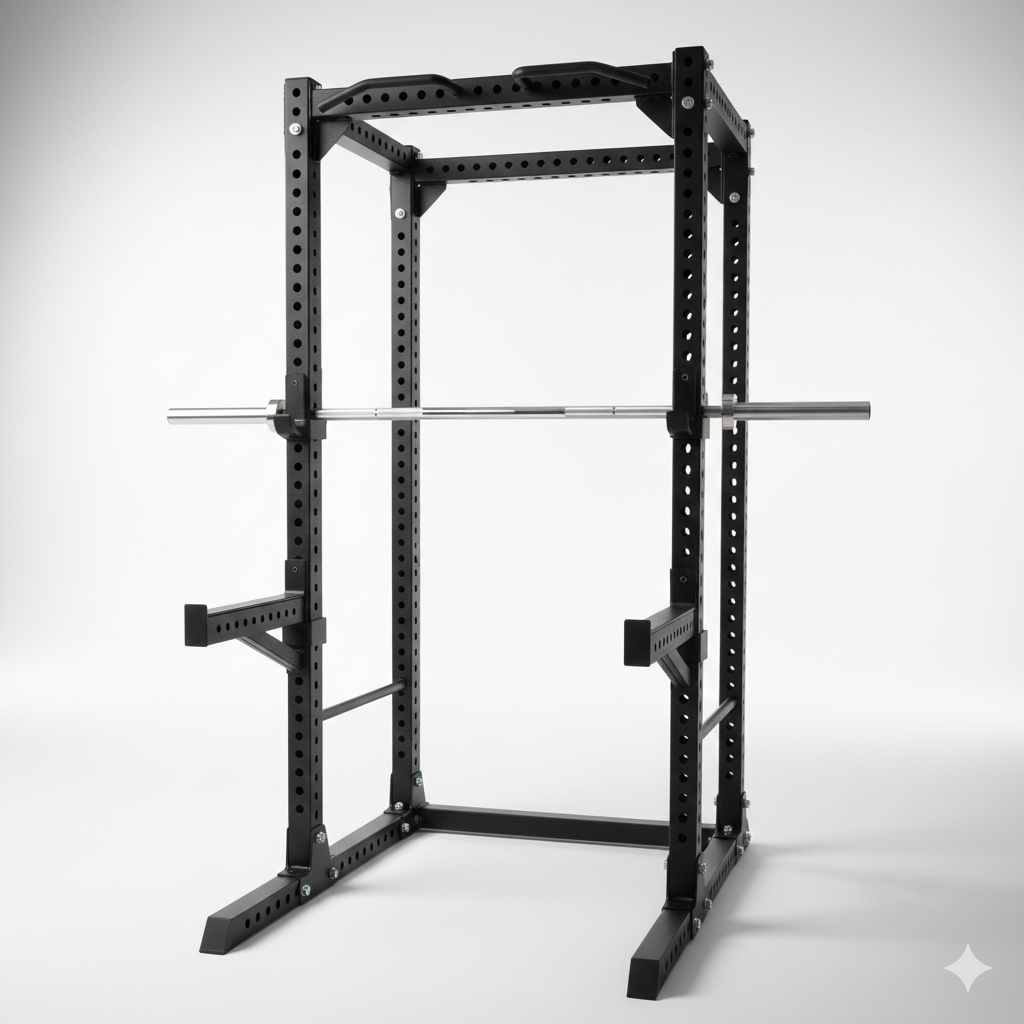
The Gym Monster 2 is a freestanding all-in-one. Two 800W motors deliver up to 220 lb of digital resistance through a pair of cables, wrapped in a frame that gives you a power cage, a Smith bar path, a squat rack, and a bench. That frame is the point: you can get inside it and squat, press, and pull in the patterns a barbell lifter actually uses, not just cable movements in front of a screen. When you are finished, the whole thing folds to under three square feet against a wall.
Its biggest practical advantage over the Tonal is what it does not demand of you. There is no mandatory subscription. The on-device coaching and rep tracking work the moment you switch it on, and Speediance only charges if you want its extra library of guided classes. You are not signing a 12-month contract to use the machine you just bought. For a full breakdown of what it is like to own, see the Speediance Gym Monster 2 review.
Where it gives ground is polish. The coaching is good but not as visually slick or as form-aware as Tonal's camera-driven system, and as a young brand Speediance does not have the years of reliability data that would let anyone promise it will still be running in a decade. It is the more versatile, more flexible, better-value machine. It is not the more refined one.
The Tonal 2: Polish and Integration
The Tonal 2 is a different philosophy. It mounts on your wall, gets professionally installed, and disappears into a compact panel when not in use. It delivers up to around 250 lb of adaptive digital resistance and pairs it with an integrated camera and Smart View coaching that watches your form and corrects it in real time. A brief strength assessment sets your weights automatically, and the guided workout library spans 15 modalities from strength to HIIT to yoga. As a single, beautifully integrated piece of home fitness design, nothing here beats it.
The catch is the commitment, and it is a big one. The Tonal 2 requires a membership with a 12-month minimum to function as intended, so the price on the listing is only the start of what you pay. It is wall-mounted and pro-installed, which means it is effectively permanent once fitted, no folding it away, no taking it with you if you move. And it is the most expensive option here by a clear margin. You are buying the most refined experience in the category, and you are paying for that refinement continuously.
Head-to-Head: Tonal 2 vs Speediance Gym Monster 2
| Dimension | Tonal 2 | Speediance Gym Monster 2 | Winner | Why it matters |
|---|---|---|---|---|
| Up-front cost | Highest in class | Lower | Speediance | Less capital to start |
| Membership | Required, 12-month minimum | Optional | Speediance | Tonal keeps charging monthly |
| Max resistance | Up to 250 lb | Up to 220 lb | Tonal 2 | Headroom for strong lifters |
| Form coaching | Camera + Smart View | On-device AI | Tonal 2 | Tonal watches your form |
| Footprint | Wall-mounted, fixed | Freestanding, folds to 2.69 sq ft | Speediance | Move it, store it, take it |
| Installation | Professional install required | Self-setup | Speediance | No installer appointment |
| Movement range | Cable-based, wall unit | Cage and Smith included | Speediance | Real barbell-style patterns |
| Brand track record | Established smart-fitness name | Newer challenger brand | Tonal 2 | Longer reliability history |
The table makes the split clear. The Tonal 2 wins where refinement and coaching matter most. The Speediance wins on almost everything practical: cost, flexibility, freedom from a contract, and the versatility of an actual cage you can train inside.
Which One Should You Buy?
Buy the Speediance Gym Monster 2 if you are the type of person who wants to own your equipment outright, train without a monthly bill, and keep the option to fold it away or take it with you. It also suits anyone who lifts in barbell patterns and wants a cage and Smith frame rather than cables in front of a panel. For the large majority of home gym buyers, this is the machine.
Buy the Tonal 2 if you specifically want the most polished, most integrated experience in home strength training, you value real-time camera form coaching above everything else, you have a permanent wall to give it, and the mandatory membership does not bother you. It is a genuinely premium product for a buyer who wants premium and will use the coaching enough to justify the ongoing cost.
Buy neither if your priority is raw strength per dollar or long-term durability. In that case a barbell, a power rack, and a set of adjustable dumbbells will out-lift and outlast either machine for a fraction of the price. The smart gyms win on convenience and coaching, not on cost or longevity. If your shortlist is really premium AI against a cheap traditional gym rather than two smart machines, the Tonal 2 vs BowFlex Xceed comparison is the one to read next.
There is also the beginner question, because both machines are often pitched at people new to lifting. Here the two split in a useful way. A nervous beginner who wants to be told exactly what to do, with form watched and corrected in real time, gets the most hand-holding from the Tonal and its camera coaching, and for some people that guidance is the difference between training consistently and quitting. A beginner who is more cost-conscious, or who suspects they will outgrow the classes and want to follow their own program, is better served by the Speediance, which teaches and tracks without charging a monthly fee for the privilege. Neither is a bad starting point. The question is whether you will lean on the coaching enough to justify paying for it indefinitely, or whether you would rather own the tool outright and learn at your own pace.
Match It to Your Situation
Run the decision through your actual life instead of the spec sheet and it tends to settle itself.
Renting, or likely to move within a couple of years? Get the Speediance. It stands on the floor, folds flat, and comes with you. Bolting a Tonal to a wall you do not own and later paying to strip it out again is money you never see back.
Want to train barbell-style patterns, squatting and pressing inside a frame? The Speediance wins here too. The cage and Smith path are the entire reason to pick it over a wall unit, and no amount of Tonal polish replaces standing inside a rack.
Nervous about form and want coaching through every rep? That is the Tonal's home turf. Its camera correction is the most active guidance either machine offers, and if that is what gets you under the bar three days a week, the consistency alone can pay for it.
Training in a shared living space where the machine has to look the part between sessions? Give it to the Tonal. It reads as a sleek wall panel when nobody is on it, where the Speediance, folded or not, still looks like gym kit parked in the corner.
Sharing it across a household with mixed strength levels leans to the Tonal as well, whose automatic assessment and per-user profiles smooth the handover between people. The Speediance tracks more than one user too; it just asks you to set more of it up by hand.
What to Avoid
Buying the Tonal 2 without budgeting for the membership. The sticker is not the real cost. With a 12-month minimum commitment required to use it properly, the true first-year price is meaningfully higher than the machine alone. Anyone comparing the two on up-front price only is comparing the wrong number.
Choosing a wall-mounted unit if you rent or might move. The Tonal 2 is professionally installed and fixed to a stud wall. If there is any chance you relocate inside the next couple of years, the freestanding, foldable Speediance saves you from leaving an expensive machine behind or paying to uninstall and refit it.
Assuming either replaces a barbell for a serious lifter. Both cap out in the low-to-mid 200s of pounds of digital resistance, which a strong squatter or deadlifter will pass. If that is you, do not buy either as your only strength tool.
Picking the smart gym purely for the AI novelty. The coaching is genuinely useful, but it is not a reason to overspend if you will not use the classes. If the guided content is not something you will stick with, the value case for both machines weakens fast.
The Real Cost of the Tonal Membership
The single number that decides this comparison for most people is not the price on either listing, it is the Tonal membership. Tonal requires a paid plan with a 12-month minimum commitment to work as designed, and that cost repeats every month for as long as you own the machine. So the honest way to compare the two is not sticker against sticker, it is the Tonal sticker plus a year of membership against the Speediance sticker plus nothing.
Run that math and the gap widens a long way past what the listings suggest. The Speediance has an optional membership too, but you can ignore it entirely and still have a fully functional gym with on-device coaching. With the Tonal, the subscription is not a nice-to-have you can skip in a lean month, it is the cost of using the equipment at all. Over three or four years of ownership, the recurring fee can rival the price of a second machine. If you are the kind of buyer who will genuinely use the guided classes several times a week, that fee buys something real. If you mainly want a strength tool and will drift away from the classes after the novelty fades, you are paying rent on features you stopped using. Be honest with yourself about which buyer you are before you commit, because the contract does not care.
What Owners Report on Each
I have not trained on either machine myself, so this is a synthesis of what owners and reviewers consistently say rather than a hands-on verdict. Tonal owners are, on the whole, very happy with the polish. The form coaching and the auto-adjusting weight get praised as genuinely motivating, and people who stick with the classes tend to love the machine. The recurring frustrations are the cost stacking up over time and the feeling of being locked in once the unit is bolted to the wall and the membership is running.
Speediance owners report the opposite pattern. The early friction is the learning curve and the occasional sense that they are an early adopter of a younger product, but the satisfaction grows as the convenience and the no-subscription freedom sink in. The most common theme across both camps is that buyers who matched the machine to their real priorities are happy, and buyers who chose on novelty or on the up-front number alone are the ones with regrets. Almost nobody who wanted folding freedom and no contract regrets the Speediance, and almost nobody who wanted the most coached, most integrated experience regrets the Tonal.
Resistance and Feel
On paper the Tonal edges the resistance battle, offering up to 250 lb against the Speediance's 220 lb, and a very strong lifter will notice that ceiling sooner on the Speediance. In practice the gap matters less than the raw numbers imply, because both use adaptive digital resistance rather than a fixed stack, and both can apply tricks that iron cannot, such as eccentric overload and assisted reps that ease off when you stall. For the large majority of home lifters who train in a normal hypertrophy range, neither machine's ceiling is the limiting factor. The more meaningful difference in feel is the frame: training inside the Speediance cage feels closer to a traditional rack session, while the Tonal feels like working out with a beautifully coached wall unit. Which one feels right is less about pounds and more about whether you want a cage around you or a panel in front of you.
The Coaching and Content, Compared
For a lot of buyers this is the real reason to pay the premium, so it helps to spell out what each side actually puts in front of you.
Tonal runs the more advanced system. Its camera and Smart View coaching track your body through a rep and flag when your form drifts, which is as close to a trainer in the room as either machine gets. The guided library is broad, the opening assessment sets your starting weights, and the machine keeps nudging them up as you get stronger. If you genuinely thrive on being programmed for and talked through a session, this is the fuller experience, and it is the strongest single argument for what Tonal asks.
Speediance goes leaner by design. On-device coaching and rep tracking run from the moment you power it on, with no subscription standing between you and a workout, and the class library sits there as an option rather than a toll. The feedback is solid without being camera-driven, so it corrects less actively than Tonal does. You trade the most sophisticated coaching for freedom from a monthly bill, and if you already have a rough idea of what you are doing, that is an easy trade to make.
Underneath the specs, the split is simple. Tonal sells you the most guidance money can buy on a home machine and bills you for it every month it stays on your wall. Speediance sells you most of that same guidance once and lets you ignore the classes without crippling the machine. For anyone not certain they will stay married to the coaching, that one-time deal is the safer bet.
What I'd Buy Today
For nearly everyone weighing these two, I would get the Speediance Gym Monster 2. It gives you the all-in-one AI gym experience, a real cage to train inside, and the freedom to skip the subscription and fold it away, all for less than the Tonal costs before its mandatory membership even starts.
If you have read all of that and you still want the most refined, best-coached, wall-integrated option, and the ongoing cost genuinely does not faze you, the Tonal 2 is the premium pick and it earns that label.
Most people should save the money, keep the flexibility, and get the Speediance.
As an Amazon Associate, we earn from qualifying purchases.
Products Mentioned in This Guide
Frequently Asked Questions
Related Guides
Find Your Perfect Equipment
Expert guides for racks, barbells, plates, benches, and more. Build your home gym the right way.
Browse All Guides