Rowing Machine vs Exercise Bike 2026 | Which is Better?

Thirty years of training at home. Built multiple home gyms from bare garages to proper setups. I know what equipment lasts, what breaks, and what becomes an expensive clothes rack.
Just so you know, some links on this page are affiliate links. If you buy something via them, we get a small kickback. You don't pay more, but it helps toward the next bit of kit.
Looking for more equipment recommendations?
Browse All GuidesThe honest comparison most people find: they use the rower three times a week, and the bike sits collecting dust. Enjoyment beats spec comparisons every time.
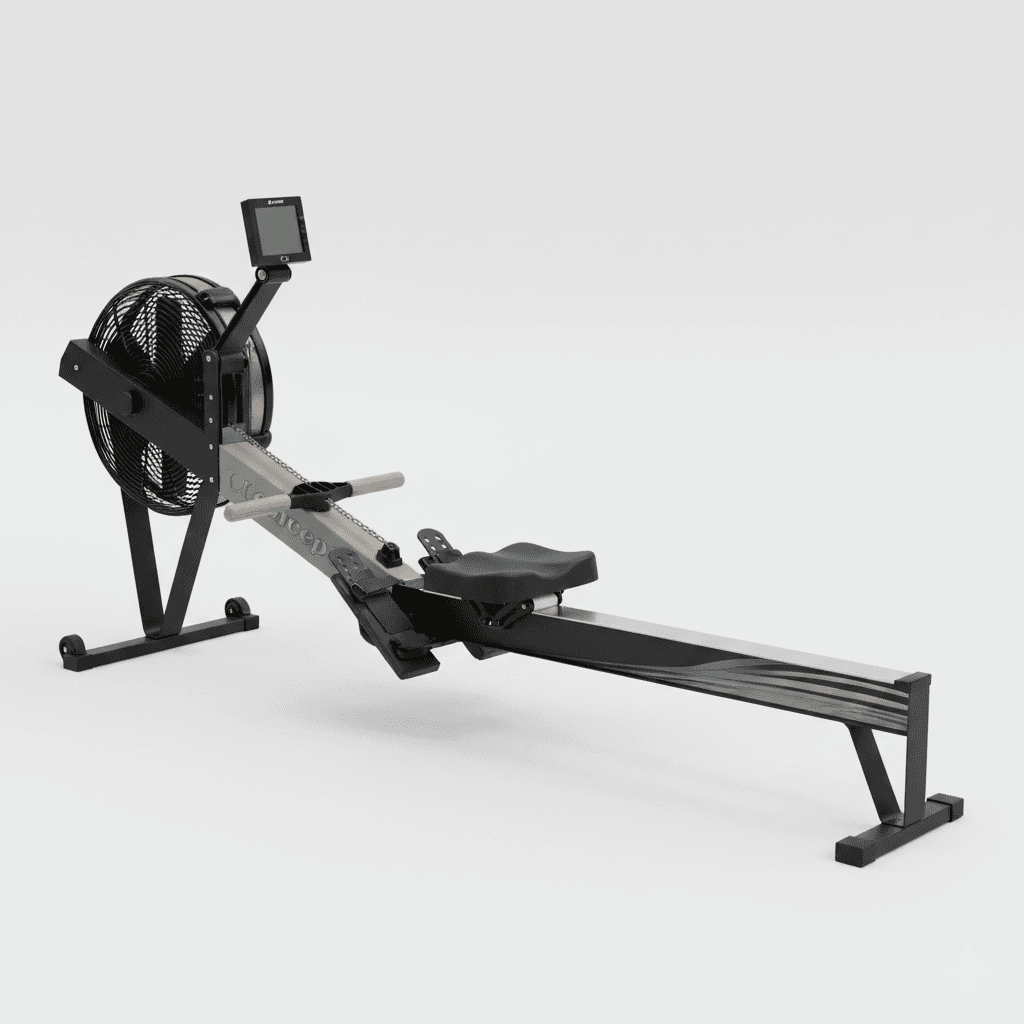
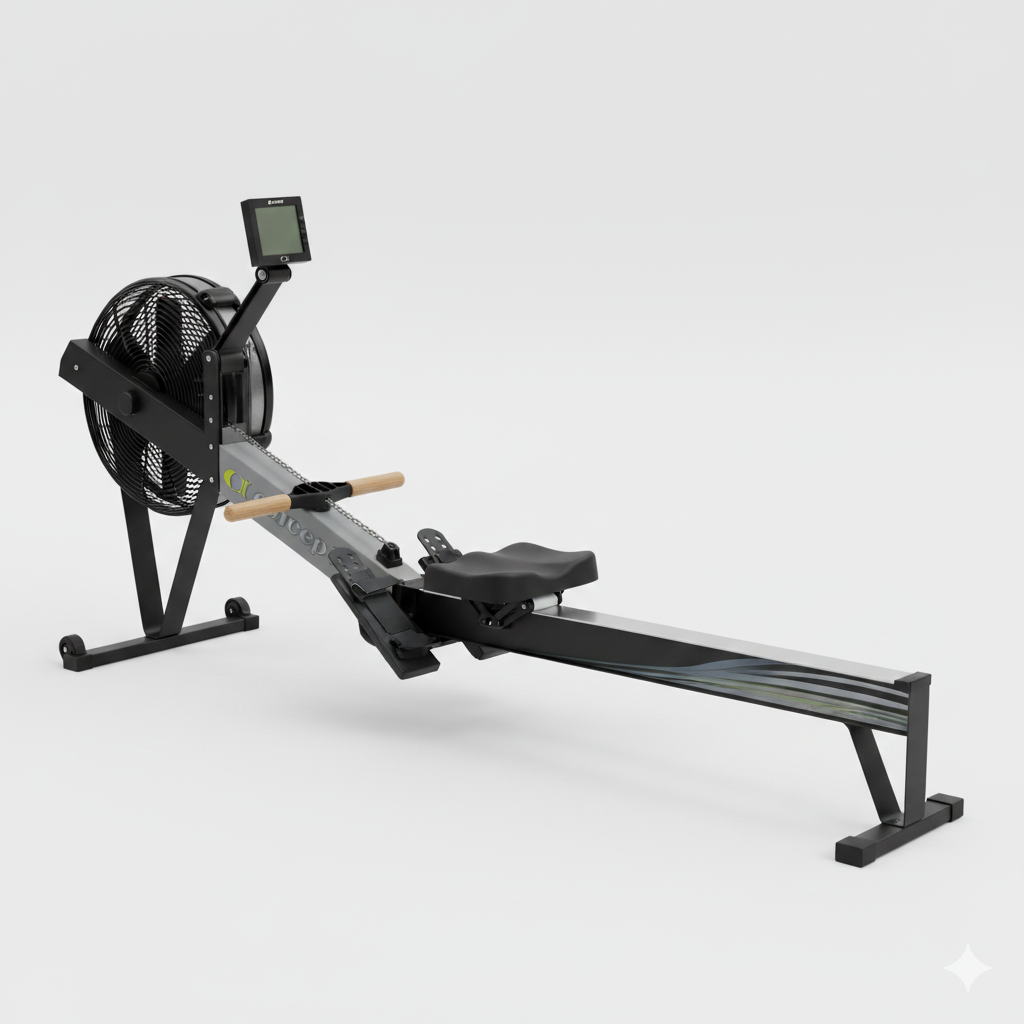
Top picks: Concept2 RowErg if you want the rower; Merach magnetic if quiet matters most.
Here's how to figure out which one you'll actually use.
Quick Comparison
| Factor | Rower | Bike | Winner |
|---|---|---|---|
| Muscles worked | 86% full body | Lower body only | Rower |
| Calories (30 min) | 250-350 | 200-300 | Slight edge: Rower |
| Space needed | 7'+ length | 4' x 2' | Bike |
| Noise (magnetic) | Silent | Silent | Tie |
| Learning curve | Technique required | None | Bike |
| Joint impact | Zero | Near-zero | Tie |
| Price range | $290-1,000 | $180-500 | Bike |
The Muscle Question
This is the biggest difference.
Rowing: Full-body workout. Legs drive (60%), back pulls (20%), arms finish (20%). Core stabilizes throughout. You're building muscle while doing cardio.
Bike: Lower body only. Quads, hamstrings, glutes, calves. Core does almost nothing unless you stand.
If you're already strength training, this might not matter. You're getting muscle work elsewhere. If cardio is your main exercise, rowing gives you more bang per minute.
Calories and Fat Loss
At moderate effort for 30 minutes: - Rowing: 250-350 calories - Cycling: 200-300 calories
The difference sounds significant but isn't really. Work harder on either and you burn more. The machine you use 5x weekly beats the "better" one you use twice.
My view: Don't choose based on calorie burn. Choose based on which you'll actually do.
Space Reality
Rowing Machine
In use: 2-2.5m length. You need clearance behind you on the pull.
Stored: Depends on model: - Concept2 RowErg: Folds upright, roughly 2' x 4' footprint - Merach Magnetic Rower: Folds to around 20" x 12" standing
Exercise Bike
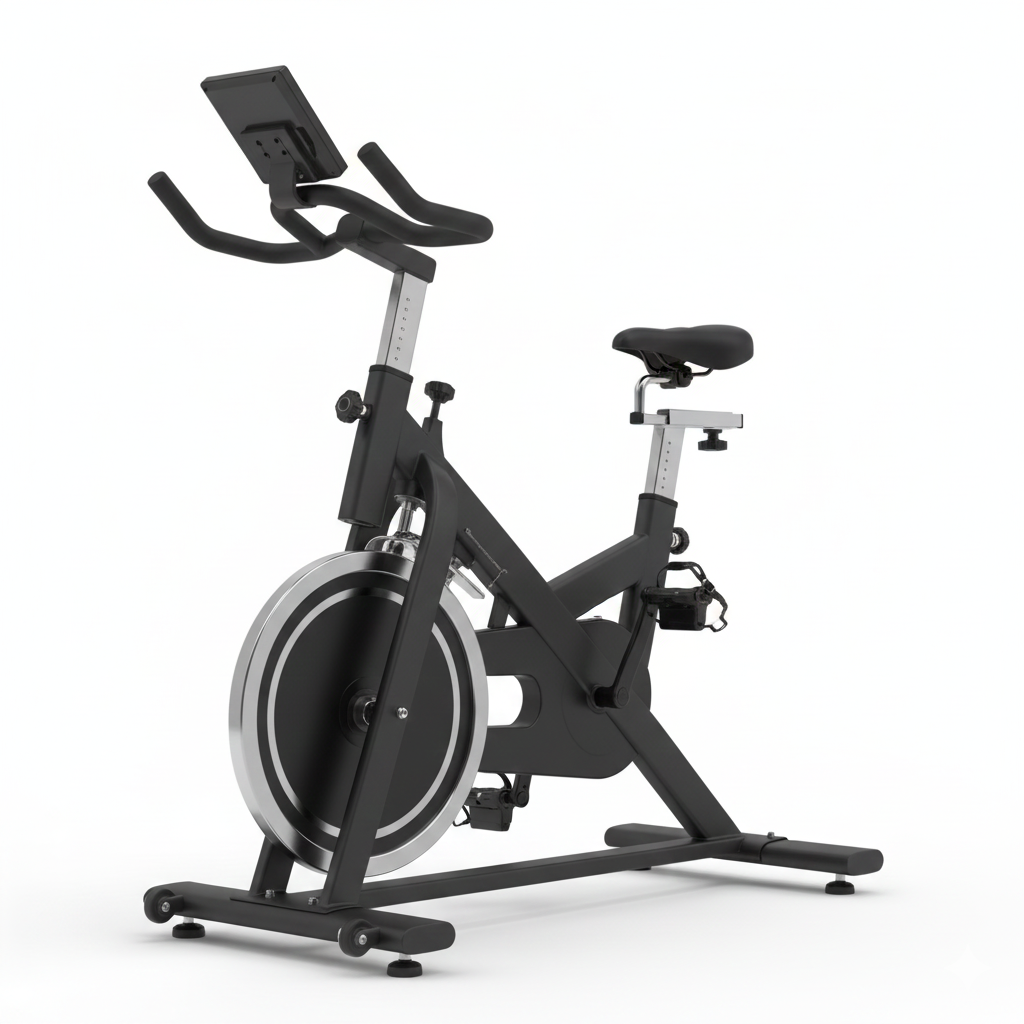
Footprint: approximately 4' x 2'. Doesn't fold, but smaller overall. Transport wheels let you roll it against a wall.
Winner: Bikes for tight spaces. But foldable rowers work if you have somewhere to store them.
Noise: Flat Compatibility
| Type | Noise Level | Notes |
|---|---|---|
| Magnetic rower | Silent | Merach works in apartments |
| Air rower | Louder | Fan noise scales with effort |
| Water rower | Swoosh | Pleasant but audible |
| Magnetic bike | Silent | MERACH Exercise Bike is apartment-friendly |
If you have neighbors below: magnetic everything. Air rowers and chain-driven bikes are too loud for early mornings.
The Technique Question
Bikes: Zero learning curve. Everyone knows how to pedal. Sit down, start spinning.
Rowing: Proper technique takes practice. Bad form leads to back strain.
The sequence matters: legs push, back opens, arms pull. Not: yank with your arms while your legs flail. Watch a YouTube tutorial before your first session.
Is this a dealbreaker? No. Technique takes maybe 20 minutes to learn properly. But it's a real consideration if you want instant gratification.
Joint Considerations
Both are low-impact compared to running.
Rowing: Zero impact. You're seated, sliding on a rail. Good for people with ankle, knee, or hip issues.
Biking: Near-zero impact. Can aggravate knee problems if seat height is wrong. Adjust properly.
For injury recovery or joint problems: Both are gentler options. Neither is clearly better.
The Decision Framework
Choose a Rower If:
- Full-body workout matters - You want strength and cardio together - You're willing to learn technique - You have 7'+ clear space (or storage for folded) - You find cycling boring (many do)
Choose a Bike If:
- You want zero-learning, sit-and-go cardio - Space is limited - You have lower back issues (upright position is easier) - You'll use Zwift, Peloton, or similar apps - Cycling feels natural to you
Top Picks
Not sure which setup is right for you?
Take Our QuizThe Concept2 is the gold standard rower. The Merach is 75% of the experience for 25% of the price. Both MERACH bikes are quiet, compact, and reliable. More options in our best rowing machines US guide and best exercise bike guide. And if you've already settled on rowing and are weighing the two big names, my Concept2 RowErg vs NordicTrack RW900 head-to-head breaks down which one earns the money.
Long-Term Value and Resale
Both machine types hold value well on the used market, but rowers depreciate less.
Concept2 RowErg resale: 70-80% of new price after 3-5 years. They are built to last decades (many CrossFit gyms run Concept2s from the early 2000s). Parts are available and cheap.
Quality exercise bikes (Schwinn IC4, Bowflex VeloCore) resale: 40-60% after 3 years. The rapid innovation cycle in smart bikes means newer models with better screens and features reduce demand for older ones.
The Hybrid Approach
The best home cardio setup for many people is one of each: a rower for full-body training days and a bike for recovery days or when the lower back needs rest.
If budget allows only one machine, the decision matrix is simple. Choose the rower if: you want full-body conditioning, you have good lower back health, you will train 3-4 times per week, and noise is not a concern. Choose the bike if: you want leg-focused cardio, you have back issues, you plan to ride 5+ times per week, you live in an apartment, or you want to supplement weight training with low-impact cardio.
Training Programmes for Each Machine
Rowing beginner programme (first 4 weeks): Three sessions per week. Each session: steady state rowing at 18-22 strokes per minute for 20 minutes. Focus on technique, not speed. Record your 2,000-metre time in week 1 and re-test in week 4. Improvement of 30-60 seconds is normal.
Rowing intermediate (weeks 5-12): Two steady state sessions (30 minutes) plus one interval session (8 rounds of 500 metres hard with 90 seconds rest). Total weekly training time: 75-90 minutes.
Cycling beginner programme (first 4 weeks): Three sessions per week. Each session: 25-30 minutes at a pace where you can hold a conversation but would prefer not to. Resistance moderate enough that your legs feel worked but not destroyed.
Cycling intermediate (weeks 5-12): Two steady state sessions (35-40 minutes) plus one interval session (30 seconds all-out, 90 seconds easy, 8 rounds). Add one long easy ride (45-60 minutes) on weekends if time allows.
The Concept2 logbook (free online) tracks every rowing workout automatically when connected via Bluetooth or USB. It ranks your times globally by age, weight, and gender. This built-in competitive element motivates many people far more effectively than generic fitness trackers.
Maintenance Comparison
Rowing machine maintenance: Air rowers (Concept2) need the chain wiped and oiled every 50 hours of use. The air cage needs vacuuming monthly to prevent dust buildup on the flywheel. That is the entire maintenance requirement. Magnetic rowers need essentially nothing.
Full-Body vs Lower-Body: What the Numbers Show
Rowing machines work approximately 86% of your muscles per stroke. Legs drive the initial push, back and core stabilize and transfer force, arms finish the pull. Exercise bikes work approximately 40% of your muscles, primarily quadriceps, hamstrings, glutes, and calves with minimal upper body involvement.
This difference matters for three types of people. First, anyone short on time: 30 minutes of rowing produces full-body stimulus that would require 30 minutes cycling plus 15-20 minutes of upper body work to match. Second, anyone focused on general fitness rather than sport-specific training: rowing builds a more balanced physique. Third, anyone recovering from upper body training days who wants active recovery: cycling isolates the legs without loading arms and back that may still be sore.
For pure cardiovascular conditioning, both machines are equally effective. Heart rate response at equivalent perceived effort is nearly identical between rowing and cycling. The calorie burn difference (rowing claims 600-800 per hour vs cycling 400-600) is misleading because most people cannot maintain high-intensity rowing for an hour, while steady-state cycling for 60 minutes is comfortable.
Noise and Space in American Homes
If you live in an apartment, noise matters. Air rowers (Concept2 RowErg, around $990) generate a rhythmic whooshing from the flywheel that is audible in adjacent rooms. It measures roughly 65-75 decibels at moderate intensity, comparable to a loud conversation. Magnetic rowers are near-silent.
Exercise bikes vary. Belt-drive spin bikes (Schwinn IC4, around $500) produce barely any noise. Chain-drive bikes generate a low hum. Fan bikes (Assault Bike, Rogue Echo) are louder than air rowers at high intensity.
Space requirements are significant. A rowing machine needs roughly 9 feet of floor length during use (the slide rail plus your leg extension). Width is minimal, around 2 feet. The Concept2 separates into two pieces for storage, each standing against a wall in about 2 by 2 feet. An exercise bike needs approximately 4 by 2 feet and stays assembled permanently.
For apartments, condos, and shared walls: a magnetic rower or belt-drive bike are the quietest options. For garages and basements where noise is irrelevant: an air rower delivers the best rowing experience.
Joint Impact and Long-Term Sustainability
Cycling is lower-impact than rowing. The seated position eliminates spinal loading, and the circular pedal motion creates minimal shear force on the knees when saddle height is correct. Cycling five to six times per week is sustainable for most people indefinitely.
Rowing loads the lower back through a hip hinge pattern under force. Poor technique amplifies this, and technique degrades when fatigued. Three to four rowing sessions per week is sustainable with good form. More than that, and most recreational rowers develop cumulative lower back tightness.
For people over 50 or those with existing back issues, cycling is generally the safer long-term choice. Rowing is not contraindicated at any age, but the technical demands and spinal loading require more attention than cycling.
The honest recommendation: If you train for general fitness, the rower gives you more per minute. If you train for weight loss primarily, either works. If you will use the machine five or more times per week, a bike sustains better. If you have back problems, choose the bike. If you are under 40, healthy, and willing to learn technique, the rower builds a more complete athlete.
Buying Used in the US
The used market for both machines is active in the US. Concept2 rowers hold value exceptionally well, typically selling for 70-80% of new price on Facebook Marketplace, Craigslist, and OfferUp. This makes buying used relatively low-risk since you can resell for what you paid if it does not work out.
Used exercise bikes are abundant because many people buy them, use them for a few months, and sell. This works in the buyer's favour. A Schwinn IC4 often sells for $200-250 used in good condition. Check the flywheel for smooth spinning, the pedals for tight bearings, and the resistance mechanism for consistent operation.
What to Avoid
The cheapest option in either category. Below $250 for a rowing machine or $200 for an exercise bike, the flywheel mass and frame quality start to compromise the experience. Cheap rowers develop squeaky seats and wobbly frames within a year of regular use. Cheap bikes have resistance mechanisms that feel mushy and inconsistent. The Merax rower and the WENOKER bike are both at the minimum viable price point. Going lower is a false economy.
Subscription-locked machines you do not fully understand. The Peloton bike and Hydrow rower both require subscriptions to access their core programming. At $44/month, the cost over three years is $1,584 on top of the hardware. This is fine if the coached programming is what you want and will use. It is poor value if you plan to just ride or row at your own pace. Non-subscription machines like the Schwinn and Concept2 provide the same cardio benefit with no ongoing cost.
FAQ
Which burns more calories: rowing or cycling? Rowing engages more muscle groups (upper back, core, arms, and legs) compared to cycling (primarily legs). For equal perceived effort, rowing typically burns more calories per minute. However, the best calorie-burning equipment is the one you actually use. If cycling is something you will do four times a week and rowing feels tedious, the bike wins in practice regardless of the calorie numbers.
Is rowing bad for your back? Rowing with correct form is not bad for your back. Rowing with poor form, specifically rounding the lower back under load or jerking the handle rather than using a controlled drive, can strain the lumbar. The fix is technique, not avoidance. If you have an existing back condition, check with a physio before starting any new training modality. For most people, rowing with proper posture is actually a strong back-strengthening activity.
Can I use either machine if I have bad knees? Both are low-impact compared to running or jumping. Cycling places no impact stress on the knees but does involve repetitive knee flexion, which some conditions find uncomfortable. Rowing involves knee flexion too, but the load is shared more broadly across the legs and hips. If knee pain is a specific issue, try both at a gym before purchasing. Most knee conditions that prevent running tolerate cycling and rowing without problems.
Which machine has lower maintenance? Magnetic exercise bikes require almost no maintenance. Clean the frame occasionally, check the pedal bolts, and the resistance mechanism needs nothing. Rowing machines with air resistance, like the Concept2, need minimal maintenance too: keep the chain lightly oiled and clean the fan guard. Water rowers need the water changed every six months and occasional algae treatment. If maintenance is a concern, magnetic resistance on either machine is the lowest-effort option.
The Honest Answer
The best cardio equipment is the one you'll use.
I've seen expensive Concept2s become clothes hangers. I've seen cheap bikes used daily for years.
If you can, try both at a gym before buying. Many people have strong preferences they didn't expect. A $290 Merach you row 4x weekly beats a $1,100 Concept2 gathering dust.
As an Amazon Associate, we earn from qualifying purchases.
Products Mentioned in This Guide
Frequently Asked Questions
Related Guides
Find Your Perfect Equipment
Expert guides for racks, barbells, plates, benches, and more. Build your home gym the right way.
Browse All Guides