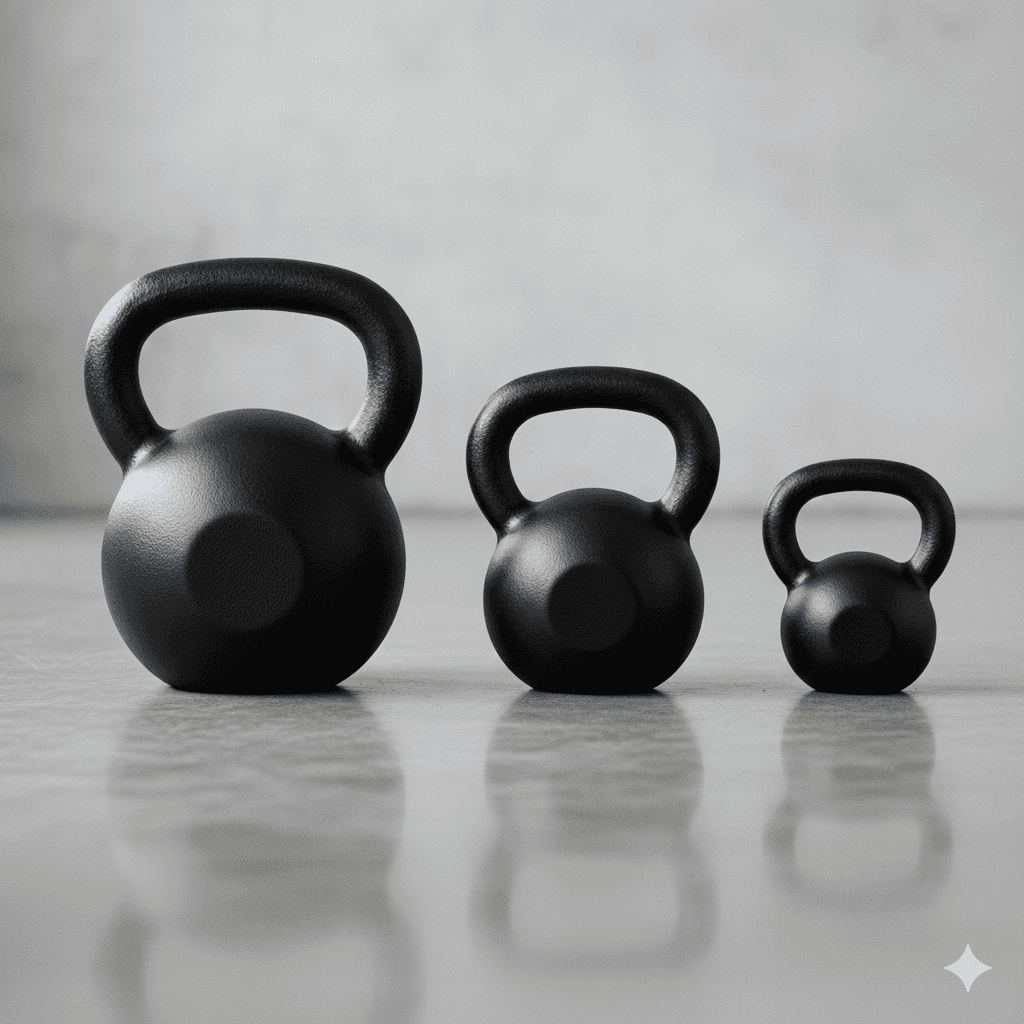
Kettlebell vs Dumbbell 2026 | Which is Better?

Thirty years of training at home. Built multiple home gyms from bare garages to proper setups. I know what equipment lasts, what breaks, and what becomes an expensive clothes rack.
Just so you know, some links on this page are affiliate links. If you buy something via them, we get a small kickback. You don't pay more, but it helps toward the next bit of kit.
Looking for more equipment recommendations?
Browse All Guideswe bought kettlebells first. Mistake. Should have started with dumbbells.
Don't get me wrong, we use kettlebells regularly now. But for a beginner building their first home gym, dumbbells are more versatile and easier to progress with.
Here's when each wins, and what to buy first.
Quick Picks
| Category | Top Pick | Best For | |
|---|---|---|---|
| Dumbbells | NordicTrack Select-A-Weight | Adjustable, space-saving | Check Price on Amazon |
| Budget Dumbbells | PROIRON 88 lb Set | Fixed weight starter | Check Price on Amazon |
| Kettlebells | Yes4All Kettlebell Set | Cast iron, graded set | Check Price on Amazon |
Prices shown are approximate at time of review. Click "Check Price on Amazon" for current pricing.
The Short Answer
| Goal | Winner | Why |
|---|---|---|
| Muscle building | Dumbbells | Better isolation, more exercises |
| Fat loss / cardio | Kettlebells | Swings are brutal |
| Beginners | Dumbbells | Intuitive, proven programs |
| Space-limited | Tie | Both compact |
| Budget-conscious | Kettlebells | Single bell covers most |
Our recommendation: Start with adjustable dumbbells. Add a kettlebell after 6 months.
The Fundamental Difference
Dumbbells: Weight balanced on both ends. Stable, predictable, comfortable for controlled movements.
Kettlebells: Weight hangs below the handle. That offset mass creates instability your core and grip must fight against.
This isn't marketing fluff. Pick up a kettlebell and do a press. You'll feel your forearm and core working harder than with a dumbbell at the same weight.
When Dumbbells Win
Muscle Isolation
The balanced weight lets you focus on the target. A kettlebell's offset would tire your grip before your bicep gives out.
Traditional Strength Training
Every strength program in existence assumes you have dumbbells. Kettlebell-specific programs exist but are far less common.
Beginners
Kettlebell swings and cleans have technique requirements. Done wrong, you'll hurt your back. You need to learn before you load.
Progressive Overload
Kettlebells jump 9-18 lb at a time. Going from 35 lb to 53 lb is a huge leap. Either you're not ready, or the current weight is too easy.
When Kettlebells Win
Explosive Power
You can't replicate a proper kettlebell swing with a dumbbell. The physics don't work. The shape matters.
Fat Loss / Cardio
Combine strength and cardio in one session. Circuits of swings, goblet squats, and presses are brutally effective.
Grip Strength
Minimalist Training
If you travel or have minimal space, a single kettlebell covers more than a single pair of dumbbells.
What to Buy First
For Most People: Dumbbells First
NordicTrack Select-A-Weight Dumbbells or PROIRON 88 lb set. *(Prices when reviewed: NordicTrack roughly $230, PROIRON around $90 | Check Price on Amazon | Check Price on Amazon)*
Build a foundation of strength with bench press, rows, curls, shoulder press. Learn proper form with stable weight.
Add a Kettlebell Later
After 3-6 months of dumbbell training, add an Yes4All Kettlebell Set. *(Price when reviewed: approximately $35 | Check Price on Amazon)*
Starting weights: - Men: 12-16 kg (26-35 lb) (start lighter if unsure) - Women: 8-12 kg (18-26 lb)
Learn swings, goblet squats, and presses. These three exercises cover 90% of kettlebell training.
Starting Weight Guide
Dumbbells
| Level | Weight Per Hand |
|---|---|
| Beginner | 10-33 lb |
| Intermediate | 22-55 lb |
| Advanced | 44-88 lb |
Kettlebells
| Level | Men | Women |
|---|---|---|
| Beginner | 12-16 kg (26-35 lb) | 8-12 kg (18-26 lb) |
| Intermediate | 16-24 kg (35-53 lb) | 12-16 kg (26-35 lb) |
| Advanced | 24-32 kg (53-70 lb) | 16-24 kg (35-53 lb) |
The Best of Both Worlds
For around $270, get both: - NordicTrack Select-A-Weight Dumbbells *(roughly $230 | Check Price on Amazon)* - Single kettlebell *(around $35 | Check Price on Amazon)*
Dumbbells handle traditional strength work. Kettlebell handles conditioning and explosive training. Complete home gym in two purchases.
Start with dumbbells, add a kettlebell when the foundation is solid. In six months you'll have two tools, a broad set of exercises, and a training habit that actually sticks.
The Product Comparison in Detail
Adjustable Dumbbells: Your Options
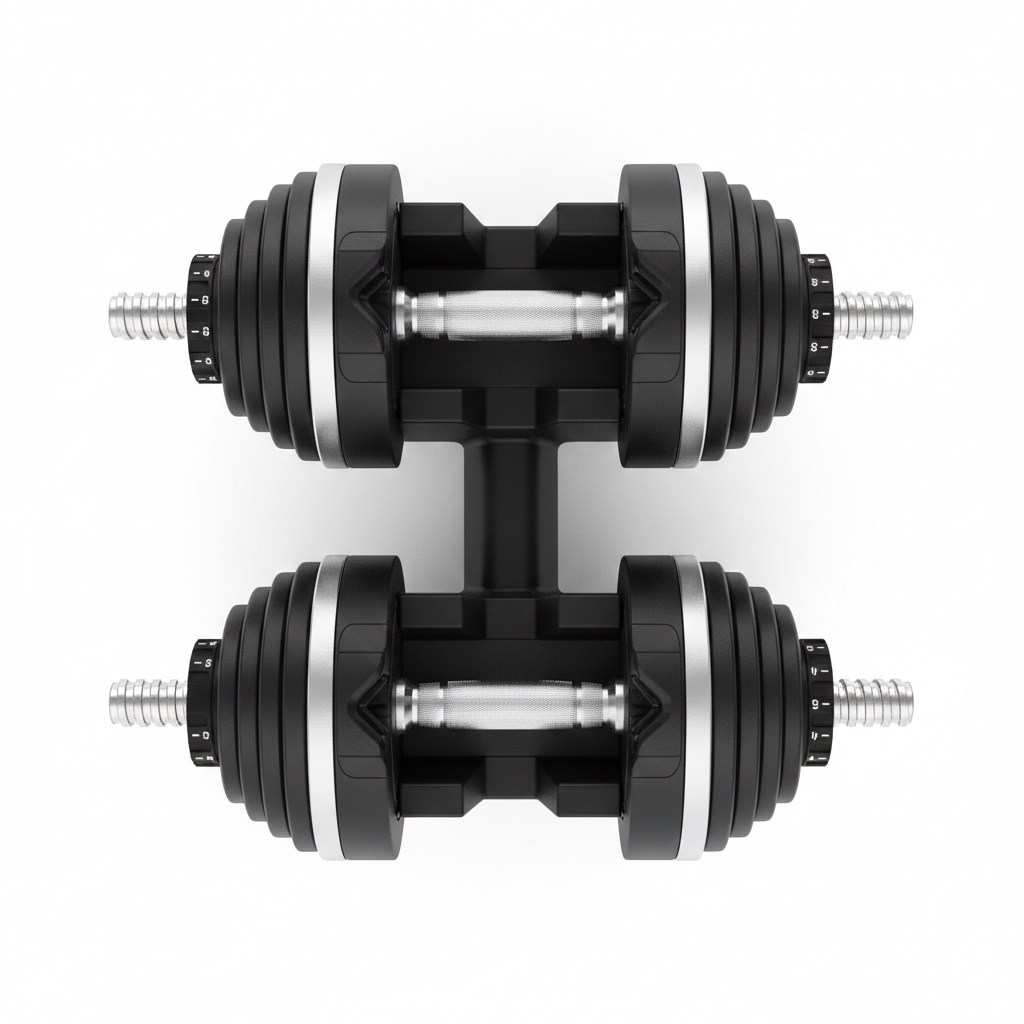
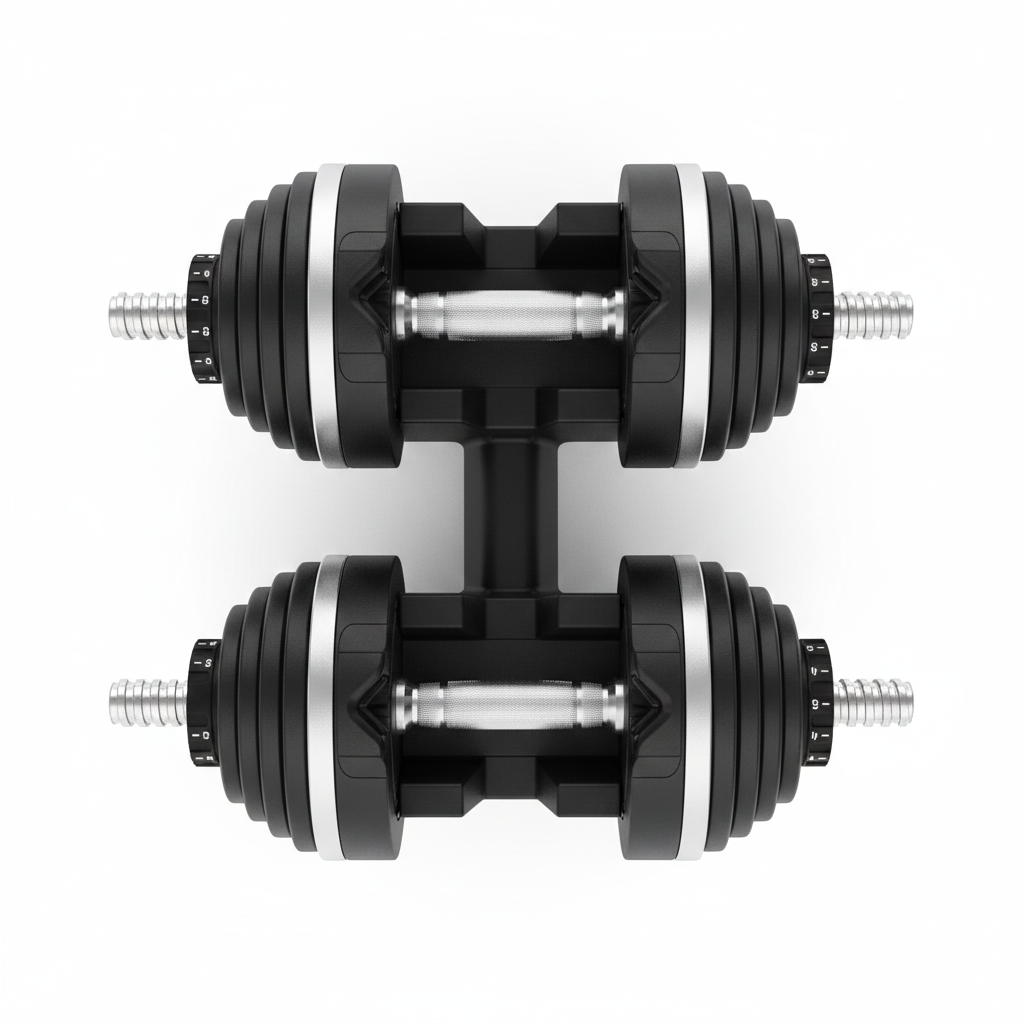
Budget: PROIRON 88 lb Set (approximately $90) Standard plate-loading design. Cast iron plates, spin-lock collars, 20" straight handles. Takes 15-20 seconds to change weights -- remove collar, swap plates, replace collar. The weight itself is identical to any premium brand. The tradeoff is time: if your programme has you changing weights frequently between sets, this gets tedious.
Worth buying if: you're starting out, budget is tight, or you do long sets with consistent weight rather than frequent changes.
Mid-range: NordicTrack Select-A-Weight (roughly $230) Dial mechanism on each end. Turn to select weight (5 lb increments from 10-55 lb per hand), lift dumbbell out of tray, train. No swapping plates. Takes under 5 seconds to change. Both dumbbells sit on a compact molded tray.
Worth buying if: you do circuits or switch weights between sets. The time saving adds up significantly over a training session.
High-end: PowerBlock Elite (around $350-450) Selectorized mechanism, the most compact option at any weight range. Square design fits in tighter spaces than other adjustable systems. 50+ lb sets available. Build quality is excellent.
Worth buying if: you'll use them daily for years and want the best build quality in the category.
Kettlebells: Your Options
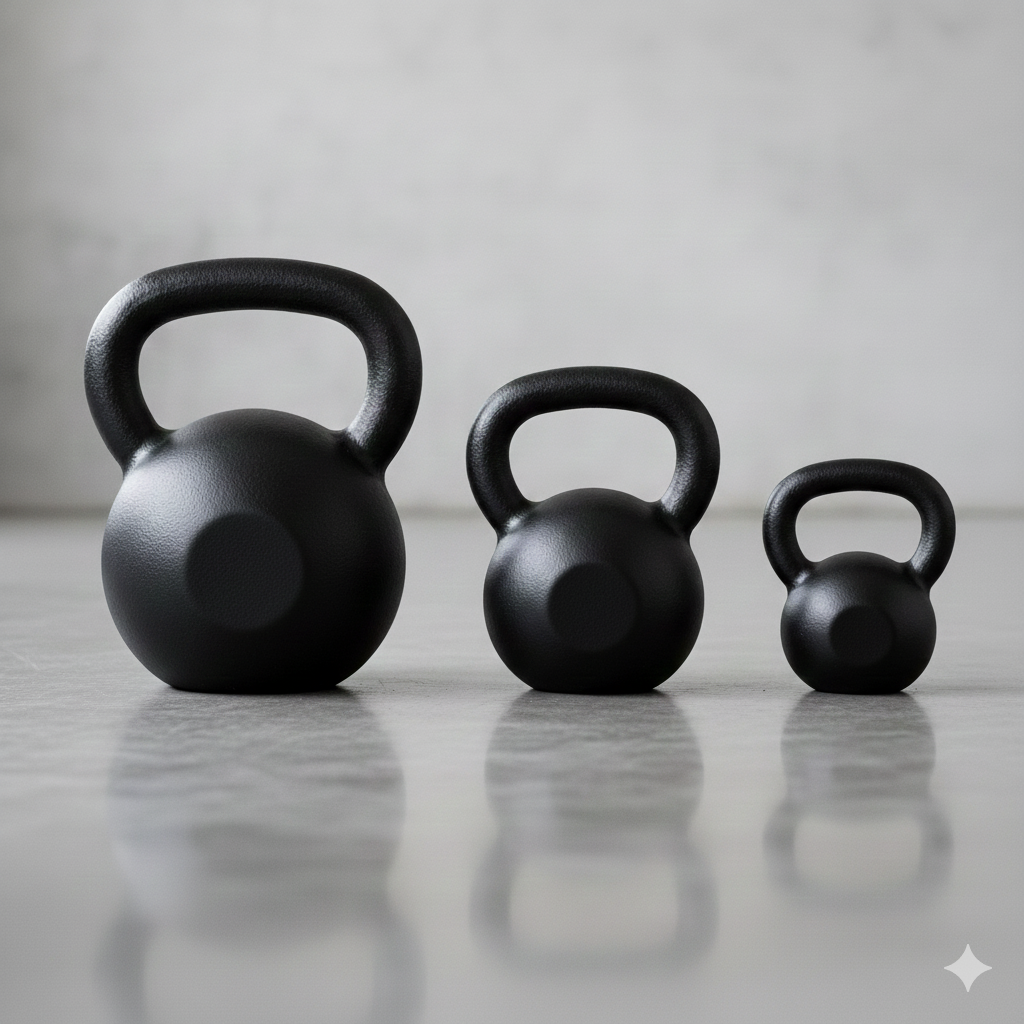
Single cast iron bell: Yes4All (approximately $30-50 per bell) Classic cast iron construction. Flat base for stability during floor exercises. No frills. What you want for most training purposes.
Starting weights that actually work: - Men starting out: 16 kg (35 lb) for swings, 12 kg (26 lb) for presses - Women starting out: 12 kg (26 lb) for swings, 8 kg (18 lb) for presses
The most common mistake is buying too light. Light enough to do 50 reps with means it's too light to train your hips effectively during swings.
Sets and progressions: Most dedicated kettlebell trainees end up with 2-3 bells at different weights. The classic progression is having a "conditioning bell" (medium weight for long sets and swings) and a "strength bell" (heavier, for double cleans, presses, loaded carries).
A 16 kg and 24 kg pair for men, 12 kg and 16 kg for women, covers most training needs for years.
When the Decision Is Already Made
A few scenarios where the answer is clear:
You want to follow a structured strength programme (5/3/1, GZCLP, PPL, etc.): These programmes assume barbells or dumbbells. The exercises are designed for stable, symmetrical loading. Dumbbells first.
You want to do conditioning work without leaving the house: Kettlebell circuits -- swings, clean and press, goblet squat, Turkish get-up -- build conditioning more efficiently than dumbbell circuits. The ballistic movements elevate heart rate in ways that controlled dumbbell movements don't.
You want to do both strength training and conditioning with minimal equipment: Start with adjustable dumbbells. After 3-6 months, add a single kettlebell at a challenging weight. The combination covers everything.
You have less than $100 to spend: One kettlebell at the right starting weight covers full-body training for months. The Yes4All at $30-50 is legitimate equipment, not a toy.
Common Mistakes
Buying kettlebells and using them like dumbbells. A goblet squat with a kettlebell is the same as with a dumbbell. A kettlebell lateral raise is awkward and there's no reason to do it. Kettlebells have specific movements they excel at -- swings, cleans, snatches, Turkish get-ups, farmer carries. Using them for isolation work (curls, lateral raises, extensions) wastes what makes them special.
Buying adjustable dumbbells and doing nothing but curls and presses. Dumbbells allow a complete strength programme. If you're only doing isolation movements, you're leaving most of the value on the table. Compound movements -- dumbbell rows, Romanian deadlifts, goblet squats, split squats -- should form the foundation.
Buying too light on the first kettlebell. A 25-35 lb kettlebell is a training tool, not a toy. Going lighter means swings won't challenge your posterior chain enough to produce results. The rule of thumb: your first kettlebell should feel heavy enough that 15 swings is genuinely challenging.
Frequently Asked Questions
Can I get a full workout with just one kettlebell?
Yes. Swing, goblet squat, clean and press, and Turkish get-up cover full-body strength and conditioning. A 20-minute kettlebell circuit (10 swings, 5 goblet squats, 5 clean and press each side) is a legitimate workout for intermediate fitness levels. The limitation compared to dumbbells: you can't do bilateral pressing movements (bench press, shoulder press) safely with a single kettlebell at typical training weights.
Do I need both kettlebells and dumbbells?
Eventually, most committed home trainers have both. But not from the start. Pick based on your immediate training goals. Strength building as a beginner? Dumbbells first. Conditioning and movement quality? Kettlebell first. Then add the other after 3-6 months once you know what you need.
Which burns more calories: kettlebell training or dumbbell training?
Kettlebell training at the same subjective effort level burns more calories because the ballistic movements (swings, cleans, snatches) are compound and aerobic simultaneously. A 20-minute kettlebell swing circuit burns roughly 250-350 calories. Equivalent dumbbell training burns 150-200 calories for the same duration. The difference is the involvement of the cardiovascular system -- swings are conditioning, not just strength work.
How do I progress with kettlebells if they jump from 16 kg to 24 kg?
Two strategies: (1) increase reps at the current weight until you can do 20+ swings easily, then move to the next weight; (2) buy an intermediate weight (20 kg is widely available). The 8 kg jump in the traditional 16/24 progression does require a real strength base before making it. Most people are ready for the jump after 6-8 weeks of consistent work at 16 kg.
Travel and Portability
Kettlebells travel. A single 35-pound kettlebell and a resistance band fit in a car trunk and provide a complete workout anywhere: hotel rooms, parks, camping trips. Dumbbells (especially adjustable ones) are bulky, fragile if dropped on hard surfaces, and awkward to transport.
Safety Differences
Kettlebell swings send a heavy object through an arc at speed. Grip failure releases the bell forward. Always swing with 10 feet of clear space in front. Dumbbell exercises are generally safer because the movements are slower and more controlled.
Overhead kettlebell work (Turkish get-ups, snatches) requires confident grip and stable shoulders before adding weight. Start light, progress slowly.
Cost and Space Comparison
Dumbbell setup cost: A pair of adjustable dumbbells covering 5-52.5 pounds costs around $300-500 (PowerBlock, Bowflex). Space: 20 by 12 inches in their cradle.
Kettlebell collection cost: Three bells (18lb, 35lb, 53lb) costs around $100-180. Space: 2 by 1 foot on the floor.
Combined cost: Around $400-680 for a complete setup. Combined space: roughly 3 by 2 feet. This covers every exercise you need for a complete home training programme.
Programming With Both
The most effective approach uses both rather than choosing one.
Upper body days: dumbbells. Bench press, rows, shoulder press, curls, extensions all work better with dumbbells. Balanced shape allows stable bench positioning. Incremental weight progression suits small upper-body strength gains.
Conditioning days: kettlebells. Swings, cleans, snatches, and circuits build cardiovascular fitness, hip power, and grip endurance simultaneously.
Lower body: both. Goblet squats are more comfortable with a kettlebell. Lunges work equally well with either. Romanian deadlifts are better with dumbbells at your sides.
Practical weekly template: Monday: dumbbell upper (press, row, shoulder press, accessories). Wednesday: kettlebell conditioning (swings, cleans, goblet squats). Friday: dumbbell lower and arms (lunges, RDLs, curls).
What to Avoid
Buying a full set of either when you are starting out. Whether you start with kettlebells or dumbbells, buy one weight first. A single 16 kg kettlebell or a 25-35 lb dumbbell pair costs $35-80 and covers months of learning. The full set comes later, once you know what weight progression you actually need. Buying a complete range upfront often results in weights you never use.
Cheap adjustable dumbbells as your only dumbbell option. For variety and home gym use, adjustable dumbbells are fine. For kettlebell-specific movements like swings and cleans, the adjustable designs that change weight by adding plates around a central handle create an awkward weight distribution that changes the feel of the movement significantly. Keep kettlebells fixed and cast iron.
FAQ
Can I do kettlebell swings with a dumbbell? Yes, with a dumbbell held vertically. It works, and many people train this way. The movement pattern is the same. The grip is slightly different, and the weight distribution changes the feel at the top of the swing. It is a legitimate substitute if you have dumbbells and want to add swings without buying a kettlebell.
What weight kettlebell should I start with? For most men: 16 kg (35 lb). For most women: 12 kg (26 lb). These are standard starting weights for the kettlebell swing, goblet squat, and Turkish get-up. If you are already training consistently with weights and have a good strength base, go one increment heavier. Starting too light is a smaller mistake than starting too heavy.
Do I need both kettlebells and dumbbells? Eventually, yes. The tools complement each other. Dumbbells handle progressive overload on pressing and isolation movements better than kettlebells. Kettlebells handle conditioning, carries, and ballistic work better than dumbbells. A home gym with both has more training variety than one with either alone. Start with whichever category fits your training goals first.
Which to Buy First
Most people: start with adjustable dumbbells. They cover more exercise variety, connect to existing programme knowledge (most fitness advice assumes dumbbells), and allow precise progressive overload with small weight increments.
For adjustable dumbbell recommendations, see the best adjustable dumbbells US guide.
People who know they want conditioning work: start with a kettlebell. One 16 kg or 24 kg kettlebell covers months of conditioning work and costs $35-50.
People who want both: start with dumbbells, add a single kettlebell after a month.
For the best kettlebells to buy, see the best kettlebells US guide.
The longer answer is that both tools are worth owning long-term. The question is just which $30-230 purchase comes first. Either decision is correct -- the important thing is starting.
As an Amazon Associate, we earn from qualifying purchases.
Products Mentioned in This Guide
Frequently Asked Questions
Related Guides
Find Your Perfect Equipment
Expert guides for racks, barbells, plates, benches, and more. Build your home gym the right way.
Browse All Guides