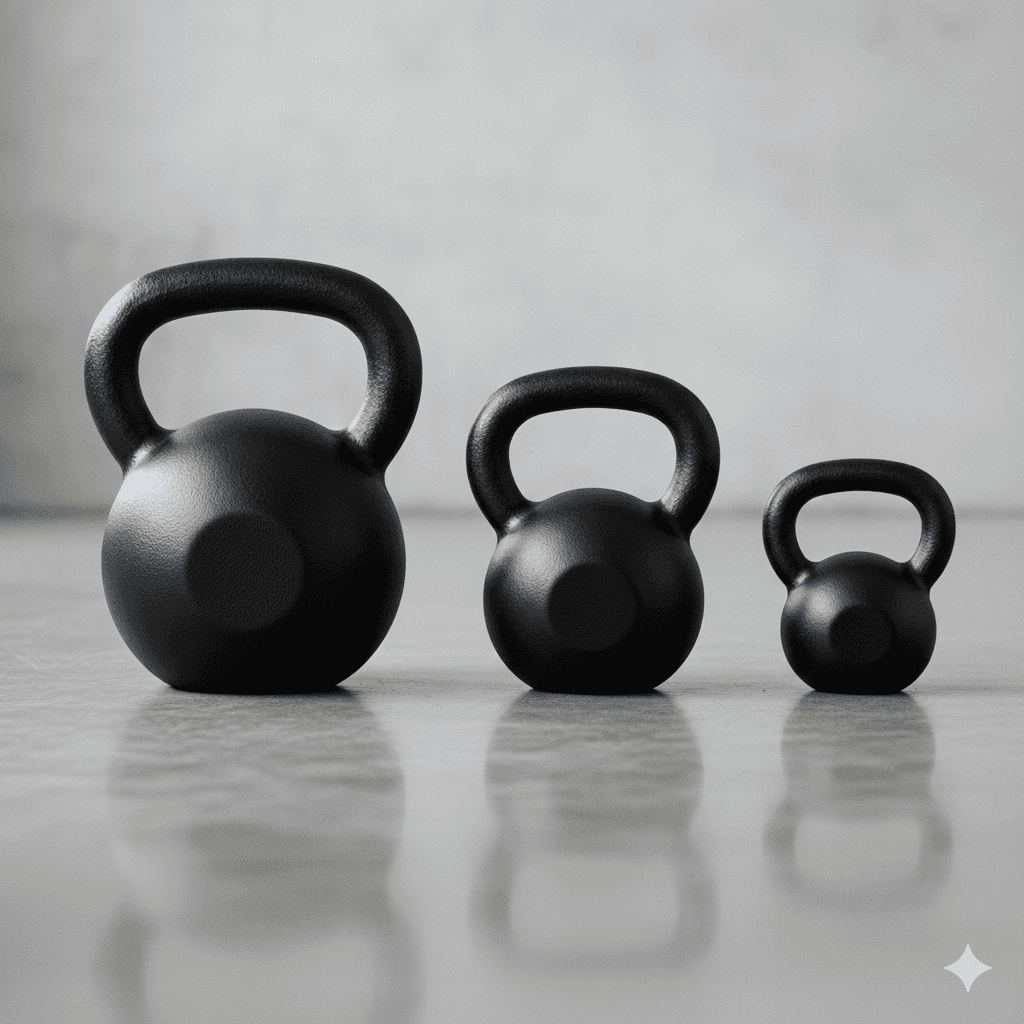
Kettlebell vs Dumbbell: Which is Better?

Thirty years of training at home. Built multiple home gyms from bare garages to proper setups. I know what equipment lasts, what breaks, and what becomes an expensive clothes rack.
Just so you know, some links on this page are affiliate links. If you buy something via them, we get a small kickback. You don't pay more, but it helps toward the next bit of kit.
Looking for more equipment recommendations?
Browse All Guideswe bought kettlebells first. Mistake. Should have started with dumbbells.
Short answer: Start with PROIRON adjustable dumbbells (around £65), add a kettlebell later. Read on for the full breakdown.
Don't get me wrong, we use kettlebells regularly now. But for a beginner building their first home gym, dumbbells are more versatile and easier to progress with.
Here's when each wins, and what to buy first.
Quick Picks
| Your Goal | Best For | Why |
|---|---|---|
| Building muscle | Dumbbells | Better isolation, proven programmes for every muscle group |
| Fat loss and conditioning | Kettlebells | Swings and circuits burn more calories per minute |
| Complete beginners | Dumbbells | Intuitive, no technique learning curve |
| Explosive athletic training | Kettlebells | Ballistic movements can't be replicated with dumbbells |
| Tight budget | Kettlebells | One bell covers most training; dumbbells need adjustable set |
| Progressive strength training | Dumbbells | Fine 2.5kg increments vs 4-8kg jumps on kettlebells |
| First purchase overall | Dumbbells | Covers more ground; add kettlebell as second tool |
Our recommendation: Start with adjustable dumbbells. Add a single kettlebell after 6 months.
The Fundamental Difference
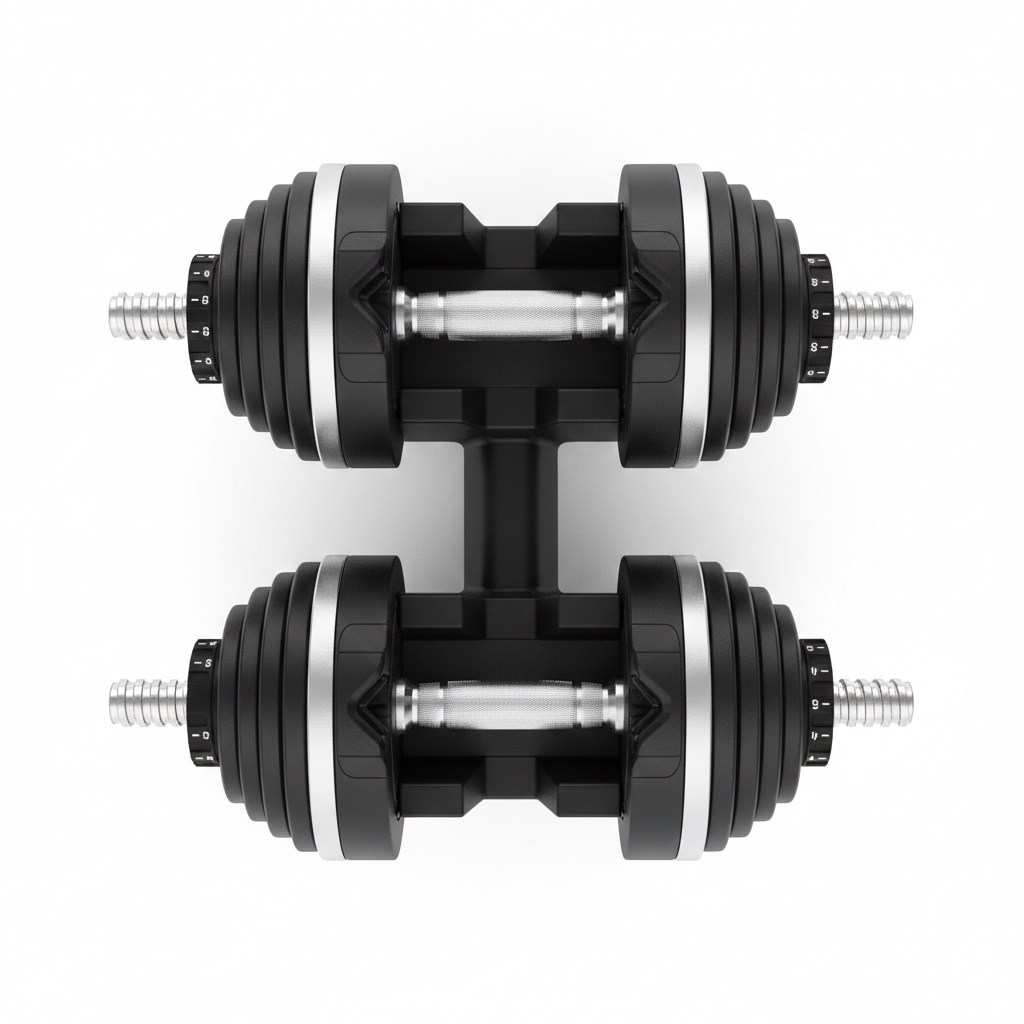
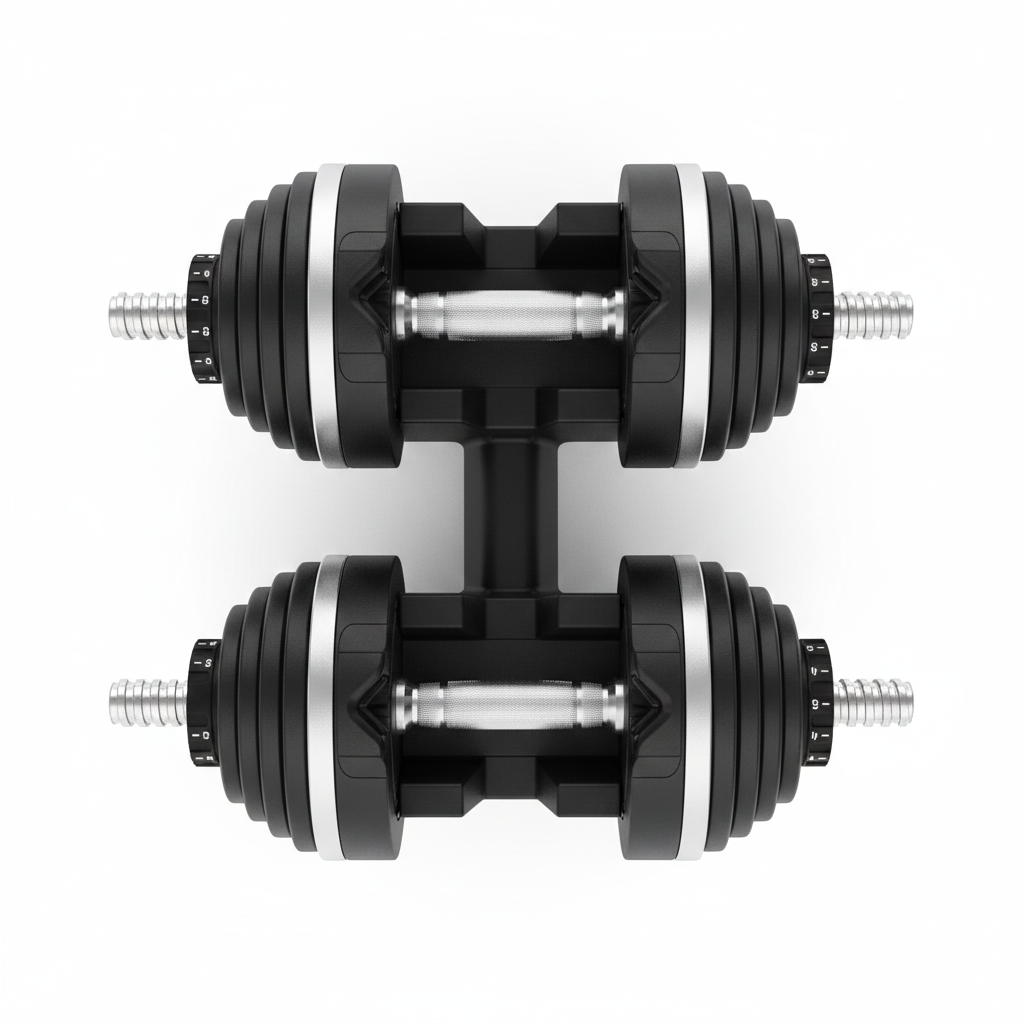
Dumbbells: Weight balanced on both ends. Stable, predictable, comfortable for controlled movements.
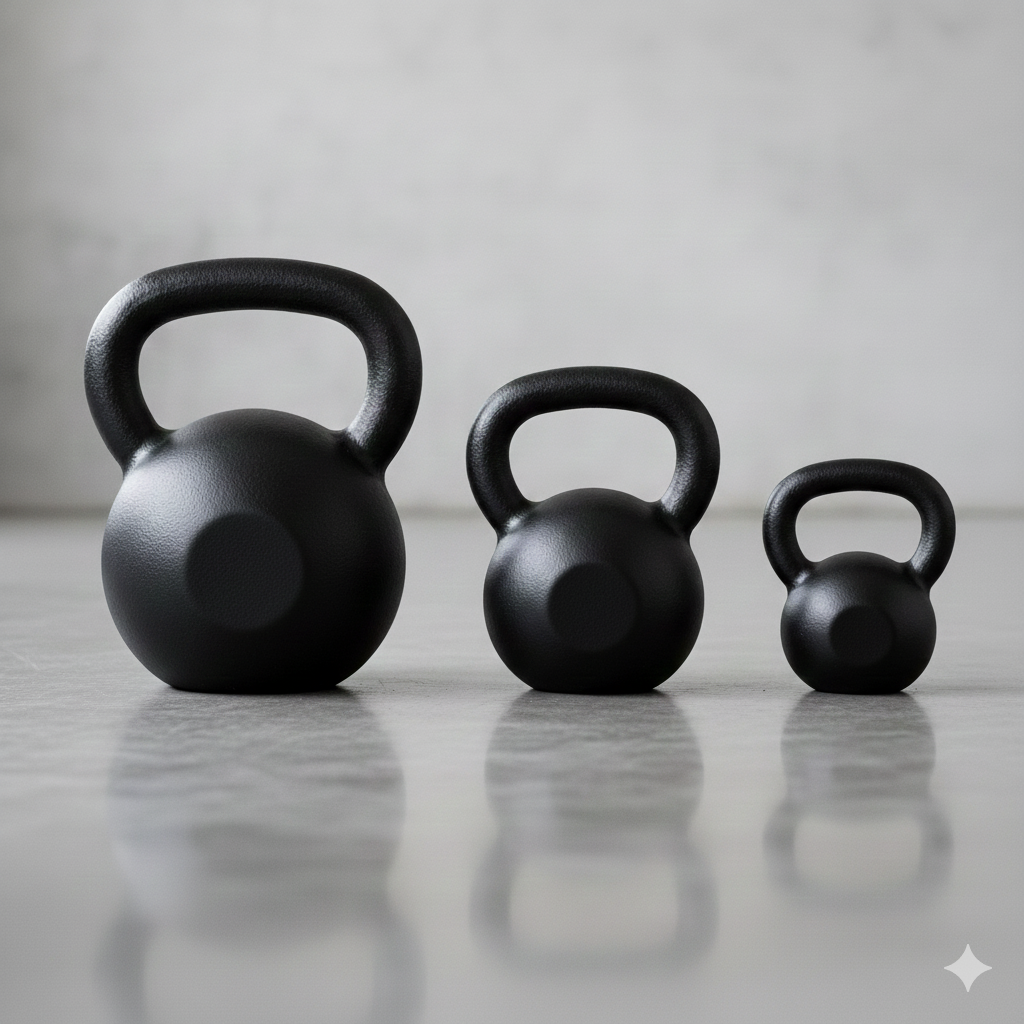
Kettlebells: Weight hangs below the handle. That offset mass creates instability your core and grip must fight against.
This isn't marketing fluff. Pick up a kettlebell and do a press. You'll feel your forearm and core working harder than with a dumbbell at the same weight.
When Dumbbells Win
Muscle Isolation
The balanced weight lets you focus on the target. A kettlebell's offset would tire your grip before your bicep gives out.
Traditional Strength Training
Every strength programme in existence assumes you have dumbbells. Kettlebell-specific programmes exist but are far less common.
Beginners
Kettlebell swings and cleans have technique requirements. Done wrong, you'll hurt your back. You need to learn before you load.
Progressive Overload
Kettlebells jump 4-8kg at a time. Going from 16kg to 24kg is a huge leap. Either you're not ready, or the current weight is too easy.
When Kettlebells Win
Explosive Power
You can't replicate a proper kettlebell swing with a dumbbell. The physics don't work. The shape matters.
Fat Loss / Cardio
Combine strength and cardio in one session. Circuits of swings, goblet squats, and presses are brutally effective.
Grip Strength
Minimalist Training
If you travel or have minimal space, a single kettlebell covers more than a single pair of dumbbells.
What to Buy First
Not sure which setup is right for you?
Take Our QuizFor Most People: Dumbbells First
MuscleSquad or PROIRON adjustable dumbbells cover the widest range of exercises. Build a foundation of strength with bench press, rows, curls, shoulder press. Learn proper form with stable weight.
Add a Kettlebell Later
After 3-6 months of dumbbell training, add an Amazon Basics Kettlebell (roughly £30).
Starting weights: - Men: 12-16kg (start lighter if unsure) - Women: 8-12kg
Learn swings, goblet squats, and presses. These three exercises cover 90% of kettlebell training.
Starting Weight Guide
Dumbbells
| Level | Weight Per Hand |
|---|---|
| Beginner | 5-15kg |
| Intermediate | 10-25kg |
| Advanced | 20-40kg |
Kettlebells
| Level | Men | Women |
|---|---|---|
| Beginner | 12-16kg | 8-12kg |
| Intermediate | 16-24kg | 12-16kg |
| Advanced | 24-32kg | 16-24kg |
The Best of Both Worlds
For around £230, get both: - Adjustable dumbbells *(around £200 | Check Price on Amazon)* - Single kettlebell *(approximately £30 | Check Price on Amazon)*
Dumbbells handle traditional strength work. Kettlebell handles conditioning and explosive training. Complete home gym in two purchases.
Start with dumbbells, add a kettlebell when the foundation is solid. In six months you'll have two tools, a broad set of exercises, and a training habit that actually sticks.
Exercise Library Comparison
Understanding which tool does what well is the fastest route to picking the right one.
Exercises That Favour Dumbbells
Upper body (push): Dumbbell bench press (flat and incline), dumbbell shoulder press, dumbbell flyes, tricep kickbacks, overhead tricep extension. All benefit from the balanced, stable grip - heavier loads, cleaner technique.
Upper body (pull): Dumbbell rows (single-arm and both arms), incline rows, rear delt flyes. The balanced weight lets you focus on squeezing the back rather than fighting the handle.
Arms: Bicep curls, hammer curls, concentration curls, tricep extensions. The controlled, symmetrical weight is purpose-built for isolation. A kettlebell's offset makes these harder without the right technique benefit.
Legs: Romanian deadlifts, Bulgarian split squats, lunges, step-ups. Dumbbells load these movements cleanly. Goblet squats work with either, but holding heavy dumbbells at the chest is harder than a kettlebell.
Exercises That Favour Kettlebells
Ballistic power: The swing is the core kettlebell movement and has no dumbbell equivalent. Two-handed swings (hamstrings, glutes, back), single-arm swings (adds rotational demand), and alternating swings. These build explosive hip power while also conditioning your cardiovascular system.
Total body conditioning: Cleans, jerks, and snatches. Athletic movements that chain lower body power with upper body press or catch. These require technique to learn safely but deliver exceptional fitness return.
Ground-based strength: Turkish get-up. One movement, every muscle. Lie flat holding the bell, stand up, lie back down - without the bell touching the ground. It's one of the most complete tests of mobility and functional strength there is.
Carries: Farmer's carry (two bells), suitcase carry (one bell), rack carry (bell held at shoulder). All are simple and brutal. Core, grip, traps, and conditioning in one drill.
Kettlebell Technique: The Short Version
The two most important things beginners get wrong:
The swing is a hip hinge, not a squat. Your hips drive back, not your knees forward. The power comes from the glutes snapping your hips through, not your arms swinging the bell. Arms are just ropes - they don't generate the force.
Keep the bell close on the way down. The bell should hike back between your legs like you're passing it to someone behind you. Let it swing out in front and you'll hurt your back within 10 sessions.
Watch one video before your first swing session. Concept2 and StrongFirst both have excellent free tutorials. Learning properly takes 20-30 minutes and will protect you from the most common injury in kettlebell training.
How They Fit in a Home Gym
If you own nothing yet: Start with adjustable dumbbells. They cover more training variety and allow easy progression. Buy a £30 kettlebell six months later to add conditioning.
If you already strength train: You probably own dumbbells or a barbell. A single 16kg-24kg kettlebell adds a completely different training stimulus for relatively little money.
If you're tight on space: Both are equally compact. A pair of adjustable dumbbells sits on a 42cm x 20cm base. A kettlebell sits in a corner. Neither needs much room.
If you travel or train in multiple locations: A single kettlebell fits in a car boot and covers a complete travel workout. Adjustable dumbbells are heavier and harder to transport.
Sample Workout Programmes
Dumbbells: 3-Day Strength Programme
Day 1 (Push): Dumbbell bench press 3x8-12, shoulder press 3x10, flyes 3x12, tricep extension 3x12 Day 2 (Pull): Single-arm row 3x10 each side, bent-over row 3x10, rear delt flies 3x15, bicep curls 3x12 Day 3 (Legs): Romanian deadlift 3x10, Bulgarian split squat 3x8 each, lunges 3x12 each, goblet squat 3x15
Progressive overload: add 1-2.5kg per movement every 2 weeks.
Kettlebell: 20-Minute Conditioning Circuit
5 rounds: - 20 two-handed swings - 10 goblet squats (pause at bottom) - 8 single-arm presses each side - 10 Romanian deadlifts each side - Rest 60 seconds
Finish with 3 Turkish get-ups each side. Scale rounds, not the movements.
What to Avoid
Buying a kettlebell that's too heavy to start. The most common beginner mistake. Proper swing technique depends on moving fast enough to generate momentum - too heavy and you'll compensate with your back instead of your hips. Men starting out: 12-16kg maximum. Women: 8kg is often the right starting weight regardless of general fitness level. Swinging technique is different from pressing technique.
Buying a kettlebell before learning the swing. Watch a proper tutorial first. The swing is not intuitive - most people default to squatting with the bell rather than hinging at the hips. Done wrong at volume, it puts repeated stress on the lower back. Done right, it's one of the most effective exercises in existence.
Buying cheap vinyl-coated dumbbells. The vinyl cracks within 6-12 months of regular use. The coating flakes. The weights inside shift. Spend the extra £50-100 on rubber-coated or adjustable dumbbells that will last a decade.
Skipping the adjustable dumbbell option. Fixed dumbbells in multiple weights take up an enormous amount of space and cost 3-4x more than a single adjustable pair. Unless you specifically want the feel of fixed weights, adjustable dumbbells are a clearly better choice for home training.
Expecting one tool to do everything. Dumbbells are better for muscle building. Kettlebells are better for conditioning. Treating either as a complete replacement for the other leads to gaps in your training. The combination costs around £230 and covers 95% of what you'd do in a gym.
Programming: How to Use Both Together
The most effective home training programmes use both kettlebells and dumbbells rather than choosing one exclusively. Each excels at different movement patterns, and combining them creates a more complete programme than either alone.
Upper body days: dumbbells. Bench press variations, rows, shoulder press, curls, and tricep extensions all work better with dumbbells. The balanced shape allows stable positioning against a bench, and the incremental weight progression supports the small strength gains that upper body muscles produce week to week.
Conditioning days: kettlebells. Swings, cleans, snatches, and complex circuits are kettlebell territory. The offset centre of mass and ballistic nature of these movements build cardiovascular fitness, hip power, and grip endurance simultaneously. A 20-minute kettlebell conditioning session produces different adaptations than 20 minutes of dumbbell work.
Lower body: both. Goblet squats with a kettlebell are more comfortable than with a dumbbell because the shape sits naturally against the chest. Lunges work equally well with either. Romanian deadlifts are slightly better with dumbbells because you can hold them at your sides rather than in front, which reduces lower back strain.
A practical weekly template: Monday - Dumbbell upper body (press, row, shoulder press, accessories) Wednesday - Kettlebell conditioning (swings, cleans, goblet squats, carries) Friday - Dumbbell lower body and arms (lunges, RDLs, curls, triceps)
Frequently Asked Questions
Can I build a good physique with only dumbbells? Yes, without question. Every major muscle group responds well to dumbbell training. The limiting factor is usually the weight range available - adjustable dumbbells up to 30-40kg per hand will carry most people through years of training. At advanced levels you'd want a barbell and rack, but that's a different question.
Do kettlebells build muscle or just burn fat? Both. Heavier kettlebell work (weighted carries, heavy presses, slow goblet squats) builds muscle. High-volume swing circuits (lighter bell, higher reps) bias toward conditioning. The bell doesn't decide; the load and rep scheme do.
Is one kettlebell enough? For most training goals, yes. A 16kg bell (men) or 10-12kg bell (women) is enough for swings, goblet squats, presses, rows, and Turkish get-ups for a long time. The only limitation is exercises where you'd want a different weight, which is why a pair of bells is the eventual goal for serious kettlebell training.
What about adjustable kettlebells? They exist (Bowflex SelectTech KB), but the adjustable mechanism affects the shape, which changes how the bell moves. Fixed kettlebells swing better. Adjustable kettlebells work for pressing and carries. A reasonable compromise if you want one piece of equipment that covers most of both categories.
Can I use a dumbbell instead of a kettlebell for swings?
Technically yes, but the shape matters. A dumbbell swing is awkward because the weight distribution is symmetrical rather than hanging below the handle. The movement works, but the grip is less secure and the arc feels unnatural. If you only own dumbbells and want to add swings to your training, try it with a light weight first. Most people who do this end up buying a kettlebell within a month because the purpose-built tool is noticeably better for ballistic movements.
Which burns more calories - kettlebell swings or dumbbell curls? Not a meaningful comparison. Swings are a full-body explosive movement; curls are an isolation exercise. In the same 10-minute window, a swing circuit burns roughly 2-3x the calories of isolation work. But that's not the question to ask - the better question is which tool gets you showing up consistently. A dumbbell programme you enjoy beats a kettlebell circuit you dread.
Can kettlebells replace a treadmill or exercise bike for cardio? Functionally, yes. A 20-minute kettlebell circuit produces equivalent cardiovascular demand to a 20-minute moderate-intensity bike session. The difference is that kettlebells also build strength and muscle simultaneously, while a bike is pure cardio. If space or budget forces a choice between cardio equipment and a kettlebell, the kettlebell is the more versatile option. For low-impact, steady-state sessions - walking, cycling at easy pace - a bike or treadmill serves a different purpose that kettlebells don't fully replicate.
Cost Comparison
The total investment picture matters more than the sticker price on any single piece.
| Setup | Dumbbell Cost | Kettlebell Cost | What You Get |
|---|---|---|---|
| Absolute minimum | £80 (PROIRON adjustable) | £30 (single 16kg) | Basic strength OR conditioning |
| Solid starter | £200 (MuscleSquad adjustable) | £60 (16kg + 24kg) | Full strength OR full conditioning |
| Both tools | £230-260 combined | Complete home training toolkit | |
| Premium set | £350+ (PowerBlock or Bowflex) | £120+ (competition bells, 3 sizes) | Gym-quality equipment at home |
The combined cost of both tools is less than six months of a mid-range UK gym membership. And the equipment lasts a decade or more with zero maintenance beyond keeping it dry.
Used market prices: Kettlebells hold value extremely well because they're indestructible. Expect to pay 60-70% of retail on Facebook Marketplace. Adjustable dumbbells depreciate faster because mechanisms wear. Budget 50-60% of retail for used adjustable sets, but inspect the selector mechanism carefully before buying.
Common Injuries and How to Avoid Them
Both tools are safe when used correctly. Both can hurt you when used incorrectly. The injury patterns are different.
Dumbbell injuries are almost always about load management. Lifting too heavy too soon on shoulder press causes rotator cuff strain. Ego-loading bench press with dumbbells leads to shoulder impingement. The fix is simple: start lighter than you think you need to, increase by the smallest increment available, and stop a set when form breaks down. Adjustable dumbbells make this easy because the increments are small.
Kettlebell injuries are almost always about technique. The swing is a hip hinge, not a squat. Done wrong, it loads the lower back repeatedly at speed. The clean can bruise your forearm if the bell flips and crashes into your wrist. The snatch can hyperextend your elbow if you punch through too aggressively.
Prevention for both: - Learn the movement before you load it. Watch a tutorial, practice with light weight, get the pattern right. - Warm up with lighter weight before working sets. Five minutes of light swings or easy presses prepares joints and connective tissue. - Stop when fatigue degrades your form. The last rep of a set should look like the first. If it doesn't, the set was too long. - Grip failures happen with both tools. Chalk helps. Training grip strength (dead hangs, farmer's carries) reduces the risk of dropping a weight mid-set.
The kettlebell has a steeper technique learning curve, but once you've learned the movements, the injury rate is no higher than any other form of resistance training. The dumbbell has a lower barrier to entry, but the risk of overloading is higher because the movements feel intuitive even when the weight is too heavy.
When to Upgrade
Dumbbell upgrade signals: - You've maxed out your adjustable set's weight range on multiple exercises - You're spending more time changing weight than training (upgrade to a faster-adjust system) - You want barbell compound lifts (squat, deadlift, bench) that dumbbells can't replicate at heavy loads
Kettlebell upgrade signals: - Your current bell feels light for swings but right for presses (you need a second, heavier bell) - You want to train double-bell exercises (double cleans, double presses) for more load - You're doing competition-style training and need matched pairs in specific weights
The honest assessment: Most people training at home with adjustable dumbbells and one or two kettlebells will not genuinely need to upgrade for 2-3 years. The limiting factor is almost never the equipment. It's consistency, progressive overload discipline, and sleep. Fix those before buying anything else.
See our best kettlebells UK guide for specific model recommendations at every budget, and our adjustable dumbbells guide for the full comparison on the dumbbell side. Both tools are more useful together than either is alone. The £230 combined investment is one of the best value decisions in home gym equipment.
The first time you finish a kettlebell conditioning circuit and then pick up the dumbbells for a strength finisher, you'll understand why the answer to "kettlebell or dumbbell" is almost always "both." They solve different problems. Together, they cover everything a commercial gym does for upper body, conditioning, and most lower body work. For the price of three months at a decent gym, you own the equipment for life.
As an Amazon Associate, we earn from qualifying purchases.
Products Mentioned in This Guide
Frequently Asked Questions
Related Guides
Find Your Perfect Equipment
Expert guides for racks, barbells, plates, benches, and more. Build your home gym the right way.
Browse All Guides