Best Barbells UK 2026

Thirty years of training at home. Built multiple home gyms from bare garages to proper setups. I know what equipment lasts, what breaks, and what becomes an expensive clothes rack.
Just so you know, some links on this page are affiliate links. If you buy something via them, we get a small kickback. You don't pay more, but it helps toward the next bit of kit.
Looking for more equipment recommendations?
Browse All GuidesA barbell is the most efficient tool in strength training. Squat, deadlift, bench press, overhead press, row - five compound movements that build more muscle and strength than any equivalent dumbbell or machine programme. If you are building a serious home gym, a barbell is the central purchase everything else supports. The barbell is where home training becomes genuinely serious.
The good news: a decent Olympic barbell costs £80-140. The bad news: you also need a rack, plates, flooring, and a dedicated space. This guide covers the bar specifically, but I will give you the full picture of what you are buying into.
Quick Picks
| Situation | Pick | Why | |
|---|---|---|---|
| Testing the habit, tight budget | BodyPower BLACK Bar | Solid entry point, full capacity for compounds | Check Price on Amazon |
| Committed long-term | Strongway 20KG Olympic Bar | Premium build quality, last a lifetime | Check Price on Amazon |
---
Olympic vs Standard: Buy Olympic
First the terminology: there are two bar types. Standard bars have 1-inch (25mm) sleeves. Olympic bars have 2-inch (50mm) sleeves.
Buy Olympic. Full stop.
All modern racks, bumper plates, weight plate storage, and serious gym equipment uses the Olympic 50mm spec. Standard bars are a dead end - you will eventually want to upgrade everything around the bar, and none of it will be compatible. The BodyPower and Mirafit M3 are both Olympic bars. Commit to Olympic from day one.
---
Budget Option: BodyPower BLACK Olympic Bar
BodyPower is a UK brand with reliable availability and straightforward returns. The BLACK 7ft bar is a 20kg Olympic bar rated to 320kg - more than sufficient for home gym use, where most people will never exceed 200kg on the bar in real terms. If you compete in powerlifting or train seriously, 200kg on the bar is well into advanced territory.
What you get: The bar uses standard sleeve bushings (not bearings), which means the sleeves rotate adequately for compound lifts. For squats, deadlifts, bench press, and rows, which is what 95% of home gym users actually do - bushings are perfectly adequate. The sleeves rotate smoothly enough, and reliability is excellent.
Knurling is moderate: enough grip for most training without being skin-stripping. The aggressive knurling stays consistent through sweat and use. The black steel shaft with chrome sleeves is a straightforward finish that holds up to normal garage gym conditions. Over time, the sleeves will oxidise slightly (chrome shows water spots), but this is cosmetic only.
Why it works: At this price, this bar has paid for itself through training sessions by week two. The build quality is honest - no premium materials, but no corners cut either. Cast steel, proper threading on the sleeves, spring collars included. It does what it claims.
Longevity: 7-10 years of home gym use is realistic if you don't drop the bar regularly. The knurling doesn't wear significantly, and the bushings are standard-issue on gym bars everywhere.
Best for: Beginners getting their first barbell, anyone on a tight budget, anyone who wants to prove the habit before investing in higher-end equipment, anyone who expects this to be their only bar indefinitely.
Not for: Olympic weightlifting (clean and jerk, snatch), competitive powerlifting, daily training with heavy loads (150kg+), or anyone who trains for hours daily and wants zero friction in the sleeves.
---
Best All-Round: Mirafit M3 20kg Olympic Bar
The Mirafit M3 is a different class of bar. If you're serious about barbell training and want equipment that won't become a limitation, this is the bar. The key differences from budget bars:
Tensile strength: 218K PSI. This is the measure of how much stress the bar can handle before permanently deforming. Budget bars at this price point have 140-160K PSI steel - fine for most home use, but the M3's higher spec means the bar stays perfectly straight through thousands of loading cycles. Over 5-10 years, you notice this.
Bearing rotation. The M3 uses needle and ball bearings in the sleeves, not bushings. When you unrack the bar from a squat stand, the sleeves spin smoothly - you can feel it immediately. This matters for Olympic movements (clean and jerk, snatch) where the bar needs to rotate freely in your hands. For standard compounds (squat, deadlift, bench), it also just feels premium and allows faster bar speed on the way up.
Knurling. Aggressive dual knurling (pattern on the sleeves matches the shaft knurling) that actually grips during heavy sets. Budget bars have lighter knurling that can slip as your hands get sweaty during sets of 8-10. The M3's knurling is consistent, sharp without being uncomfortable, and designed to grip under fatigue.
680kg rated capacity. A 5x safety margin over what 99% of home gym users will load. This reflects the quality of steel and construction throughout - Mirafit doesn't cut corners. You're buying engineering, not just price.
Why it matters: You're paying a premium over BodyPower. That extra cost goes directly into materials and bearing quality. Will it matter after one year of training? Probably not. After five years of consistent use (2-3 times per week)? Yes - you'll appreciate the smooth rotation and the straight bar.
Best for: Anyone committing to barbell training long-term, anyone who values precision in equipment, anyone who will eventually add accessory movements or train for strength sport, anyone who will use this bar for 10+ years.
Longevity: Mirafit builds bars that last decades. The knurling doesn't wear significantly with normal use. The bearings can be replaced if worn (rare, but possible). This is a generational tool.
---
Detailed Specification Comparison
| Feature | BodyPower BLACK | Mirafit M3 |
|---|---|---|
| Material | Cast steel, chrome sleeves | Chrome molybdenum steel, chrome sleeves |
| Tensile Strength | roughly 150K PSI | 218K PSI |
| Diameter | 28-29mm | 28.5-29mm |
| Length | 7ft (2.2m) | 7ft (2.2m) |
| Weight | 20kg | 20kg |
| Capacity Rating | 320kg | 680kg |
| Sleeve Rotation | Bushing-based (adequate) | Needle+ball bearings (smooth) |
| Knurling | Single, moderate grip | Dual, aggressive grip |
| Finish | Black oxide + chrome sleeves | Chrome plated throughout |
| Spring Collars | Included | Included (higher quality) |
| Made In | China (imported by BodyPower UK) | China (UK-based support) |
| Warranty | 1 year | 2 years |
---
What to Look For When Choosing a Barbell
Tensile strength (PSI). This determines how much stress the bar can handle before bending permanently. 150K PSI handles standard home gym loads. 200K+ PSI gives you a safety margin and longevity. Check the spec sheet - reputable brands publish this, cheap bars don't.
Sleeve rotation type. Bushings work fine for most training. Bearings are smoother and required for Olympic lifting. If you're only doing squats and deadlifts, bushings are adequate. If you're learning Olympic movements or prefer maximum bar speed, bearings matter.
Knurling consistency. Run your hand along the bar. Aggressive knurling should be sharp and consistent. Budget bars often have patchy knurling that wears unevenly. The knurl should feel intentional, not rough or oversanded. During a set of heavy squats, this grip becomes critical.
Sleeve fit. Olympic collars should slide on with slight friction, not loose, not tight. Take a test spin at a gym if possible. Tight sleeves are annoying, loose sleeves can allow plates to shift under heavy loads.
Coating durability. Black oxide (like BodyPower) is more prone to rust than chrome, but it's cheaper and functional. Chrome (like Mirafit) lasts longer but is more expensive. In a garage with humidity, both will show some oxidation. Either is fine if you're not concerned about aesthetics.
---
What to Avoid
Cheap Amazon no-brand bars under £50. These bars often have steel quality that's borderline for heavy loading. The sleeves can be slightly misaligned, the knurling is inconsistent, and customer reviews frequently report bending. Spending £80 instead of £50 buys you reliability.
Bars with bearings that aren't sealed. If you're in a damp garage, unsealed bearings collect moisture and rust. Mirafit seals theirs. Check the spec before buying.
Mixing standard and Olympic specs. If you buy a standard bar, you're locked into standard plates (expensive and hard to find) and incompatible with any modern equipment. Olympic is the only sensible choice.
Bars rated under 300kg. These are often marketed as "women's bars" or "training bars," and they're fine for very light use. But if you plan to squat or deadlift with any real weight, buy a 300kg+ rated bar. The extra cost is minimal and the margin of safety matters.
---
Your Complete Setup: The Real Cost
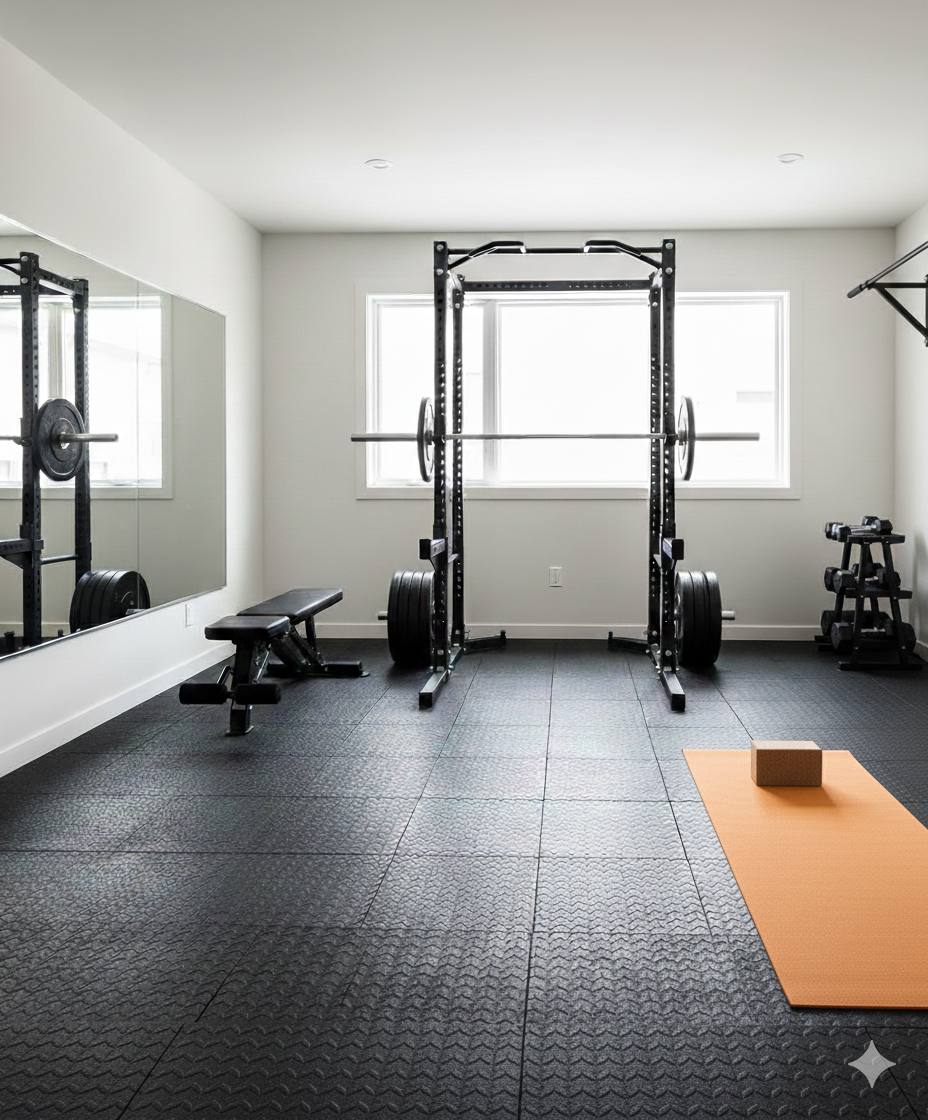
A barbell alone is incomplete. Here's what a functioning barbell home gym actually requires:
Barbell: £80-140 (BodyPower or Mirafit)
Rack: A half rack (squat stand + safeties) handles squats and bench press safely. Budget: £200-400. A full power cage with spotter arms is significantly safer for solo training and costs £350-600. This is the safety investment - worth prioritising.
Weight plates: A 100kg Olympic set (two 20kg, two 10kg, two 5kg, two 2.5kg) covers beginner-to-intermediate training. Cast iron: £100-150. Bumper plates (rubber coated, safe to drop): £200-300. Bumper plates are more durable long-term. Once the plates arrive, our plate loading calculator works out exactly which combination to put on each side of the bar for any target weight.
Collars: Spring collars are included with bars. Get one quality backup set (£15-25) for security.
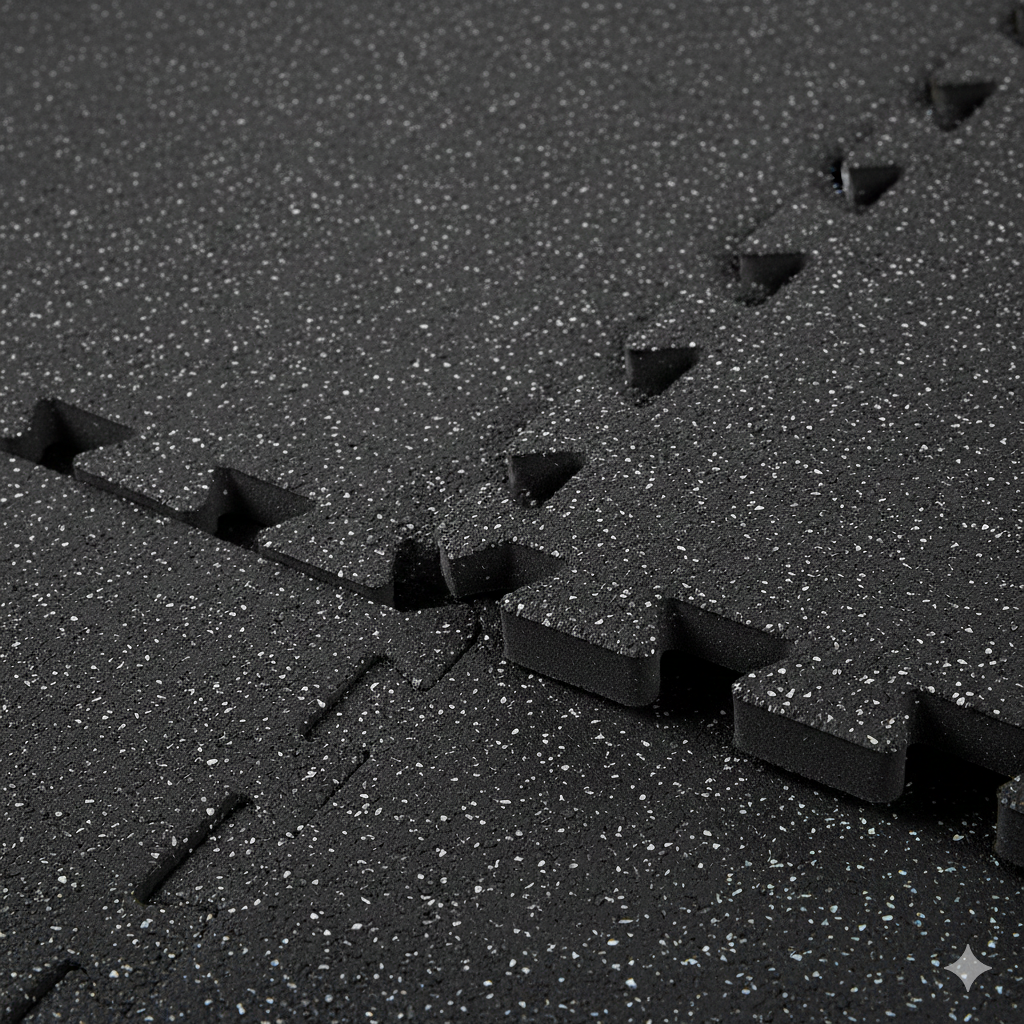
Flooring: Rubber crumb tiles under the rack and deadlift zone prevent floor damage and reduce noise. Budget £80-200 depending on space. Essential if you're renting or in a garage.
Miscellaneous: Chalk, lifting shoes (optional but useful), maybe a lifting belt. £50-100 total.
Total committed setup cost: Barbell + half rack + 100kg plates + flooring = approximately £500-900 for a functioning barbell home gym. This is the right way to think about the purchase - the bar alone is only part of the equation.
---
FAQ
Can I start with a barbell if we've never lifted before?
Technically yes, but dumbbells are safer. A barbell requires a rack and setup to learn safely, and mistakes under load on a barbell are more punishing than on dumbbells. Master the movement patterns with dumbbells first (6-12 weeks), then progress to the barbell when form is solid.
Which bar should a complete beginner buy?
The BodyPower BLACK. You need to prove that you'll stick with barbell training before investing in equipment. If you're still training consistently after 3-6 months, upgrade to the Mirafit M3 and sell the BodyPower (resale value roughly £50-60).
Do I need bumper plates or can we use cast iron?
Cast iron is fine for a home gym. Bumper plates (rubber coated) are designed to be dropped from overhead (clean and jerk, snatch) and they're quieter. For squats and deadlifts, dropping cast iron is bad for the bar and floor. If you're only doing bench, squat, deadlift, pull - cast iron works. If you want to add Olympic movements, bumper plates are essential.
Will the bar rust in my garage?
Yes, both BodyPower (black oxide) and Mirafit (chrome) will show light surface rust in a humid garage. This is cosmetic and doesn't affect function. A coat of WD-40 every few months prevents serious rust. Keep the bar inside in a dehumidified space if rust bothers you.
How much weight can I really load on a home gym barbell?
BodyPower is rated 320kg, Mirafit 680kg. In practice, most people max out at 150-200kg on a barbell (squats, deadlifts) unless they're lifting seriously. Both bars have more than enough capacity. The limitation is your ability to move weight, not the bar's rating.
---
Maintenance and Longevity
A barbell is simple - it's just metal under load. Unlike equipment with moving parts, there's very little to maintain. Here's what actually matters:
Keep it dry. The single biggest threat to bar longevity is rust. In a damp garage, wipe the bar down after training when your hands are warm (moisture evaporates faster). Store it inside if possible. A light coat of WD-40 on the sleeves once monthly prevents serious oxidation. This takes 2 minutes and adds years to the bar's life.
Check the collars. Spring collars can loosen over time with heavy loading. Before each session, check that the collars are tight. A loose collar can allow plates to shift mid-lift, which is dangerous. Backup collars (£15-25 for a quality pair) are good insurance.
Don't drop the barbell. Particularly important with BodyPower (lower tensile strength). Dropping from overhead (clean and jerk style) is normal for Olympic lifting, but in a home gym with cast iron plates, you can't absorb that impact safely. Use bumper plates if you're training Olympic movements, or don't drop the bar.
Inspect the bar before heavy loading. Once yearly, run your hands along the shaft checking for cracks or permanent bends. A bent bar is a liability - it can snap under heavy load. BodyPower makes this easy. If you find damage, replace it rather than risk injury.
---
Real-World Progression: What Realistic Loading Looks Like
A question many first-time barbell buyers have: how much weight will I actually load?
Month 1-3 (learning phase): Empty bar (20kg) for all movements while learning form. This takes longer than you'd expect - proper squat depth, chest contact on bench, straight deadlift pulls. 3-4 weeks minimum before adding meaningful weight.
Month 3-6 (initial strength phase): Adding 5kg per side on squats and deadlifts each week is standard progress. Bench press typically adds 2.5kg per side weekly. You might be at 60kg squats, 80kg deadlifts, 50kg bench by month 6. Well within BodyPower's 320kg capacity.
Month 6-12 (foundation building): Steady progression continues. By month 12, realistic targets are 120kg squats, 150kg deadlifts, 80kg bench. Still leaving significant capacity headroom on any 300kg+ rated bar.
Year 2+: Adding weight slows as you get stronger. A 20kg jump on your deadlift every month becomes a 5kg jump every month, then every 3 months. Most home gym lifters plateau around 140kg bench, 200kg squat, 250kg deadlift - all well under the BodyPower's 320kg rating.
The takeaway: both BodyPower and Mirafit have more than enough capacity for realistic home gym progression. You'll outgrow a lot of things (dumbbells, benches) before you outgrow the barbell's capacity.
---
When to Upgrade from BodyPower to Mirafit
Upgrade if: - You've been training consistently (3+ times weekly) for 6+ months and want to continue - You're training heavy (squatting 100kg+, deadlifting 150kg+) and want zero friction - You plan to add Olympic lifting (clean and jerk, snatch) where smooth rotation matters - You're training for strength sport or powerlifting where precision matters
Don't upgrade if: - You're still in the first 3 months of training (habit isn't proven yet) - You only train once or twice per week (the BodyPower never becomes a limitation) - You're content with bushing-based rotation for standard compounds
The upgrade path is straightforward: train with BodyPower for 6 months, prove the habit, sell BodyPower secondhand (expect £50-60 back), buy Mirafit M3, have a generational barbell for the next decade.
---
Second-Hand Bars and Value
Olympic barbells hold their value surprisingly well on the second-hand market. A used BodyPower sells for £40-50 (50-60% of new price). A used Mirafit from a serious lifter fetches £80-100 (60-70% of new). This makes the upgrade path financially practical - you're not losing £80, you're trading £15-30 to get a better bar.
If you find a used Mirafit M3 or similar quality bar at £60-80 secondhand, that's a genuine bargain. Check it for bends (sight it against a straight edge), verify the sleeves spin freely, and you've got a premium bar at budget pricing.
---
Barbell Maintenance Schedule
Weekly: wipe the shaft with a dry cloth after each session. Monthly: oil the shaft lightly with 3-in-1 oil or barbell-specific lubricant. Apply a drop to the sleeve bearings. Quarterly: deep clean the knurling with a nylon brush to remove chalk buildup. Annually: check for any bending by rolling on a flat surface. A bent bar wobbles visibly and should be replaced. Floor protection under a deadlift station requires the thickest rubber available. A standard 20mm gym tile absorbs the impact of controlled lowering. For actual drops (failed reps, heavy singles), a dedicated platform with two layers of 18mm plywood topped with 20mm rubber absorbs significantly more force and distributes it across a wider area. Storing weight plates properly extends their lifespan and keeps the training area safe. Plates left on the floor get stepped on, tripped over, and develop flat spots on rubber-coated edges. A plate storage tree costs around £30-50 and organises plates by weight within arm's reach of the rack. Wall-mounted plate storage is more space-efficient but requires strong fixings into studs or masonry. Barbell collars matter more than people think. Spring clips (the cheap C-shaped clips that come free with most barbells) slip under heavy loads. They hold adequately up to about 80kg total bar weight. Beyond that, invest in proper lock-jaw collars (around £15-25 per pair) that clamp tight and stay locked regardless of how much weight shifts during the lift. For home training with heavy squats and deadlifts, reliable collars are a safety essential, not an accessory.
The Path Forward
The barbell is the moment a home gym stops being a collection of equipment and becomes a serious training operation. Everything else - dumbbells, bands, benches - supports the barbell work. The barbell is the pillar.
If you're testing the habit: Buy the BodyPower BLACK. Set it up safely in a half rack. Do squats, deadlifts, bench press, and rows three times per week for 12 weeks. If you're still training consistently after three months, you've found something that works. Upgrade to the Mirafit M3 then and keep training. If the training lapses, you've spent £80 to find out - a cheap answer to a real question.
If you're committing long-term: Buy the Mirafit M3 now. You'll use this bar for a decade or more. The £60 difference between this and the BodyPower is genuinely negligible spread across 500+ training sessions. Roughly 12 pence per training session. This is the bar you keep. This is the right tool.
The barbell is where home training becomes real.
As an Amazon Associate, we earn from qualifying purchases.
Products Mentioned in This Guide
Frequently Asked Questions
Related Guides
Find Your Perfect Equipment
Expert guides for racks, barbells, plates, benches, and more. Build your home gym the right way.
Browse All Guides