Major Fitness Drone2 Review 2026

Thirty years of training at home. Built multiple home gyms from bare garages to proper setups. I know what equipment lasts, what breaks, and what becomes an expensive clothes rack.
Just so you know, some links on this page are affiliate links. If you buy something via them, we get a small kickback. You don't pay more, but it helps toward the next bit of kit.
Looking for more equipment recommendations?
Browse All GuidesI earn a commission on purchases made through links on this page. Full disclosure here.
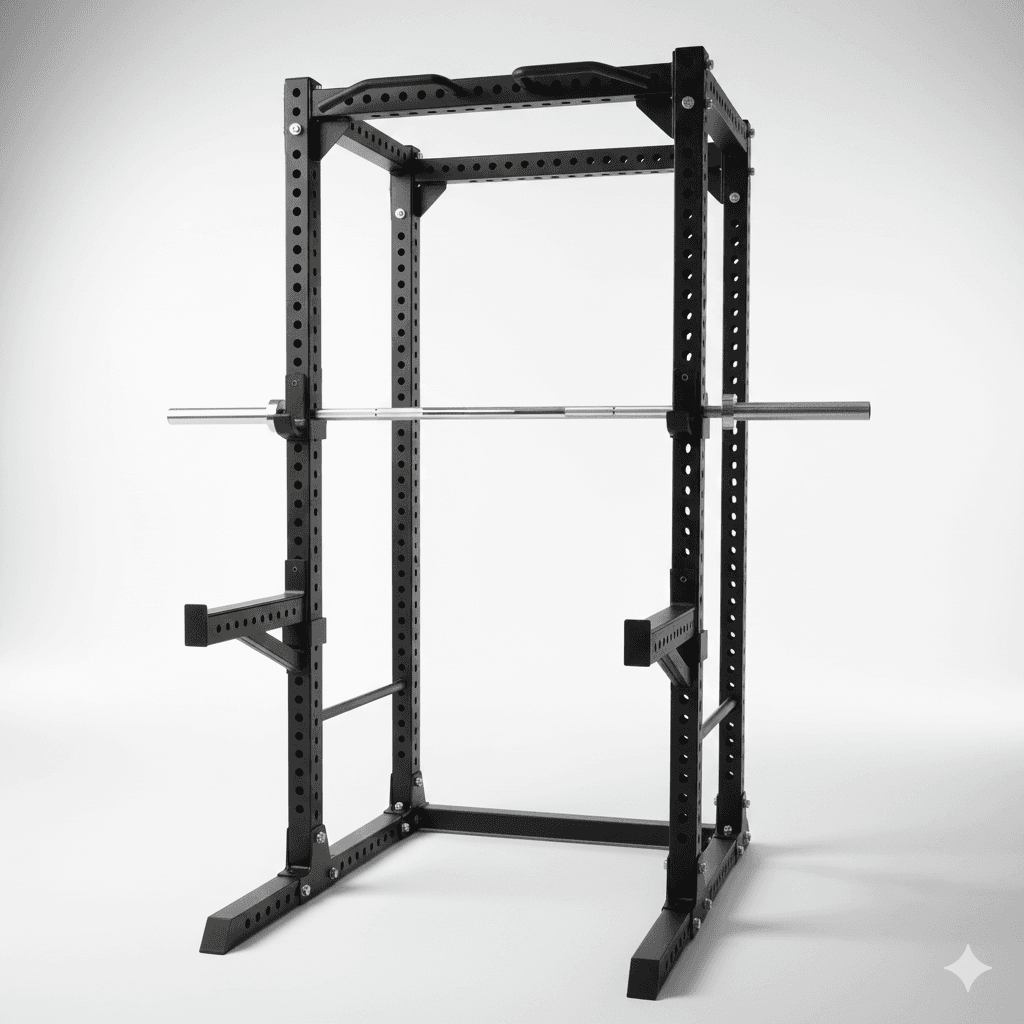
The Major Fitness Drone2 Premium is the closest thing to dropping a small commercial gym into your spare room without paying commercial-gym money. It is a Smith machine, a power cage, a squat rack, a dual cable crossover and a lat station, all welded into one steel frame and all sold for the kind of money you would normally spend on a bench and a decent set of plates. My verdict: if you want one machine that covers almost every lift and you have the floor space to give it a permanent home, the Drone2 is one of the best-value all-in-one stations you can buy on Amazon right now. If what you actually want is to load a free barbell and chase a heavy squat or deadlift, a plain rack from the best power rack guide will serve you better and cost less. Here is the full picture.
What It Actually Is
The Drone2 Premium is a single frame that does the job of six or seven separate machines. The spine of it is a Smith machine: a barbell fixed to a near-vertical track that you can rack at almost any height by twisting the bar into a row of safety hooks. Around that, Major Fitness has built a full four-post cage you can squat and press inside, a 1:1 cable system fed by an aluminum pulley set for crossovers, rows and pulldowns, a pull-up bar across the top, and the mounting points for a lat station. The Premium package is the one most people want, because it arrives with a bench, an Olympic-style weight bar, 230 lb of plates and a kit of accessories, so you are training the day you finish building it rather than placing a second order for everything that makes it useful.
What earns trust is the frame itself. It is built on 2x2 inch commercial-grade steel uprights and rated to a 2000 lb load, which is far more than any home lifter will ever put through it. This is not a flimsy multi-gym from the 1990s with a vinyl seat and a sad stack of plastic-coated weights. It is a proper steel station that happens to fold several machines into one footprint.
The Case For It
The headline is versatility per dollar, and it is genuinely strong. One frame gives you the squat rack, the bench press station, the Smith machine, the cable crossover, the seated row, the lat pulldown and the pull-up bar. To assemble that range out of separate pieces of kit, you would be buying a rack, a functional trainer and a cable tower, and you would be spending a great deal more and eating a lot more floor. The Drone2 collapses all of it into one purchase and one corner of the room.
Its Smith machine is better than the price suggests. The bar rides on linear bearings rather than cheap nylon bushings, so the travel is smooth and there is very little side-to-side play, and it locks automatically into the nearest safety hook the moment you rotate your wrists. For anyone who trains alone, that auto-locking bar is the safety net that lets you push a heavy bench or squat to the point of genuine failure without a spotter standing over you. That is the same argument the best power rack guide makes for safety bars, except here it is built into the bar path itself.
Then there is the cable side, which is where an all-in-one beats a bare rack outright. A plain cage gives you nowhere to do a cable fly, a face pull, a triceps pushdown or a lat pulldown without bolting on extra towers. The Drone2 has the pulley system and the pulldown bar in the box, so the accessory and isolation work that builds the parts a barbell neglects is there from day one. For a single piece of equipment meant to be someone's entire gym, that completeness is the whole pitch, and it delivers.
Check the Major Fitness Drone2 on Amazon
The Honest Case Against It
A Smith machine is not a free barbell, and pretending otherwise would be doing you a disservice. The bar runs on a fixed track, so it cannot drift the way a real bar does as you press or squat, and that fixed path does not suit everyone. Serious barbell lifters often find the locked groove fights their natural mechanics, particularly on squats, and the stabilising muscles a free bar trains get less work. If your goal is competitive powerlifting or Olympic lifting, this is the wrong tool and no amount of cable attachments changes that.
The uprights are the other catch. At 2x2 inches they are sturdy, but most premium attachments on the market are sized for 3x3 inch tubing, so your options for adding third-party j-cups, arms or specialty bars are narrow. You are buying into Major Fitness's own ecosystem more than you might expect. And it is a younger value brand, without the decades-long reputation of the established rack makers. The company promises lifetime after-sales support, which is reassuring, but it is a newer name making that promise, not one with thirty years of proof behind it. Anyone telling you a machine this cheap for this much kit has no compromises is not being straight with you.
Who Should Buy It, and Who Shouldn't
Buy it if you want one machine that does almost everything, you train mostly solo, and you have a dedicated room or garage bay where it can live permanently. It is the ideal pick for the lifter who wants the safety of a Smith bar, the completeness of a cable station, and the cost saving of buying it all in one box rather than piece by piece.
Skip it if you are a free-barbell purist chasing maximal squats, presses and deadlifts, in which case a straightforward cage from the best power rack guide gives you truer barbell mechanics for less money. Skip it if you are building a first gym on a tight budget, because the home gym budget guide will get you training for a fraction of the outlay. And skip it if you are short on space, since this is a full four-post cage with a tall frame, not a folding unit. Someone in a flat or a shared room is better served by a rack-and-adjustable-dumbbell setup that does not dominate the room.
What Owners and Reviewers Report
I have not trained on one myself, so treat this as a synthesis of what independent reviewers and early owners consistently say rather than a firsthand verdict. The recurring praise is exactly the value story: reviewers who put it through its paces describe it as replacing six or seven commercial machines for well under what a comparable stack of separate equipment would cost, and they single out the Smith bar's linear-bearing travel as feeling far better than the price implies. The included plate set and accessories get credit for making it usable straight out of the box.
Two cautions come up repeatedly. First, assembly. This is a big, heavy build, and the most-repeated practical tip is to leave real ceiling clearance, because the Smith guide rods slide in from the top during assembly and the frame stands around eight feet tall, so a low garage ceiling can genuinely catch you out. Measure before you order. Second, the attachment ecosystem. Owners note that a few of the bundled extras are slightly odd choices and that the 2x2 inch uprights limit what aftermarket kit will fit. Neither is a dealbreaker, but both are worth knowing before the boxes arrive. Have you measured your ceiling height yet? With a frame this tall it is the first number to check.
Assembly and Living With It
Be honest with yourself about the build before you order, because this is the part owners most often underestimate. A frame this size arrives as a stack of heavy boxes and goes together over the better part of a day, and it is far easier with two people than one. The single most repeated piece of advice is to check your ceiling: the cage stands around eight feet tall and the Smith guide rods feed in from the top during assembly, so a low garage ceiling can stop the job dead halfway through. Clear the floor, set aside an afternoon, and read the manual rather than racing it, and the result is solid.
The experience changes once it is standing. In the first couple of weeks the appeal is simply having everything in reach. You move from a Smith bench press to a cable fly to a lat pulldown without leaving the frame or buying another machine, and that convenience is what keeps people training on the days they would otherwise talk themselves out of it. Supersets that would normally mean walking between stations in a commercial gym become a matter of turning around. For a solo lifter, the auto-locking Smith bar quietly removes the fear that usually caps how hard you push when no one is there to catch a failed rep.
One ownership cost worth planning for is plates. The Premium package's 230 lb starting load is plenty for most pressing and accessory work, but a strong lifter squatting and pulling will move past it, and the answer is to add standard Olympic plates over time rather than to replace anything. That is a cheap, gradual upgrade rather than a wall you hit, but it is worth knowing the included weight is a starting point, not a ceiling. Beyond that, there is very little to maintain. A wipe-down, the occasional check that bolts are tight, and a little cable lubrication is the whole job, which is exactly the advantage steel has over a motorised gym full of electronics.
How It Compares to the Obvious Alternatives
The natural rival in spirit is the Speediance Gym Monster 2, the motorised all-in-one that folds flat and runs on digital resistance instead of plates. The Speediance wins decisively on footprint, since it tucks away when you are done, and on built-in coaching. The Drone2 wins on everything physical: it costs less, it uses real iron you can feel, it has no motors or software to fail, and a steel frame will outlive any electronics. If folding away is non-negotiable, the Speediance is your machine. If you have the space and want a tool that simply works forever, the Drone2 is the more durable buy.
A more honest comparison is a traditional setup: a power rack, a barbell and a set of adjustable dumbbells. That route gives you truer free-barbell mechanics and usually costs less, but it leaves you without the cable crossover, the pulldown and the guided Smith bar unless you buy those separately. So the real question the Drone2 asks is not whether it beats a barbell, because for pure barbell lifting it does not. It is whether having the Smith bar, the cage and the full cable stack in one frame is worth giving it a permanent home. For a lot of people building a complete solo gym, the answer is a clear yes.
The Verdict
The Major Fitness Drone2 Premium is the most machine you can get in a single frame for the money, and the Smith-plus-cage-plus-cable combination covers a wider range of training than a bare rack ever will. Buy it for what it uniquely does, put a whole gym's worth of equipment in one corner, train safely on your own, and never run out of exercises, not because it replaces a free barbell, because it does not try to.
If you have the floor and the ceiling for it, get it and turn that spare room into a real gym.
As an Amazon Associate, we earn from qualifying purchases.
Products Mentioned in This Guide
Frequently Asked Questions
Related Guides
Find Your Perfect Equipment
Expert guides for racks, barbells, plates, benches, and more. Build your home gym the right way.
Browse All Guides