Best Resistance Bands UK 2026

Thirty years of training at home. Built multiple home gyms from bare garages to proper setups. I know what equipment lasts, what breaks, and what becomes an expensive clothes rack.
Just so you know, some links on this page are affiliate links. If you buy something via them, we get a small kickback. You don't pay more, but it helps toward the next bit of kit.
Looking for more equipment recommendations?
Browse All GuidesResistance bands are the most underrated piece of home gym kit. They're cheap, they pack small, they work, and most people buy a rubbish no-brand set from eBay, snap them within three months, and write the whole category off.
The issue isn't the concept. It's that resistance bands come in four completely different types, each suited to different training goals. Buying the wrong type is like buying a skipping rope when you wanted a rowing machine - technically both are fitness equipment, but they're not interchangeable.
Here's what to buy and why.
Quick Picks
| Band Type | Best Option | Best For |
|---|---|---|
| Loop bands | Gritin 5-Pack | Warm-ups, mobility, beginners |
| Long flat bands | Mirafit Stretch Bands | Pull-up assist, power work |
| Tube bands + handles | BOB AND BRAD Set | Full-body strength training |
| Fabric booty bands | Victorem Set of 3 | Glutes, hip work, activation |
---
The 4 Types of Resistance Bands
Most buying guides treat resistance bands as a single product. They're not. There are four distinct types, and mixing them up is the main reason people get disappointed.
Loop bands (short): Small closed loops, usually 30cm long. Used around ankles or knees for activation work - clamshells, lateral walks, glute bridges. Not useful for upper body work.
Long flat bands: 200cm continuous loops, wide flat construction. Used for pull-up assist, mobility stretches, and power movements. The flat design means they won't snap the way tube bands can.
Tube bands with handles: Rubber tubes attached to foam handles, usually with a door anchor included. Closest to cable machine training - good for rows, curls, chest press, and tricep work. Stackable for adjustable resistance.
Fabric booty bands: Wide fabric loops, 30-40cm. Similar to short loop bands but cotton-blend construction won't roll or dig into your thighs during squats and hip thrusts. Significantly more comfortable than latex for lower body work.
---
Loop Bands: Gritin 5-Pack
For five bands in different resistance levels, the Gritin set is the easiest entry point into resistance band training. These are classic flat latex loop bands - small, light, and suitable for warm-up circuits, mobility work, and lower-body activation.
The five resistance levels cover a sensible range from very light (useful for shoulder warm-ups and mobility) through to heavy (glute bridges with significant resistance). They won't replace heavier training equipment, but for the price they're hard to argue with.
Best for: Warm-ups, mobility circuits, travel, beginners who want to try band training before committing. Anyone with a home gym will find these useful as a supplementary tool even if they also have heavier equipment.
Not for: Upper body strength training (no handles), heavy loaded squats, or pull-up assist (too short).
---
Long Flat Bands: Mirafit Resistance Bands
Long flat bands are a different tool to short loop bands. At around 200cm, they're designed for movements that require more range: pull-up assist, band-resisted squats and deadlifts, mobility stretches, and pull-apart drills for shoulder health.
The flat construction is the important detail here. Unlike tube bands, flat bands distribute force across a wider surface - they're less likely to snap mid-set, and they feel more secure when looped around a pull-up bar or your feet.
Mirafit are a UK brand with good Amazon availability and straightforward returns. The bands come in multiple resistance levels - buy the one that matches your current pull-up strength or the movement you're training. If you're using them for pull-up assist, start lighter than you think you need.
Best for: Pull-up assist (loop around the bar, place a foot or knee in the loop, the band helps drive you up), mobility stretching, resistance-band deadlifts, band pull-aparts for shoulder health.
Not for: Exercises that require handles, or lower-body activation work where short loop bands are more practical.
---
Tube Bands with Handles: BOB AND BRAD Set
If you want to do actual upper body resistance training with bands - rows, curls, chest press, overhead press, tricep pushdowns - you need tube bands with handles. Short loop bands are the wrong tool for this. Tube bands mimic cable machine exercises without requiring a cable machine.
The BOB AND BRAD set includes five stackable bands (you can combine them for heavier resistance), two handles, and a door anchor. That door anchor is important - it turns any door into an anchor point for horizontal pulling movements, which is the main limitation of resistance band training if you don't have a pull-up bar or power rack.
The foam handles are more comfortable than the rubberised handles on cheaper sets, and the latex quality is noticeably better than budget alternatives - no flaking, no uneven tension.
Stack all five bands and you're pulling against meaningful resistance. Use one light band for isolation work like bicep curls or lateral raises.
Best for: Home gym users who want cable machine-style upper body work without a cable machine. Stacked bands give enough resistance for intermediate-level training. The door anchor setup is practical and doesn't damage the door.
Not for: Lower body activation work, or movements where a fixed bar anchor is better (pull-up assist, band deadlifts).
---
Fabric Booty Bands: Victorem Set of 3
If you've ever done squats or hip thrusts with a cheap latex loop band and had it roll up your legs halfway through a set, you'll understand why fabric booty bands exist.
Victorem's cotton-blend construction stays in place. It doesn't roll. It doesn't dig into your skin. For lower body activation work - clamshells, lateral walks, glute bridges, hip thrusts, banded squats - fabric bands are simply better than latex at the same resistance level.
The set includes three resistance levels (light, medium, heavy). For most people, medium is the workhorse: enough resistance to fire the glutes during warm-ups and activation sets without being so tight it limits range of motion. Heavy is useful for loaded hip thrusts once you're past beginner level.
Best for: Glute activation before squats or deadlifts, hip thrust work, lateral band walks, any exercise where a latex band would roll or dig in.
Not for: Pull-up assist or exercises where a longer band is needed.
---
Full Comparison
| Product | Type | Upper Body? | Lower Body? | Pull-Up Assist? | Won't Roll? |
|---|---|---|---|---|---|
| Gritin 5-Pack | Loop bands | No | Yes | No | Moderate |
| Mirafit Long Bands | Flat bands | Limited | Yes | Yes | Yes |
| BOB AND BRAD Set | Tube + handles | Yes | No | No | N/A |
| Victorem Fabric | Fabric booty bands | No | Yes | No | Yes |
---
What to Skip
No-brand multi-pack sets under £5: They snap. The latex is thin and inconsistent. They also usually mix incompatible band types in a single pack, which means you get five different products that aren't particularly good at anything.
Tube bands without handles: Some sets include tubes without the handle attachment - these are nearly useless for upper body training. You can't do rows, curls, or pressing movements properly without handles. Pay the extra few pounds for a proper set.
Single-resistance fabric bands: Some brands sell single heavy-resistance fabric bands. Unless you specifically know you need one resistance level, the set-of-three is more versatile and only marginally more expensive.
---
What to Buy Based on Your Goals
For complete beginners: Start with the Gritin loop bands. They're cheap enough that it doesn't matter if you decide bands aren't for you. If you stick with it, add the Victorem fabric set and BOB AND BRAD tube set as you progress.
For home gym users who already have free weights: The BOB AND BRAD tube set fills the cable machine gap. Add Mirafit long bands if you're also doing pull-up work.
For lower body and glute focus: Victorem fabric bands plus the Gritin loop set covers activation work and loaded movements. That's around £25 total.
For a complete band setup: All four types costs around £70 combined. You'd have loop bands for warm-ups, long flat bands for pull-up assist and mobility, tube bands for upper body strength work, and fabric bands for lower body activation. That covers the full training spectrum at a fraction of gym membership cost.
For all four types combined, a complete band setup costs less than a single month at most gyms. It's one of the few purchases in home training where the regret rate is effectively zero.
Common Mistakes
Buying only one type. The four band types serve different purposes. Buying only loop bands limits you to lower body and rehab work. The best setups combine tube bands with handles (upper body strength), loop bands (lower body activation), and mini bands (warm-up and isolation).
Choosing by resistance rating rather than feel. Manufacturers label bands wildly differently. One brand's "heavy" is another's "medium." Buy from brands with reviews that specifically mention the resistance level at your target strength, or buy a set with multiple resistances to find what works.
Expecting bands to fully replace weights. Bands excel at variable resistance -- hardest at the top of a movement where muscles are typically weakest. They're not ideal for maximum strength development or movements where you need consistent tension throughout. Use them alongside free weights, not as a permanent replacement.
Frequently Asked Questions
How long do resistance bands last?
Quality bands from reputable brands last 2-4 years with regular use. The main failure modes are microtears from overstretching and UV degradation from sunlight exposure. Store them coiled loosely in a bag away from direct sunlight. Replace immediately if you notice any nicks or surface cracks -- a snapped band under tension can cause injury.
Can resistance bands build muscle?
Yes, with the right approach. Progressive overload is the key principle, and bands allow it through progressing to thicker bands or combining bands. The variable resistance means muscles work differently than with free weights, which can be an advantage for hypertrophy when combined with traditional training. For pure muscle building, free weights remain more efficient. For most fitness goals, bands are more than adequate.
What resistance bands are best for beginners?
A set of loop bands with 3-4 resistance levels is the simplest starting point. Gritin makes a reliable UK-available set for around 12-15 pounds. Start with the lightest band and learn the movement patterns. Most beginners progress to the medium band within 2-4 weeks. The key is choosing a resistance where you can complete 12-15 reps with good form but not 20-plus.
Are resistance bands good for back pain rehabilitation?
Yes -- resistance bands are commonly used in physiotherapy precisely because they allow controlled, low-impact movement. The variable resistance means the band is lightest at the beginning of a movement (when injured tissue is most vulnerable) and heaviest at end range. Always check with a physiotherapist for specific exercises if you're rehabilitating an injury.
Training Programmes Using Only Bands
A band-only programme builds muscle for beginners and maintains it for experienced trainees between gym access.
Band Colour Coding and Resistance Levels
Band resistance is measured in pounds or kilograms of force at a specific stretch length. Most brands use colour coding, but there is no universal standard. A red band from one manufacturer may offer different resistance than a red band from another.
Combining Bands With Free Weights
Resistance bands paired with dumbbells or barbells create training variety that neither achieves alone.
Banded dumbbell bench press adds resistance at the top of the movement where you are strongest. Loop a band under the bench and over each dumbbell. The band tension increases as you press up, overloading the lockout. This technique builds explosive pressing strength and breaks through bench press plateaus.
Banded goblet squats loop a band under both feet and over the dumbbell. The squat becomes progressively harder as you stand up. This mimics the resistance curve of a barbell squat more closely than a standard goblet squat.
Banded pull-ups assist at the bottom where most people are weakest and provide no assistance at the top. This is more effective for building pull-up strength than assisted pull-up machines because the assistance matches the strength curve naturally.
Band Exercises That Replace Expensive Equipment
Resistance bands replicate movements that normally require cable machines costing £500 or more. The three most valuable cable replacements for home gym owners are face pulls, lat pulldowns, and cable crossovers.
Face pulls are arguably the most important exercise for shoulder health. Anchor a band at head height (over a door frame works), step back to create tension, and pull the band towards your face with elbows high. This strengthens the rear deltoids and external rotators that prevent the rounded-shoulder posture caused by excessive bench pressing and desk work. Two sets of 15-20 reps three times per week measurably improves shoulder health and posture.
Banded lat pulldowns require a door anchor positioned at the top of the frame. Kneel facing the door, grip the band ends, and pull down to your upper chest. This mimics the lat pulldown machine and is the easiest way to train lats at home without a pull-up bar. A heavy band gives genuine resistance for this movement.
Banded chest flies are done by anchoring the band behind you at chest height and pressing forward with a hugging motion. This isolates the chest in a way that bench press cannot, targeting the inner and outer pectoral fibres through a full range of motion.
Beyond cable replacements, bands excel at accommodating resistance when combined with free weights. Looping a band over a barbell during squats or bench press adds resistance at the top of the movement where you are strongest, while reducing it at the bottom where you are weakest. This overloads the lockout phase and builds strength through the full range of motion. Powerlifters have used this technique for decades.
Band Durability and Safety
Resistance bands fail. Understanding how and why prevents injury.
Latex bands (the flat loop type) stretch to approximately 2.5 times their resting length before failure. Operating within 2 times resting length leaves a safe margin. Over-stretching accelerates micro-tears in the latex that eventually cause the band to snap. When a band snaps under load, it recoils at speed. This is not a theoretical risk. Band snap injuries include welts, eye damage, and facial cuts.
Prevention: Inspect bands before every session. Look for small tears, thin spots, or areas where the colour has faded (indicating stretched latex). Replace bands showing any of these signs. Average lifespan of a quality latex band with regular use is 12-18 months. Budget bands from unknown brands may last 3-6 months.
Fabric-covered bands (typically used for hip and glute work) do not snap in the same way. The fabric sleeve contains the elastic if it fails. These are inherently safer and recommended for any exercise performed near the face or overhead.
What to Avoid
Buying individual bands instead of a graded set. Single bands look cheaper, but progression requires multiple resistance levels. A set of 4-5 bands from one manufacturer ensures consistent quality and clear resistance grading. Mixing brands creates confusion because colour coding is not standardised across manufacturers. A yellow band from one brand might be 5kg, from another 15kg.
Tube bands with plastic clip handles. The clip where the tube meets the handle is the failure point. Cheap plastic clips crack under load, and the tube snaps back at speed. Look for bands with moulded or sewn connections. Better yet, use loop bands (the flat type) for heavy resistance work. They have no clips, no handles, no failure points.
Latex bands stored in direct sunlight or heat. UV light and heat degrade latex rapidly. Bands left on a windowsill, in a car boot, or near a radiator lose elasticity within weeks. Store bands in a drawer or bag, away from light and heat. Talcum powder applied occasionally prevents the rubber from bonding to itself during storage.
Using bands as the sole resistance for heavy compound movements. Bands change resistance through the range of motion. At the bottom of a banded squat, resistance is minimal. At the top, it peaks. This reversed strength curve means the hardest part of the lift (the bottom) gets the least assistance. Bands work brilliantly for accessory work, rehab, and warm-ups. For heavy squats, deadlifts, and presses, free weights are more effective.
The Complete Band Setup
For under 70 pounds, a complete resistance band setup covers more training territory than most people expect. Upper body strength, lower body development, core work, mobility, and rehab in a kit that fits in a gym bag.
That's the real appeal. Not that bands replace a full gym, but that they make a surprising amount of training possible in spaces and situations where nothing else would work. The travel kit that actually gets used. The home option that doesn't require a dedicated room. One purchase that solves a dozen training problems.
What You'll Need With It
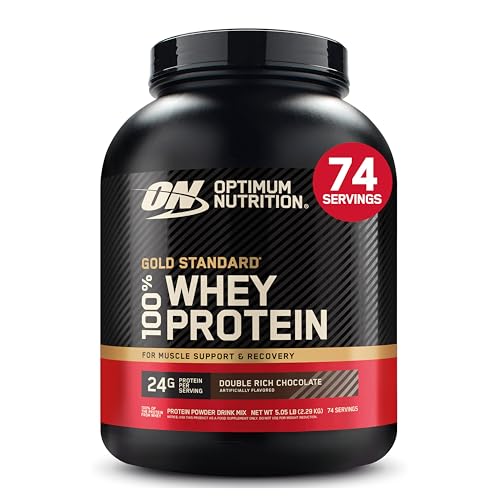
Industry-standard protein powder with premium quality and excellent mixability. The benchmark against which other proteins are measured. Great taste and trusted by athletes worldwide.
As an Amazon Associate, we earn from qualifying purchases.
Products Mentioned in This Guide
Frequently Asked Questions
Related Guides
Find Your Perfect Equipment
Expert guides for racks, barbells, plates, benches, and more. Build your home gym the right way.
Browse All Guides